


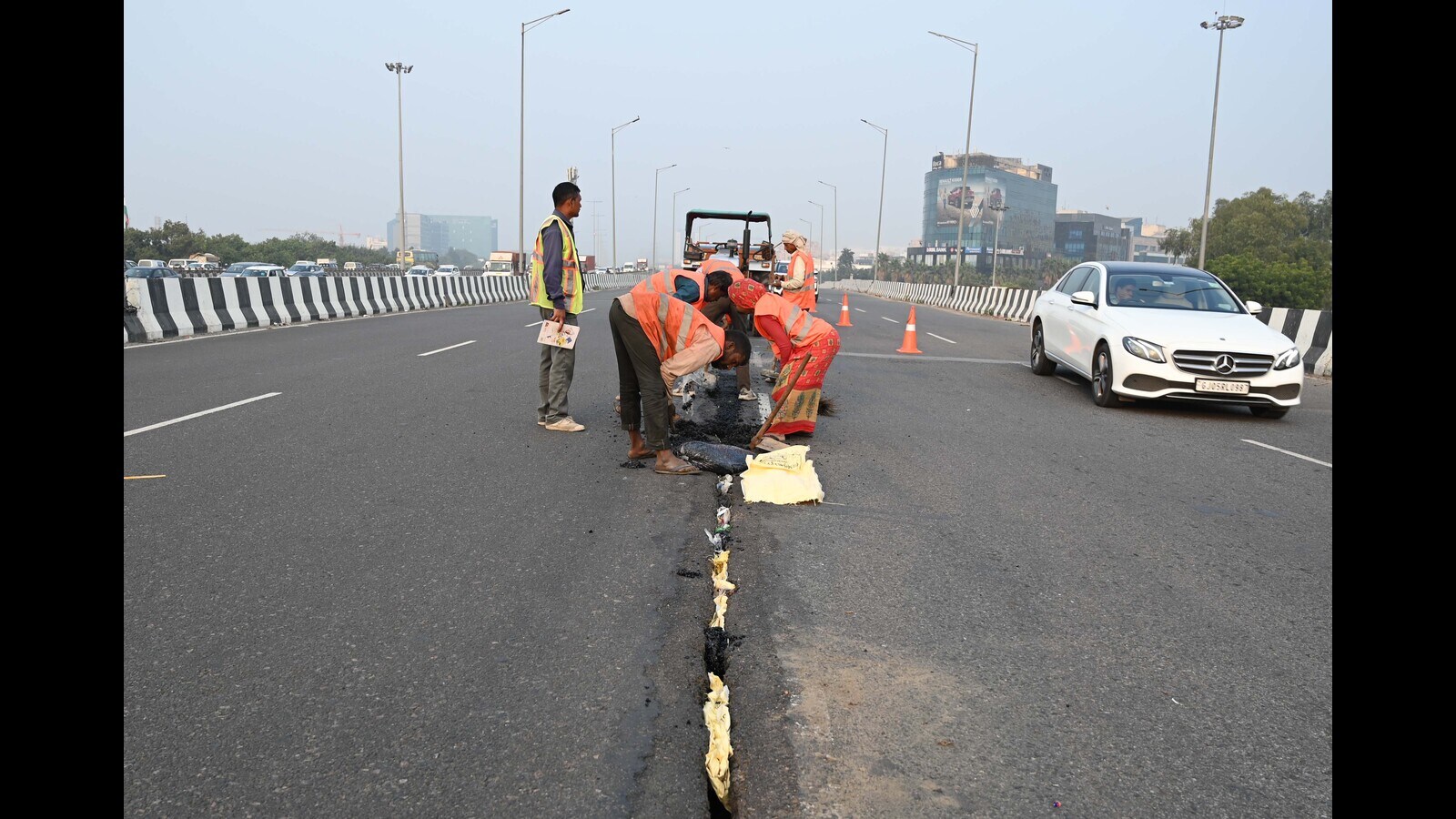
A recently inaugurated four-lane section of the Bakhtiyarpur-Mokama highway in Patna district has developed significant cracks on its side slope, raising immediate concerns about construction quality and long-term durability. This incident, occurring on a vital artery intended to enhance regional connectivity, has prompted local residents to allege the use of substandard materials. While authorities attribute the damage to heavy rainfall, the situation underscores the critical need for resilient infrastructure in urban areas, particularly as cities strive for sustainable development and improved public safety.
The affected stretch, approximately one kilometre in length, has seen the side slope compromised, leading to a visible crack on the road surface. Commuters in the area are expressing apprehension regarding potential accidents, especially given that only one flank of the four-lane highway is currently operational. This partial functionality already contributes to traffic congestion and increased risk, with reports of multiple recent accidents. The integrity of such vital transport links is paramount for the daily commute of thousands and for fostering robust economic activity across surrounding villages.
The Bakhtiyarpur-Mokama project, spanning 44.6 kilometres and built at an approximate cost of ₹870 crore, has faced a protracted development timeline. Initiated in 2017 with an original completion target of December 2019, the project experienced significant delays primarily due to land acquisition challenges. Its timeline was subsequently extended to December 2021, and despite a partial inauguration of one flank in March, the full four-lane functionality remains elusive. Such prolonged construction phases and subsequent early-onset defects can erode public trust and hinder the overall progress towards efficient urban mobility.
While the project director attributes the slope failure to heavy rainfall, the public’s concerns regarding material quality highlight a broader challenge in infrastructure development. Ensuring the use of high-grade materials and adherence to stringent quality control measures are fundamental for constructing roads that can withstand environmental stressors and heavy traffic loads over their intended lifespan. Failures in newly built infrastructure not only pose immediate safety risks but also necessitate costly rectification work, diverting resources that could otherwise be allocated to new development or other essential urban services.
This incident on the Bakhtiyarpur-Mokama highway serves as a crucial reminder for all stakeholders in urban planning and infrastructure development. The pursuit of sustainable cities necessitates an unwavering commitment to quality, transparency, and accountability in construction. Investing in resilient, long-lasting infrastructure is not merely an economic imperative but a social responsibility, ensuring safe, equitable, and eco-friendly transport networks that support the well-being and progress of communities for decades to come.
Also Read :Chennai Begins Rs 38 Crore Monsoon Works in City and Suburbs
