


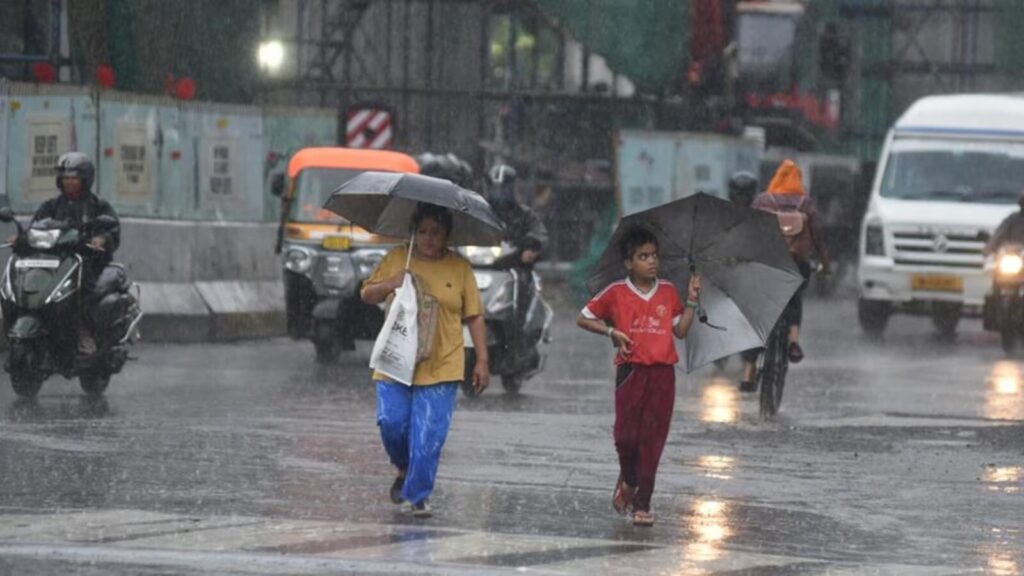
Mumbai is likely to experience a lull in monsoon activity through August, even as the Indian Meteorological Department (IMD) forecasts a rainfall rebound in September, indicating an overall above-average season for Maharashtra. The city, which saw an early onset of monsoon on May 26—16 days ahead of the usual date—has already recorded nearly half of its average annual rainfall by the beginning of August.
The IMD’s latest long-range forecast for the second half of the southwest monsoon (August–September 2025) points to below-normal to normal rainfall across most districts of Maharashtra during August. However, September is expected to see enhanced rainfall, which could provide relief to agriculture, civic planning, and reservoir levels. For Mumbai and its adjoining metropolitan regions—Thane, Palghar, and Raigad—the next five-day weather outlook indicates a continued spell of light to moderate rainfall, with no weather warnings issued. The lull comes after a period of intense downpours that saturated parts of the city and brought some urban localities to a near standstill.
As of August 3, Mumbai’s eastern suburbs have received the highest cumulative rainfall this monsoon season, measuring 1,165 mm, followed by the western suburbs at 1,067 mm, and the city centre at 900 mm. Collectively, this accounts for 47.32% of the city’s annual average rainfall, according to municipal data. The water stock across the seven key reservoirs that supply drinking water to the Mumbai Metropolitan Region stands at 89.09% of their total capacity of 14.47 lakh million litres. Civic authorities and environmental experts view this as a comfortable position for the city heading into late monsoon and post-monsoon months, although a consistent rainfall pattern is crucial for long-term water security.
IMD officials clarified that monsoon variability—such as an early onset followed by dry spells—is part of evolving climate dynamics, influenced by global weather systems including El Niño and the Indian Ocean Dipole. Officials noted that current models still predict an overall surplus for the monsoon 2025 season across central India, with September being particularly important in offsetting August’s shortfall. While a dry August may ease flooding concerns temporarily, it also raises caution for urban heat build-up, stagnant water-related health risks, and reduced recharge of groundwater in some city zones. The coming month’s rainfall patterns will therefore be pivotal not only for agriculture and water resource planning but also for maintaining urban ecological balance.
With metro infrastructure, construction timelines, and sustainability goals tightly intertwined with weather trends, timely and accurate forecasting—as being issued now by the IMD—remains an essential tool for city planners, residents, and civic agencies alike.
Also Read : Hyderabad Cuts Property Impact in Metro Phase II Realignment
