


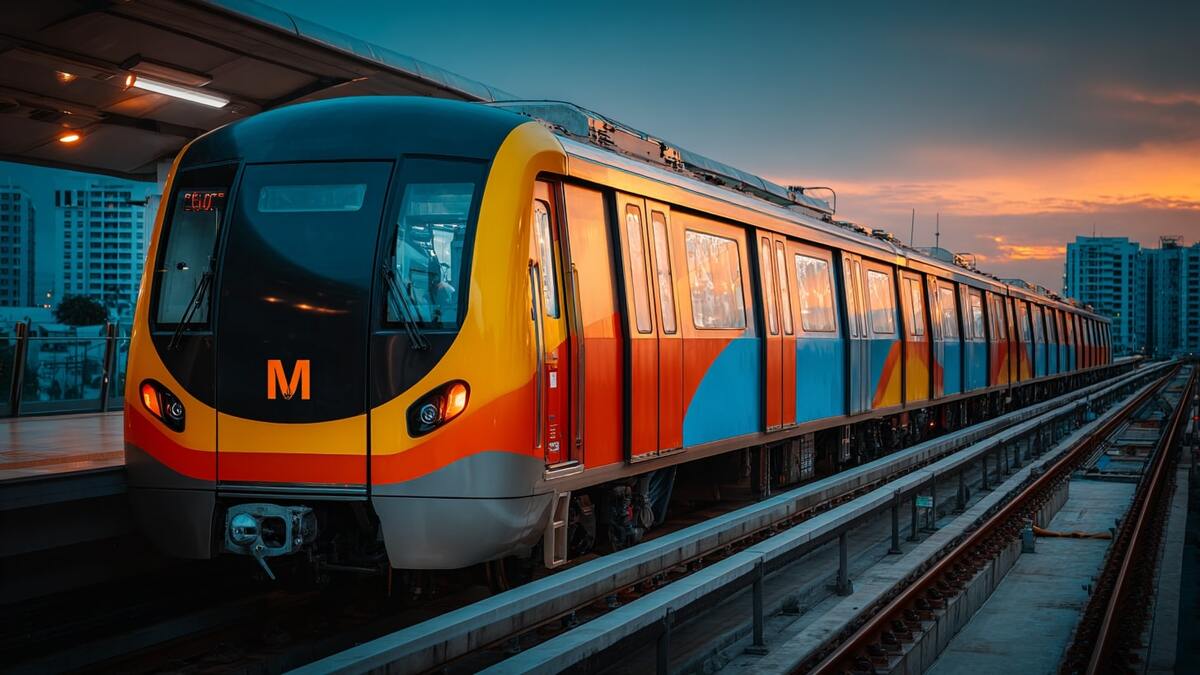
Bengaluru’s long-anticipated Yellow Line of the Namma Metro project has achieved a critical milestone, receiving statutory safety clearance from the Commissioner of Metro Railway Safety (CMRS), Southern Circle. The 19.15-km corridor, connecting R.V. Road in South Bengaluru to Bommasandra in the city’s tech belt, is now one step closer to beginning commercial operations.
Officials from the Bangalore Metro Rail Corporation Limited (BMRCL) confirmed that the CMRS safety certification has been granted, but noted that operations will begin only after all observations made during the inspection are fully complied with. The inspection, held between July 22 and July 24, covered systems ranging from signalling and tracks to fire safety and passenger information amenities. While a launch date has not been officially announced, internal sources suggest BMRCL is working toward an Independence Day rollout, subject to final approvals. The required compliance report will be submitted in the coming days, following which commercial services can be greenlit.
The Yellow Line is poised to provide a direct metro connection to high-traffic nodes such as the Central Silk Board, HSR Layout, and Electronics City, significantly reducing travel time for daily commuters and tech professionals. This stretch, however, has faced repeated delays. Initially scheduled for a 2021 opening, the project encountered several logistical setbacks—the most critical being the delay in receiving rolling stock. In 2019, BMRCL had awarded a contract worth ₹1,578 crore to a Chinese rolling stock manufacturer. However, the firm failed to meet its obligations, forcing BMRCL to explore legal remedies, including invocation of a ₹372-crore bank guarantee. The stalemate led to a revised partnership with a domestic manufacturer, facilitating partial delivery of driverless train sets. So far, three sets have arrived, with a fourth expected shortly.
When operations begin, initial services will run with three driverless trains at a 20-minute frequency. A gradual scale-up is expected by March 2026, with train frequencies tightening to five minutes during peak hours, as more rolling stock arrives. Experts believe the line’s integration will significantly ease road congestion and contribute to a cleaner urban environment by promoting mass public transport over private vehicles. From an infrastructure and commuter perspective, the Yellow Line’s operationalisation will mark a significant shift in Bengaluru’s urban transit landscape, while also encouraging a more sustainable mobility framework for the city.
For now, Bengaluru awaits its next metro leap, hopeful that the last stretch of approvals clears the path to a much-needed expansion of its public transport network.
Also Read : Delhi Metro fixes water leaks by shifting pipes to road medians
