


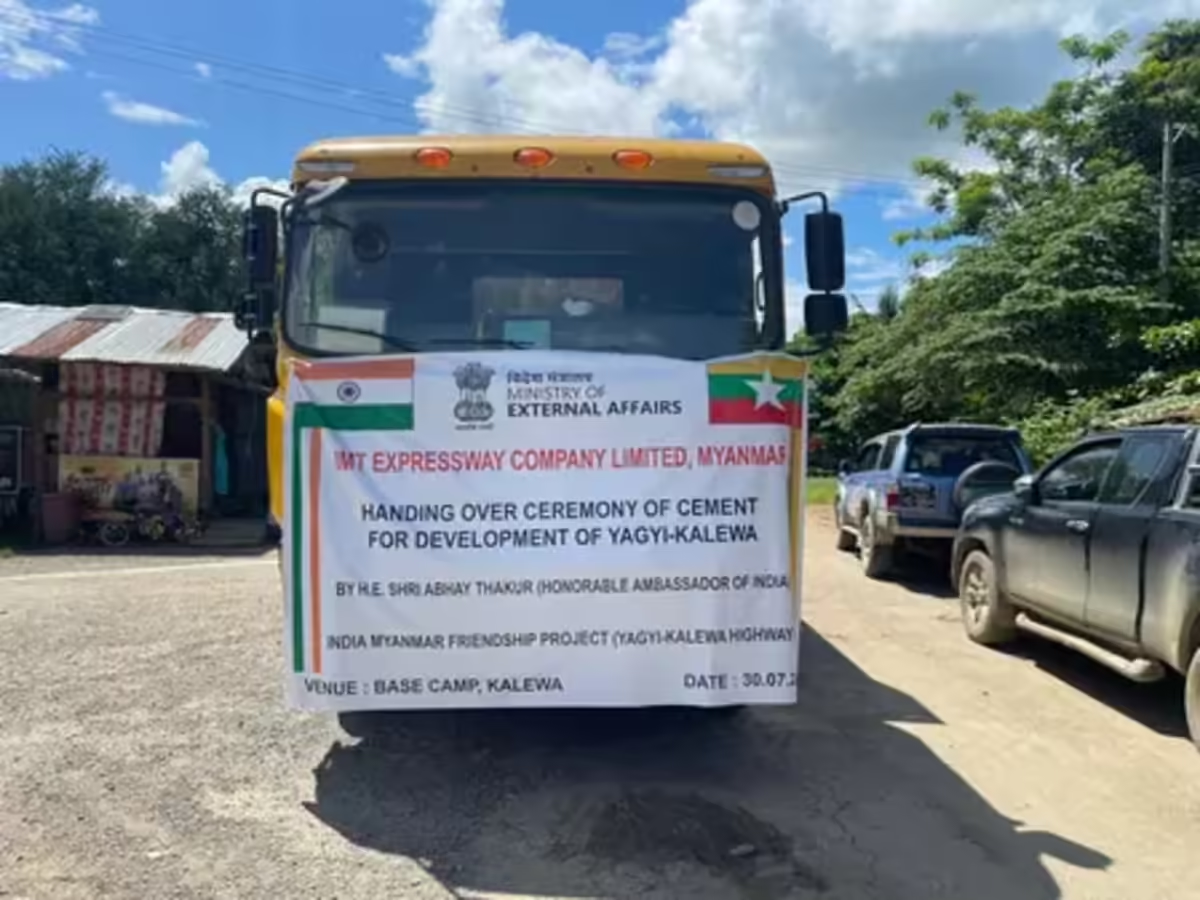
India is actively advancing its strategic connectivity initiatives in Southeast Asia, with its Ambassador to Myanmar, Abhay Thakur, recently reviewing progress on the Kalewa-Yagyi road project, a crucial segment of the India-Myanmar-Thailand (IMT) trilateral highway. This ongoing development underscores India’s unwavering commitment to enhancing regional trade, fostering deeper economic integration, and strengthening diplomatic ties. The highway project is a cornerstone in building a more sustainable and interconnected Asian landscape, facilitating cross-border movement of goods and people.
The 1,360-kilometre-long India-Myanmar-Thailand Trilateral Highway is a monumental undertaking aimed at creating seamless physical connectivity across three nations. India is specifically responsible for the construction of two vital sections within Myanmar: the 120.74-kilometre Kalewa-Yagyi road and 69 bridges along the 149.70-kilometre Tamu-Kyigone-Kalewa (TKK) road section. Ambassador Thakur’s recent visit to Kalemyo, where he engaged with project construction teams and local communities, signifies the diplomatic and operational momentum behind this ambitious infrastructure project, highlighting its human impact on regional populations.
Prime Minister Narendra Modi has consistently underscored the strategic importance of the IMT Trilateral Highway, particularly its potential to provide direct access from Myanmar to Thailand, and subsequently strengthening India’s connectivity with Vietnam and Laos. This enhanced connectivity is expected to significantly boost India’s trade with ASEAN countries, which currently stands at approximately $125 billion and is projected to exceed $200 billion in the coming years. The northeastern states of India are poised to play a pivotal role, serving as a strategic trade bridge and gateway to the dynamic Southeast Asian markets, fostering equitable economic growth in previously underserved regions.
Beyond the trilateral highway, India is also expediting the Kaladan Multimodal Transit Project, a critical initiative designed to link the Kolkata Port to Myanmar’s Sittwe Port, providing a vital trade route through Mizoram. This project is set to substantially reduce the travel distance between West Bengal and Mizoram, thereby enhancing trade flows and stimulating industrial growth in the region. Such multimodal connectivity initiatives are essential for creating efficient, low-carbon logistics corridors, aligning with the vision for sustainable and eco-friendly trade networks by reducing reliance on road transport.
Recent high-level discussions, including those between Prime Minister Modi and his Thai counterpart Paetongtarn Shinawatra in Thailand, have reinforced the mutual commitment to enhancing all modes of connectivity – physical, digital, and financial – between India and Thailand. These dialogues specifically emphasised expediting the IMT Trilateral Highway and its eastward extension, alongside the India, Myanmar, and Thailand Motor Vehicles Agreement. Efforts are also underway to strengthen regional maritime connectivity through coastal shipping and port-to-port connections, and to enhance air connectivity, ensuring a comprehensive approach to regional integration that benefits all citizens.
This concerted push for enhanced connectivity is not merely about trade; it is about fostering greater people-to-people exchanges, promoting cultural understanding, and creating a more integrated and prosperous Indo-Pacific region. By investing in resilient infrastructure and streamlining cross-border movement, India is contributing to a future where economic growth is inclusive, environmental impact is minimised, and opportunities are equitably distributed across the region, paving the way for truly sustainable urban and rural development.
Also Read: Punes Mid‑Range Homes Demand Triples As 32,800Cr Sales In H1 2025
