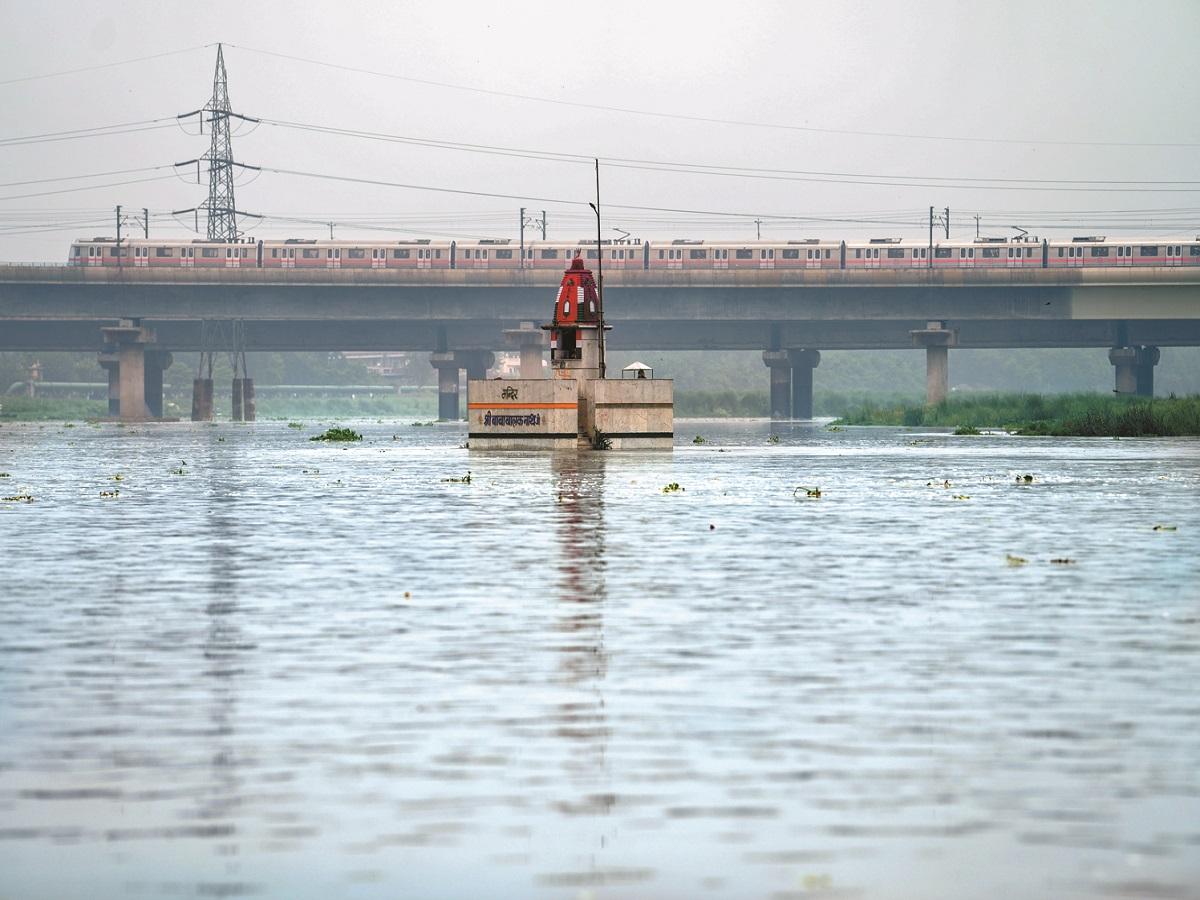
Delhis Yamuna Water Level Nears Warning Mark After Barrage Discharge
Delhi’s Yamuna river has seen a notable increase in its water level, drawing close to the warning threshold following significant water discharge from Haryana’s Hathnikund Barrage. This development highlights the critical interplay between upstream water management and urban resilience, underscoring the continuous need for comprehensive strategies to manage river systems within the context of rapidly growing, sustainable, and equitable cities. Authorities are closely monitoring the situation as water flow dynamics impact millions in the capital region.
The water level at Delhi’s Old Railway Bridge reached 204.14 meters on Wednesday afternoon, just shy of the 204.5-meter warning level, though it dipped slightly later that evening. The danger level for this key monitoring point is 205.33 meters.Historically, the Yamuna recorded its highest level at 208.66 meters during the 2023 floods, surpassing the 1978 flood level of 207.49 meters. This season’s first major discharge from Hathnikund Barrage saw over 50,000 cusecs released for nearly five hours, peaking at 54,707 cusecs on Tuesday morning.
Experts note that while the current rise is natural for the monsoon season and not immediately indicative of a flood alarm, it does reveal underlying concerns. Yamuna activist Bhim Singh Rawat highlighted that the river reaching close to the warning level with relatively low discharges suggests a gradual increase in the riverbed height due to siltation and continued floodplain encroachment. This phenomenon reduces the river’s carrying capacity, making the city more vulnerable to elevated water levels even from moderate flows, directly impacting urban infrastructure and the vision of climate-resilient cities.
To maintain a healthier and safer Yamuna, experts advocate for increased monsoon flows to facilitate groundwater recharge and flush out accumulated pollutants. The Irrigation and Flood Control Department’s historical data indicates the warning level at the Old Railway Bridge has been crossed 53 times since 1962. Current flood control protocols dictate a first warning at 1 lakh cusecs discharge from Hathnikund, a second at 3 lakh cusecs, and a third at 5 lakh cusecs, underscoring a structured, albeit continuously challenged, approach to managing the river’s dynamic flow for Delhi’s safety.