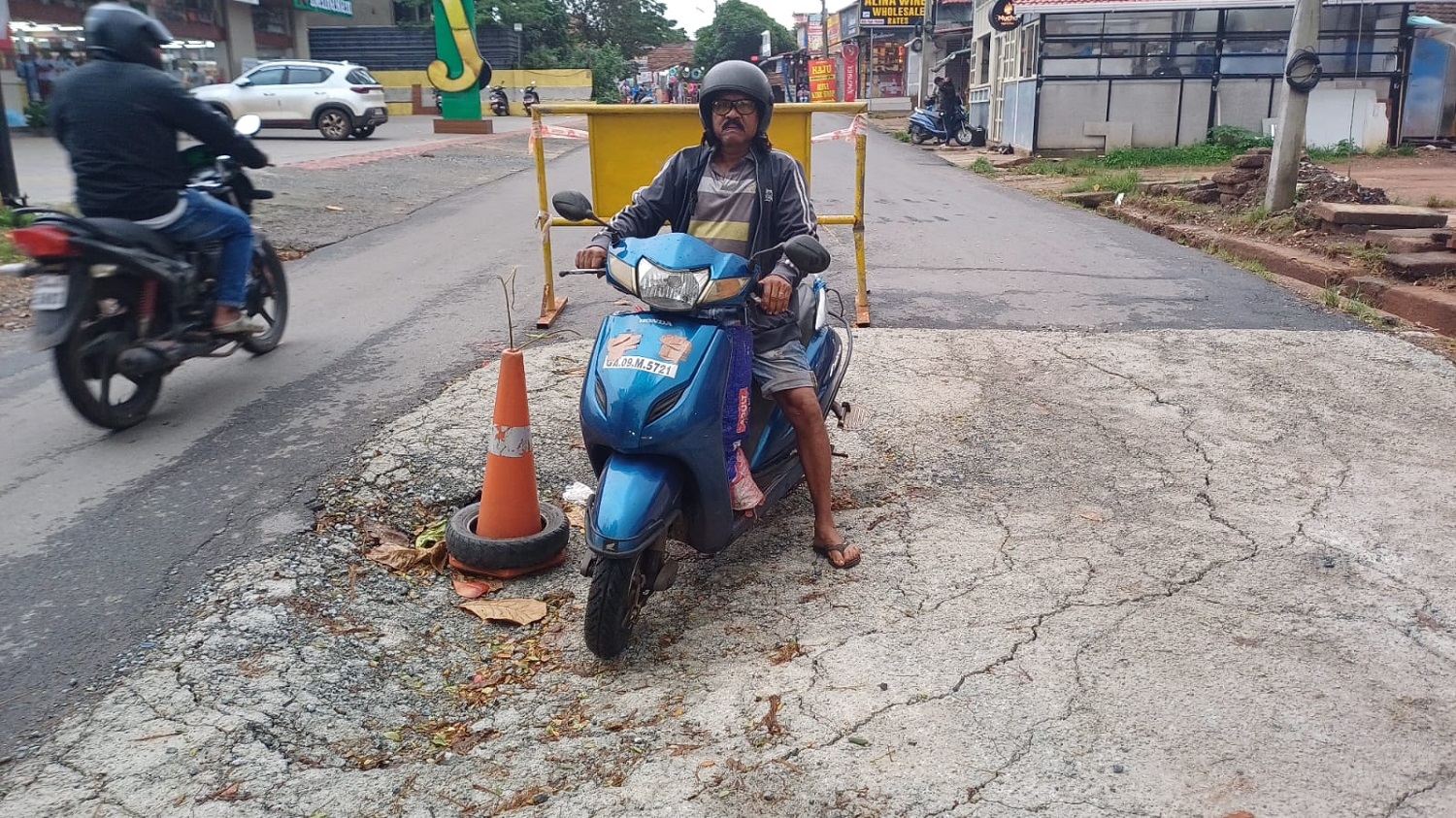
Colva Road Cave-In Sparks Chaos, Raises Safety Alarm For Commuters
A major road connecting Madel and Fatorda caved in early Thursday, disrupting traffic and pedestrian movement in South Goa’s busiest residential and transit corridor. The collapse affected a crucial link between the Margao-Colva road and the KTC bus stand, paralysing public mobility during peak morning hours. Authorities rushed to cordon off the area and divert traffic, but locals faced long detours and delays, prompting renewed scrutiny over urban infrastructure neglect in the coastal city.
Initial inspections by officials revealed multiple utility lines—water, sewage, and gas pipelines—beneath the road’s surface, complicating investigations into the cause of the sudden collapse. Experts suspect a possible pipeline breach or structural failure triggered by monsoon infiltration. Emergency crews were seen pumping rainwater from the crater as intermittent showers hampered progress. The surrounding road remains unstable, raising further fears among residents, who claim earlier complaints about its poor condition went unaddressed by local agencies. The affected zone is not only a lifeline for daily commuters but also passes through densely packed residential neighbourhoods and commercial units. The sudden disruption highlights broader concerns about Goa’s ability to maintain critical civic infrastructure under the stress of urbanisation and climate volatility.
According to civic officials, the area had undergone excavation for chamber installations, which may have weakened the road’s load-bearing capacity. With traffic redirected to narrow internal roads, emergency vehicles and public transport have also faced bottlenecks, worsening daily travel for thousands. Residents have voiced frustration over repeated delays in preventive repairs and a general lack of accountability. Many argue that poorly coordinated development works and insufficient environmental planning are undermining urban safety in South Goa. Activists have also drawn attention to the lack of regular road audits and poor drainage designs in rain-prone zones, calling for stricter oversight and sustainable engineering solutions. The current failure has added urgency to the demand for better civic transparency, resilient planning, and more eco-sensitive infrastructure policies.
Local authorities have promised that emergency repairs will be prioritised to restore the road. However, the incident underscores deeper flaws in urban governance—where reactive measures often replace long-term planning. Ensuring safe, climate-resilient, and accessible public roads must become a shared priority across departments. With monsoons only intensifying, civic planners in Goa and beyond are being urged to strengthen inspection protocols and adopt smart urban repair systems that balance development with environmental foresight.