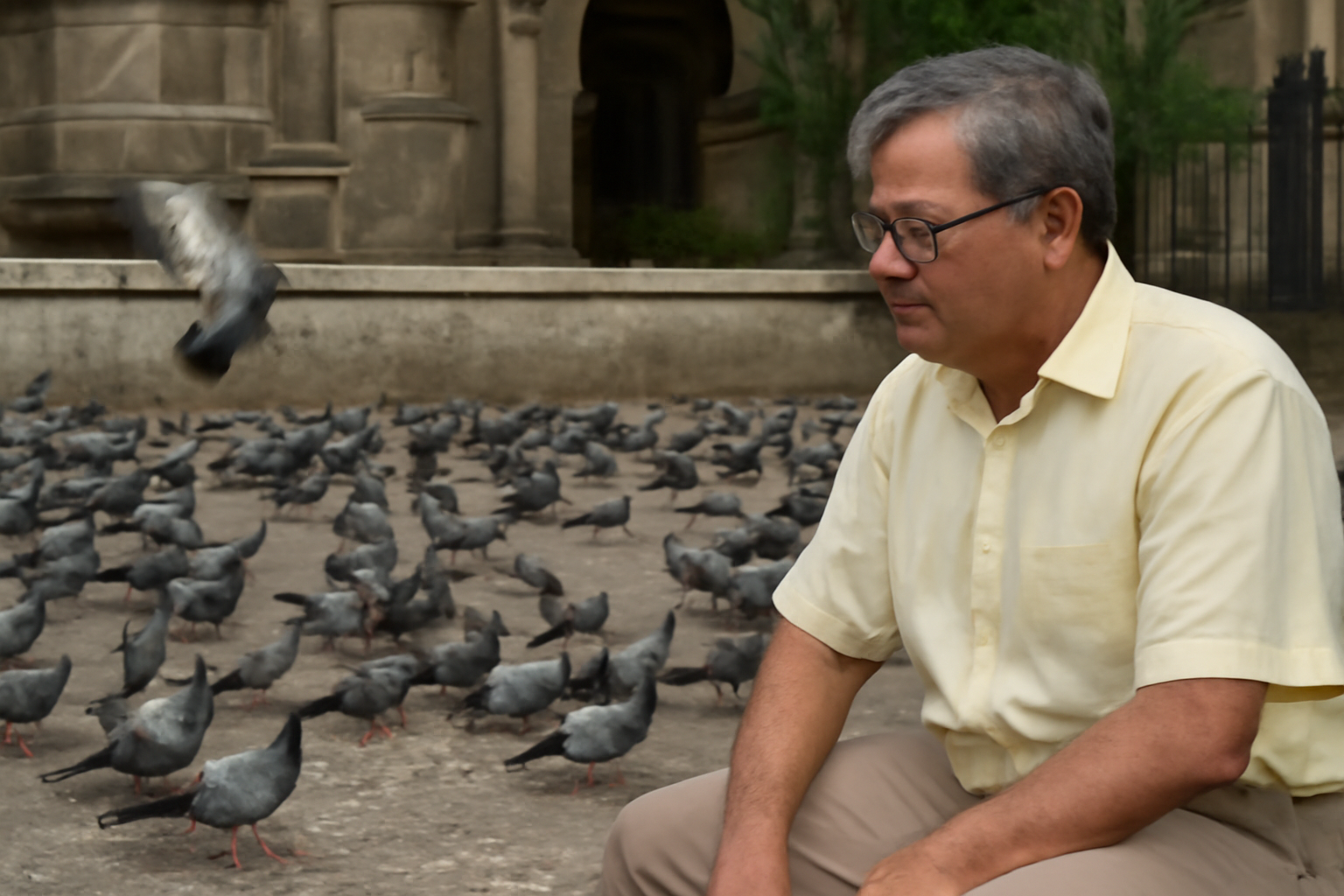
Bombay HC Calls for Action on Pigeon Droppings Health Risk
The Bombay High Court has raised alarm over the health risks posed by pigeon droppings, following a series of ongoing disputes concerning the closure of pigeon feeding enclosures, known as kabutarkhanas, in Mumbai. With mounting concerns about public health, particularly respiratory illnesses, the court has called for crucial medical data to assess the impact of pigeon congregation on citizens’ health.
As the legal battle over the future of these enclosures intensifies, the court’s intervention signals a growing awareness of the grave consequences pigeon droppings may have on public health. On Thursday, the bench, led by Justices Girish Kulkarni and Arif Doctor, reviewed the matter and called for urgent medical data from hospitals across Mumbai. This includes information on patients from all age groups suffering from respiratory illnesses linked to pigeon droppings. The court has specifically directed the BMC to compile and submit the relevant statistics from both private and government hospitals to assess the extent of the problem. As the justices noted, while this may not qualify as a pandemic, it could very well be an epidemic that demands immediate attention.
The health risks associated with pigeon droppings have long been documented, with the potential for severe respiratory conditions such as histoplasmosis, cryptococcosis, and psittacosis. These illnesses can lead to long-term lung damage and other serious health problems, particularly for children, the elderly, and individuals with compromised immune systems. The Bombay HC’s decision to extend interim protection on the demolition of kabutarkhanas, which had been suspended earlier this month, reflects the urgency of balancing public health concerns with the interests of animal welfare groups. In a noteworthy development, the court has requested the expert opinion of Dr Sujeet Rajan, a consultant pulmonologist at Bombay Hospital, who had previously advised on similar issues in a 2018 case. Dr Rajan’s insights will be crucial in understanding the medical implications of pigeon droppings and providing guidance on mitigating health risks. His professional evaluation will further support the court’s call for preventive measures to safeguard public health while addressing the needs of Mumbai’s animal lovers, who have filed petitions to protect the city’s pigeons and kabutarkhanas.
The petitioners, who argue that the BMC’s demolition activities have violated animal rights and the Prevention of Cruelty to Animals Act, 1960, have highlighted the lack of legal backing for the municipal body’s actions. Their opposition centres around the claim that the BMC is acting arbitrarily by demolishing the enclosures without proper legal justification, thereby threatening the welfare of the pigeons that rely on them. Amid these legal deliberations, the court has also taken a stern view of the BMC’s alleged use of firecrackers to scare pigeons away from kabutarkhanas. The practice has been condemned as both inhumane and ineffective. The bench ordered an immediate cessation of this practice, urging the municipal corporation to explore more sustainable and humane alternatives to deal with the growing pigeon population. In a poignant addition to the case, a petition filed by Anant Pai, the son of the late senior advocate Ratnakar Pai, brought forward the personal tragedy of a lung disease allegedly caused by prolonged exposure to pigeon droppings. This real-life example provided an emotional and compelling argument to the court, underlining the direct health hazards of pigeon congregation in densely populated urban areas like Mumbai.
As the case moves forward, the Bombay High Court’s decision to prioritise human health, while considering the welfare of both animals and citizens, reflects a nuanced approach to urban sustainability. The outcome of this case could have broader implications for the management of urban wildlife, as cities like Mumbai grapple with the delicate balance between maintaining ecological diversity and protecting the health of its residents. The Bombay High Court’s involvement in the kabutarkhana demolition issue underscores the growing intersection between urban planning, public health, and animal welfare in India’s bustling cities. With its recent decision to seek expert medical advice and data, the court is taking a step towards ensuring a sustainable and healthy urban environment for all Mumbaikars.