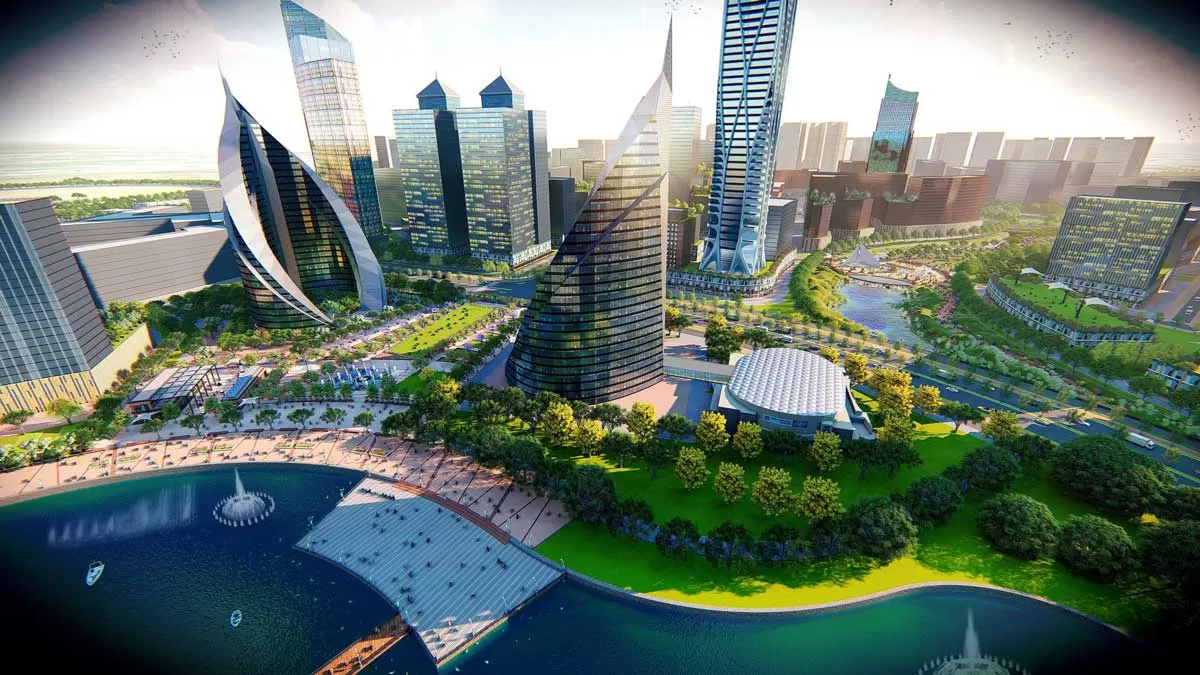
Raipur Metro Corridor Aims To Reshape Capital Region Into Connected Green Zone
In a bid to boost public mobility and address mounting urban congestion, the Chhattisgarh government has cleared the decks for a metro rail corridor connecting Raipur and Durg. Envisioned as the backbone of a proposed State Capital Region, the project aims to integrate Raipur, Nava Raipur, and Bhilai into a seamless urban transit zone. Officials say the corridor will not only facilitate sustainable growth but also unlock a new era of climate-smart urban development.
The State Capital Region (SCR) blueprint reflects a broader shift in urban planning, inspired by Delhi’s National Capital Region (NCR). Authorities have emphasised that the Raipur–Durg metro is not just a transport project, but a strategic initiative to reimagine mobility, infrastructure, and liveability across the region. With a projected population exceeding 50 lakh by 2031, the metro aims to serve as a high-capacity, low-emission alternative to private vehicles. Urban experts have pointed to the corridor’s potential in reducing road stress, improving air quality, and making the city more equitable by improving access to jobs and essential services. To get the plan underway, the state has earmarked ₹5 crore in its 2024–25 budget for a feasibility study. This will assess the operational and financial viability of introducing a light metro system. In August 2024, the Raipur Municipal Corporation signed a pact with Russia’s Ministry of Transport to explore light metro options, indicating the state’s global approach to sustainable infrastructure.
The emphasis on a light metro points to Chhattisgarh’s preference for cost-effective, energy-efficient mobility models suited for tier-2 Indian cities facing fast-paced urbanisation. The Capital Region Development Authority (CRDA) will act as the nodal body for metro planning and implementation. Officials confirm the CRDA will manage land use, infrastructure coordination, and environmental approvals, ensuring that the metro doesn’t just cut across urban sprawl but is embedded in a larger vision of inclusive and eco-friendly growth. The authority’s remit includes encouraging transit-oriented development, safeguarding green spaces, and streamlining investments that prioritise resilience over concrete expansion. To ensure that the project is financially sustainable, the CRDA will be empowered to raise funds through a dedicated infrastructure cess. Annual budgets, regulatory measures, and transparent reporting mechanisms will be central to its functioning. Experts say this marks a decisive step towards decentralised, accountable governance in public transport systems.
If implemented as planned, the Raipur–Durg metro could become a model for other emerging Indian cities grappling with urban sprawl, traffic bottlenecks, and carbon footprints. In the context of climate change and rising inequality, Raipur’s metro push signals a much-needed transition to people-first infrastructure. Rather than treating mobility as an isolated issue, the metro plan integrates housing, employment, and environmental health into one transport ecosystem. As Indian cities continue to battle gridlock and pollution, projects like these could define the next chapter in equitable and sustainable urbanisation.