


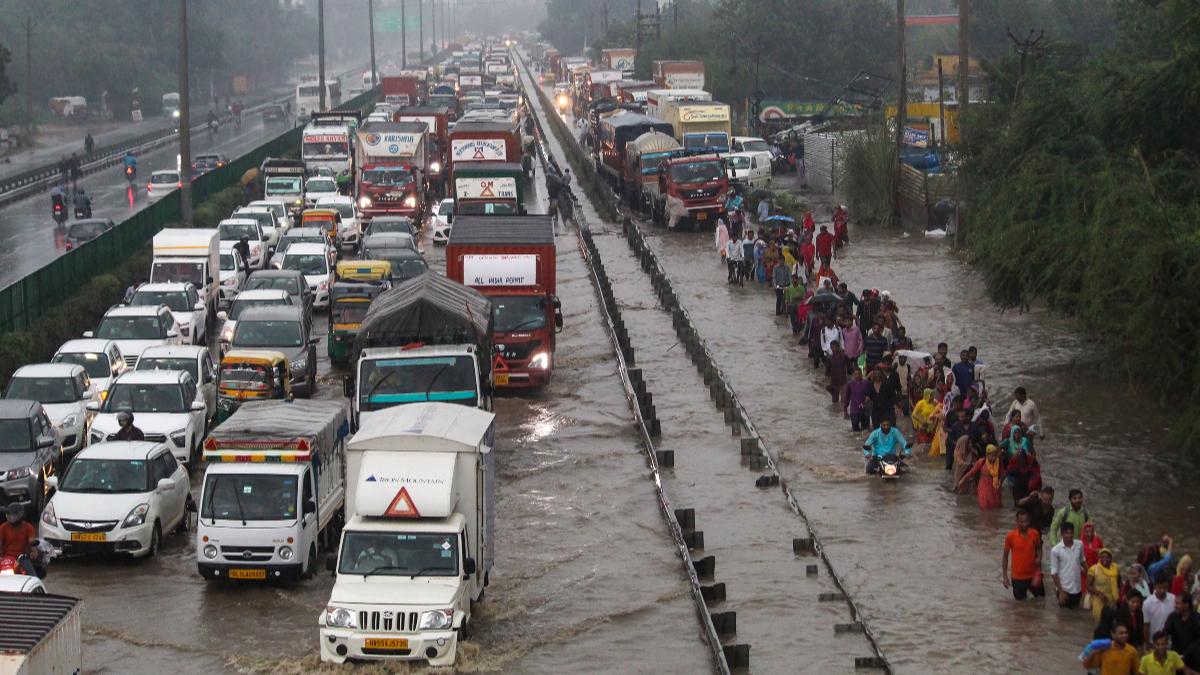
Delhi and the National Capital Region (NCR) woke up to a deluge this Wednesday, as relentless monsoon rains caused widespread disruption, exposing the vulnerabilities of the urban infrastructure. Heavy showers led to significant waterlogging across key arterial roads and residential areas, triggering massive traffic snarls that stranded thousands of commuters for hours. The India Meteorological Department (IMD) had earlier issued an orange alert for the region, indicating a high likelihood of continued heavy rainfall throughout the day, prompting concerns about further civic paralysis.
The morning’s downpour was a stark reminder of Tuesday’s intense, albeit brief, rain spell that similarly brought parts of the capital to a crawl. The recurring nature of these disruptions during the monsoon season has become a predictable, yet frustrating, hallmark for Delhi-NCR residents. Visuals from various parts of the city depicted vehicles wading through knee-deep water and long queues of traffic, painting a grim picture of daily life amidst the intensifying monsoon.
The impact of the heavy rainfall extended beyond Delhi’s immediate boundaries, with several parts of the wider NCR, including Noida, also experiencing significant disruption. The consistent challenge of waterlogged streets and choked traffic arteries during the monsoon season underscores a critical need for enhanced urban resilience. Cities like Delhi, with their rapidly expanding populations and built-up areas, require robust and forward-thinking infrastructure solutions to mitigate the effects of extreme weather events, which are becoming more frequent due to climate change.
In a parallel development, Mumbai, another major Indian metropolis, also continues to battle intense monsoon conditions. The IMD has issued an orange alert for several districts in Maharashtra, including Mumbai, Raigad, Thane, Ratnagiri, Sindhudurg, and Palghar. The severity of the downpour in Mumbai prompted the Traffic Police to close key thoroughfares like the Andheri Subway, highlighting a shared struggle faced by India’s largest urban centres in managing monsoon-induced challenges. This widespread impact underscores a national imperative for sustainable urban planning that prioritises efficient drainage, green infrastructure, and climate-resilient designs to safeguard urban populations.
Data from the IMD reveals that Delhi’s primary weather station at Safdarjung recorded 8.8mm of rainfall on Tuesday, while Ridge in North Delhi received a more significant 22.4mm. Despite these figures, Delhi’s overall rainfall for July, at 136.3mm so far, remains below its monthly average of 209.7mm. However, the intensity of isolated heavy spells, rather than cumulative figures, appears to be the primary cause of urban distress, highlighting a deficiency in stormwater management systems designed for such concentrated precipitation. Addressing this recurring civic challenge necessitates substantial investment in climate-adaptive infrastructure and a holistic approach to urban development that integrates environmental sustainability with equitable access for all.
Also Read :Himachal Pradesh Faces Severe Disruptions Amidst Heavy Rainfall and Flooding
