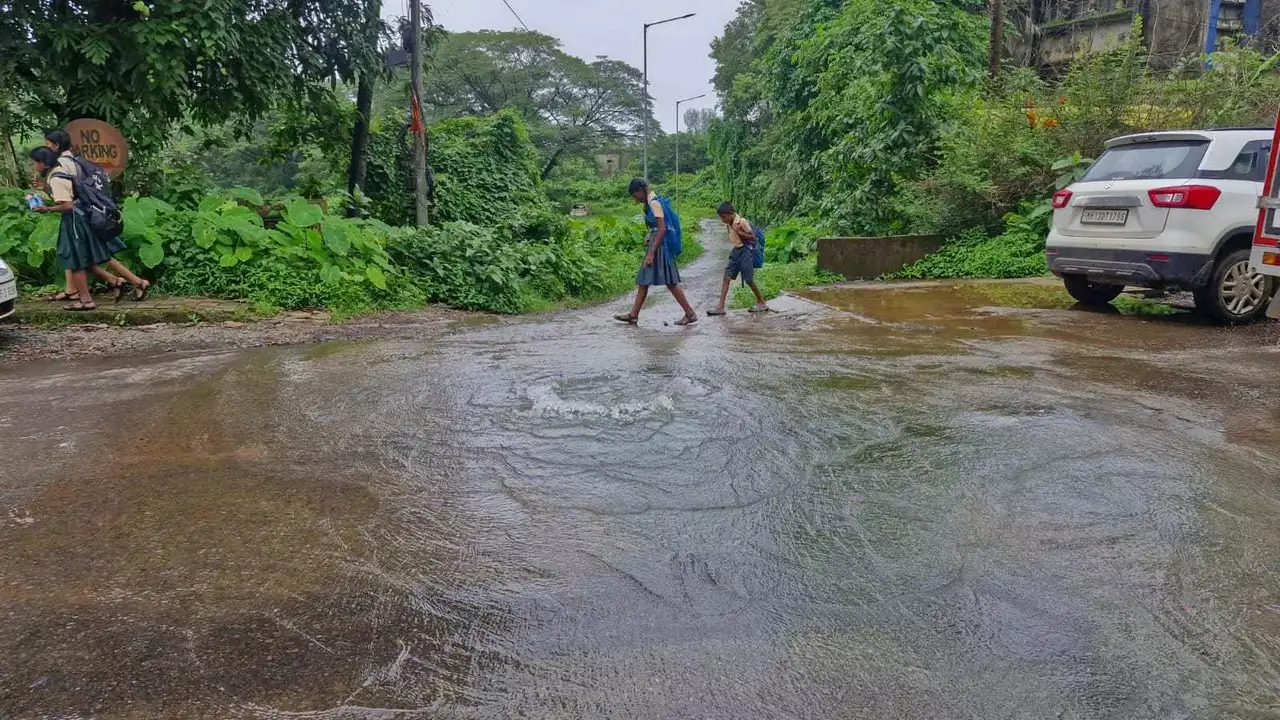
Curchorem Roads Crumble as Rainwater Floods Unfinished Sewer Chambers
Overflowing manholes and inspection chambers across Curchorem are exposing major flaws in the town’s ongoing underground sewerage project. Despite being incomplete and not yet commissioned, the network is flooding during monsoons, triggering severe inconvenience and renewed questions about the quality of construction and civic planning. Residents are demanding accountability as the heavy rain continues to turn roads into dangerous stretches, marred by overflowing sewage and poor drainage integration.
Curchorem’s long-awaited underground sewerage project, active for nearly three years, was pitched as a transformative civic upgrade. However, its delayed completion and chaotic execution have drawn sustained public criticism. With roads dug up haphazardly for pipeline laying, commuters have battled poor road conditions for months. Now, the monsoon has added a new layer of distress, as the system—yet to be formally launched—has begun to flood at multiple inspection points, with some overflowing like fountains. Local residents argue that this points to major technical or design oversights in the infrastructure rollout. Experts suggest that the sewerage lines may lack proper gradient planning or sealing, causing rainwater to infiltrate inspection chambers and manholes. Normally, an uncommissioned system should remain dry and disconnected from the main stormwater flow.
However, visual evidence across Curchorem suggests otherwise. Roads in low-lying areas are particularly vulnerable, with standing water mixing with sewage in several zones. The lack of stormwater integration and poor soil compaction around trenches also appear to have compounded the situation. In response, civic officials have maintained that the project is in its final phase and minor inconveniences are to be expected. But frustrated locals and road users find these explanations inadequate, especially as traffic disruptions persist. Some roads remain patchy or barely navigable, with stagnant water threatening two-wheeler riders. Calls for an independent safety audit and on-ground quality inspection are growing. Environmentalists are also raising concerns about untreated sewage mixing with rainwater runoff and contaminating nearby water bodies.
The broader question is whether such infrastructure projects are being built with resilience in mind. As India’s cities confront rising urban rainfall and increased flooding events, integrated planning between sewerage, stormwater, and roadworks is essential. The Curchorem case could serve as a lesson in how incomplete or sub-standard execution can unravel even ambitious schemes. Public trust will only return when civic agencies ensure transparent timelines, technical diligence, and stronger contractor accountability.