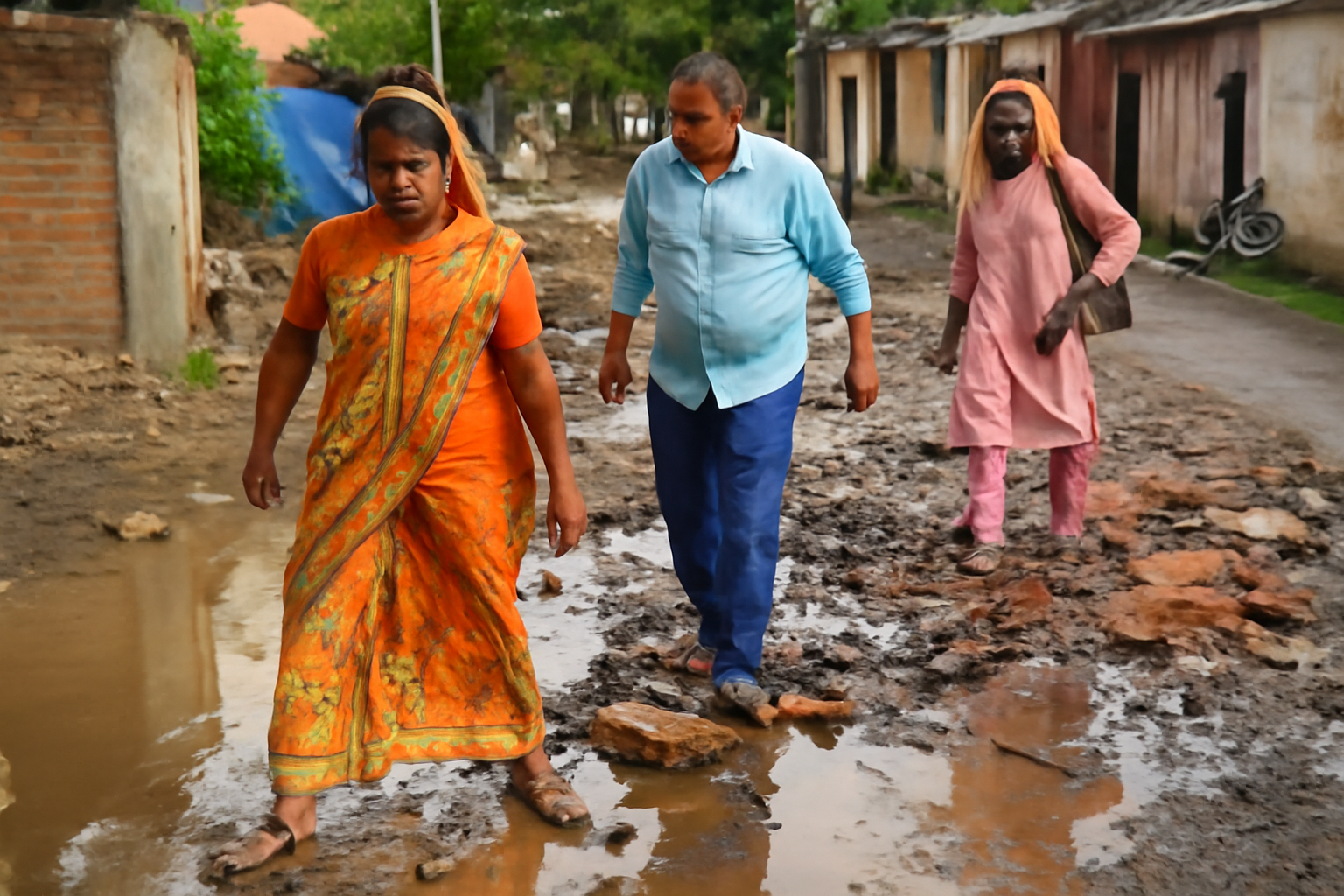
Nagpur Residents Struggle with Poor Road Conditions
Nagpur’s residents, particularly in the city’s southern and northern regions, continue to endure deplorable road conditions that show little sign of improvement, despite the Nagpur Improvement Trust’s (NIT) recent attempt to address the issue. On Tuesday, the NIT published tenders for road patchwork and repairs worth over Rs57 lakh across both authorised and unauthorised layouts.
However, the ongoing waterlogging and lack of basic infrastructure remain a grim reality for many citizens. The NIT has allocated Rs20.15 lakh for road repairs and patchwork in South Nagpur and Rs37.49 lakh for similar work in North Nagpur. The projects will span six months, aiming to fix damaged roads with metal and murum (gravel). While this move was anticipated to bring some relief, residents are already expressing doubts about the efficacy of these repairs, citing the repetitive nature of such initiatives without substantial progress on the ground. In the Swami Nagar area of Nari, North Nagpur, the situation is dire. “Khup traas aahe bhau (It’s too much trouble). Water has entered our homes. Children can’t go to school. It’s become impossible to step out,” shared a local resident, emphasising the severity of the issue. The flooded streets reflect not just poor civic planning but also the continued apathy of the authorities, even after multiple allocations for repairs in the past.
Despite the recurring expenditure on these repairs, residents are questioning the efficacy of these efforts. Former Corporator from North Nagpur has raised concerns over the utility of the recurring tenders, pointing out that similar tenders amounting to Rs1 crore were floated previously, yet tangible improvements remain scarce. He further criticised the system that allows builders to sell plots in unauthorised layouts and leave residents without proper development. “There are over 1,900 layouts now, of which only 572 have been legalised. What about the rest? These layouts must be rehabilitated and granted permanent status,” the former corporator stated, calling for urgent reform in NIT’s approach. Another persistent issue is the lack of accountability within NIT. A senior official at NIT acknowledged that only about 10% of residents in authorised layouts are paying development charges, severely hampering the agency’s ability to provide essential services like roads, drainage, and waste management. This low participation rate makes it nearly impossible to implement comprehensive infrastructure improvements across the city.
Moreover, many parts of North Nagpur, including layouts under Prabhag areas, still suffer from a lack of roads and basic services. A large number of residents are living in conditions devoid of proper drainage systems, with waterlogging being a frequent issue. These conditions not only impact daily life but also contribute to an overall sense of neglect by the authorities responsible for civic welfare. The recurring failures in improving Nagpur’s infrastructure raise questions about the efficiency of urban planning and the prioritisation of development in the region. While the NIT’s fresh tenders are a step toward addressing the issue, the question remains: how long will residents have to endure the apathy of the authorities before substantial, lasting changes are made?
As Nagpur continues to grapple with poor roads, waterlogging, and inadequate infrastructure, it is evident that piecemeal solutions and tenders are not enough. The city needs a comprehensive, sustainable urban development plan that addresses the needs of all its residents, both in authorised and unauthorised layouts. Until such a plan is put into action, the ongoing cycle of discontent and frustration is likely to persist.