


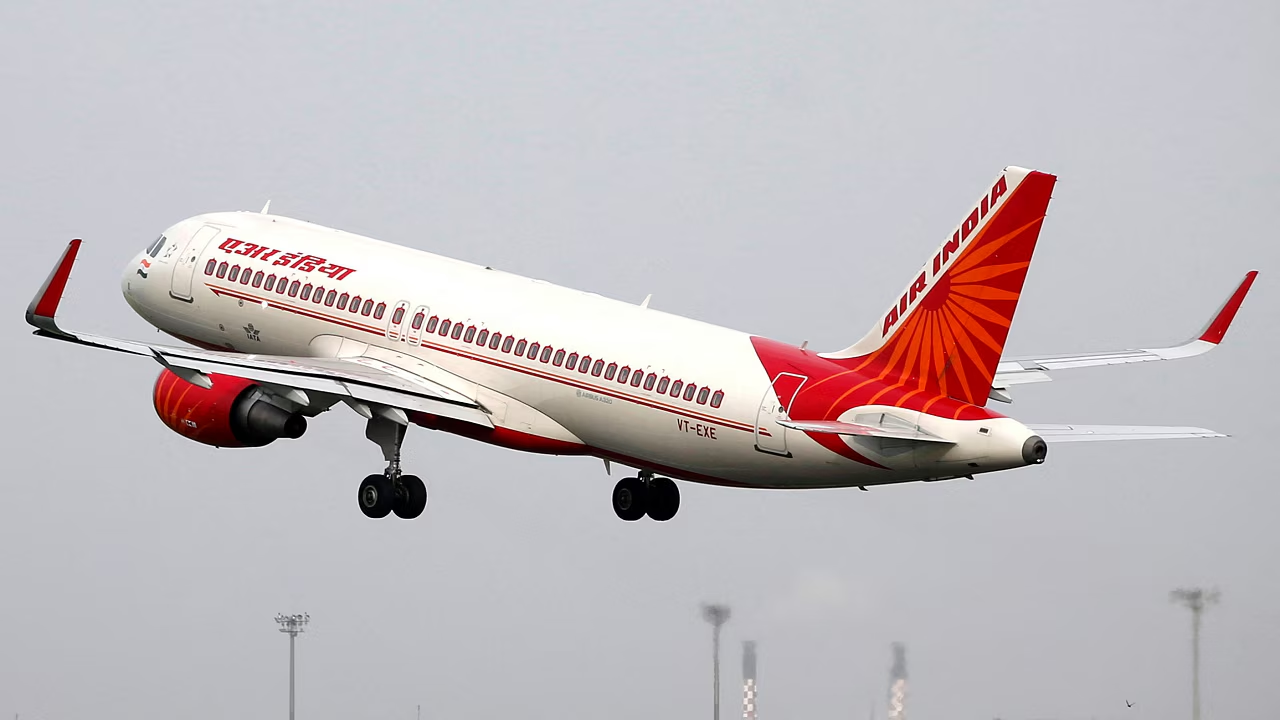
Chhatrapati Shivaji Maharaj International Airport (CSMIA) on Monday when an Air India flight from Cochin veered off the primary runway during a monsoon landing. While all passengers and crew disembarked safely, the event inflicted substantial damage upon the aircraft and the runway itself, leading to widespread operational disruptions and underscoring the critical imperative for robust urban transport infrastructure amidst challenging meteorological conditions.
The Air India flight AI-2744, an Airbus A320-251N aircraft registered as VT-TYA and operating from the Vistara fleet, executed a hard landing at CSMIA at approximately 9:27 AM, subsequently experiencing a runway excursion. This incident resulted in considerable damage to the aircraft’s wings, tyres, and the outer casing of its engine, necessitating its immediate grounding for comprehensive inspection and repair. Crucially, no injuries were reported among the passengers or crew, who were safely disembarked after the aircraft taxied to its designated gate.
Also Watch: “Mumbai will rock, shine and always be India’s best city to live.” In an exclusive, MHADA CEO Sanjeev Jaiswal (IAS) talks about Mumbai’s enduring charm, livability, and the government’s focus on making it affordable for all
The unforeseen deviation also caused minor cracks on the airport’s primary runway, 09/27, compelling authorities to promptly close it for essential repairs. All flight operations were consequently rerouted to the secondary runway, 14/32, triggering a ripple effect of logistical challenges across one of India’s busiest aviation hubs. CSMIA’s emergency response teams were swiftly mobilised to manage the situation, with a spokesperson reiterating the airport’s paramount commitment to safety. This incident, occurring despite the airport’s annual pre-monsoon runway maintenance conducted on May 8th to ensure optimal operational readiness, highlights the dynamic and often unpredictable nature of urban infrastructure management in a climate-vulnerable region.
Air India attributed the runway excursion to heavy rainfall post-touchdown, though specific details regarding the incident’s root cause remain under investigation. While the airline refrained from commenting on actions taken against the flight crew, industry sources indicate that both pilots involved have been de-rostered pending the conclusion of the inquiry. The disruption extended beyond the immediate incident, as Mumbai experienced severe precipitation throughout Monday morning, leading to significant delays and numerous flight cancellations at CSMIA, as tracked by digital flight monitoring services. Airlines, including IndiGo, a major operator from CSMIA, issued travel advisories, urging passengers to verify flight statuses and account for slow-moving ground traffic due to the steady downpour.
This event serves as a poignant reminder of the intricate interplay between urban infrastructure, meteorological phenomena, and the socio-economic fabric of a megacity like Mumbai. Ensuring the uninterrupted functionality of critical transport arteries, particularly airports, is paramount for a city that serves as India’s financial capital and a global gateway. Investing in resilient, climate-adaptive infrastructure and rigorous operational protocols is not merely an economic necessity but a societal imperative, safeguarding the lives and livelihoods of all citizens and ensuring equitable access to vital urban services, thereby contributing to the broader vision of sustainable and future-ready cities.
Also Read: Air India Flight AI 2744 Skids Off Mumbai Runway Amid Rain Today
