


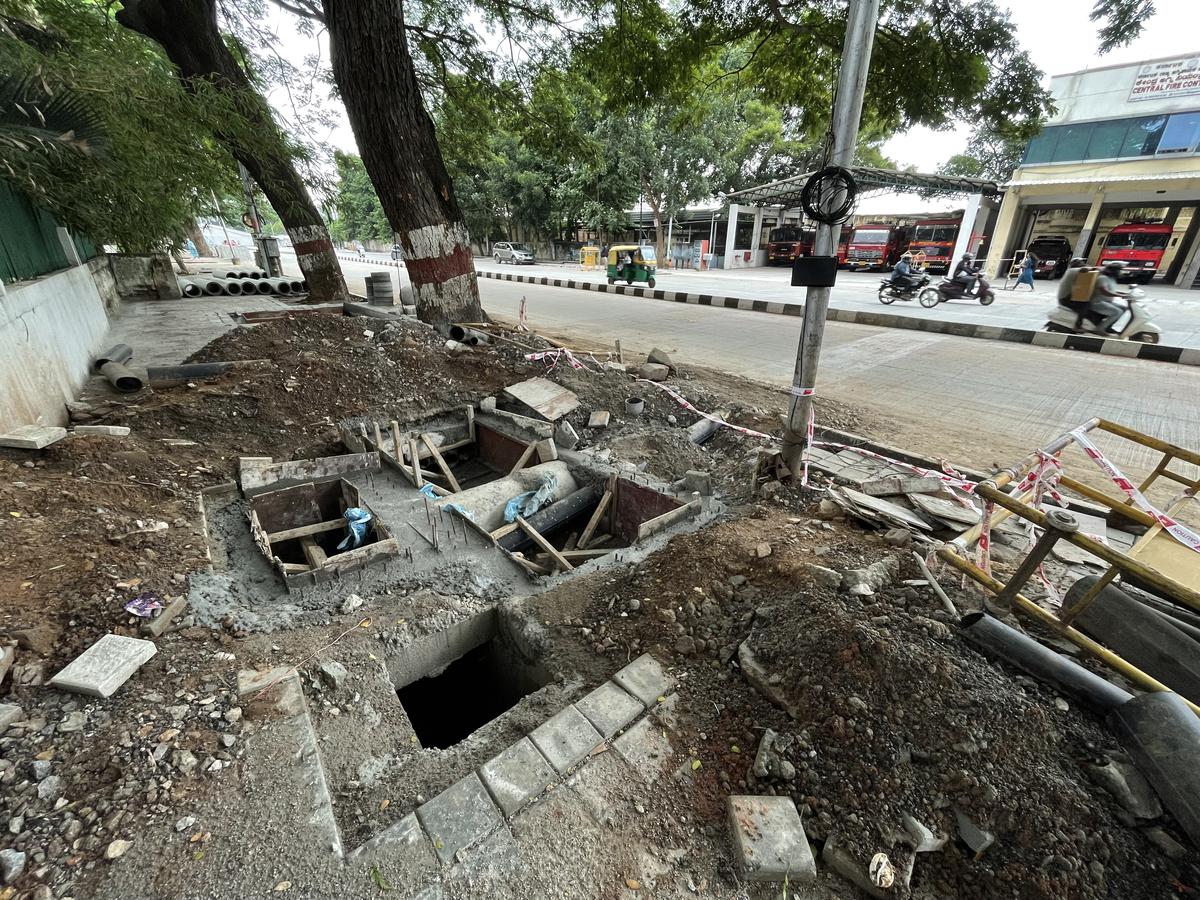
Pune’s Mundhwa locality is at the epicentre of a growing urban crisis, with residents staging a powerful protest against the Pune Municipal Corporation’s (PMC) prolonged apathy towards deteriorating civic infrastructure. Aggrieved by crumbling roads, rampant unregulated construction, overflowing garbage, and escalating traffic chaos, citizens of Venkatesh Flora Township, near Deccan Paper Mills, voiced their profound frustration. This collective outcry underscores the critical need for sustainable urban planning, equitable resource distribution, and effective governance to ensure a liveable and healthy environment for all residents, irrespective of their socio-economic background or location within the city.
The protest, which saw residents from diverse backgrounds including those who relocated from upscale neighbourhoods, highlights a city struggling to cope with rapid urbanisation. The grievances articulated are manifold and severe. Approach roads are riddled with dangerous potholes and construction debris, posing a daily hazard for commuters, particularly two-wheeler riders and the elderly. The pervasive nature of these infrastructural failures not only impedes mobility but also contributes to serious physical injuries, as reported by residents who have suffered falls and debilitating joint pain. This stark reality challenges Pune’s image as a modern, growing metropolis, exposing significant disparities in civic service delivery.
A significant environmental and public health menace in Mundhwa is the unchecked accumulation of garbage. The township’s entrance has become a permanent, overflowing dump, creating an unbearable stench and serving as a breeding ground for mosquitoes, stray animals, and disease vectors. Residents describe living amidst “rot,” where the most basic human dignity is compromised by the unsanitary conditions. The lack of consistent garbage clearance and pest control not only diminishes the quality of life but also escalates the risk of widespread illnesses, directly contradicting the vision of a zero net carbon and eco-friendly city.
Adding to the residents’ woes is the unchecked and often illegal construction activity in the vicinity. Heavy builder trucks and dumpers, frequently exceeding permissible weight limits, are reportedly using narrow residential lanes, causing further damage to already fragile internal roads and exacerbating infrastructure collapse. Accusations of builders illegally dumping construction debris further narrow roads and choke vital drainage systems, leading to increased waterlogging during monsoons. The perceived “complicity” or inaction from the PMC on regulating these activities suggests a governance deficit that undermines orderly urban development and environmental protection.
Furthermore, the newly operational Hadapsar Railway Terminal, intended as a public transport boon, has inadvertently become a logistical nightmare for locals. During peak train arrivals, the entire stretch transforms into a severe bottleneck choked with autos and cabs, rendering emergency vehicle access virtually impossible. This unintended consequence of infrastructure development highlights the critical need for integrated urban planning that anticipates and mitigates potential adverse impacts on local communities. Residents stress the urgent need for comprehensive traffic management solutions to ensure unimpeded access and emergency services.
In response to their multifaceted challenges, the residents have submitted a detailed charter of demands to the PMC and relevant officials. These demands include immediate road resurfacing, pothole filling, installation of traffic signals at key junctions, strict regulation of builder trucks and illegal parking, daily garbage clearance, pest control, enforcement against waste dumping by commercial establishments, and comprehensive traffic management at the Hadapsar Terminal access points. The call for civic safety measures like zebra crossings, ramps, and speed breakers underscores a demand for equitable and gender-neutral urban design. This collective voice represents a crucial step towards fostering a more accountable governance system and achieving truly sustainable, liveable, and equitable cities.
Also Read :Hyderabad Lights Up Nayapul–Charminar Stretch with Rs 8.19 Cr Heritage Illumination Project
