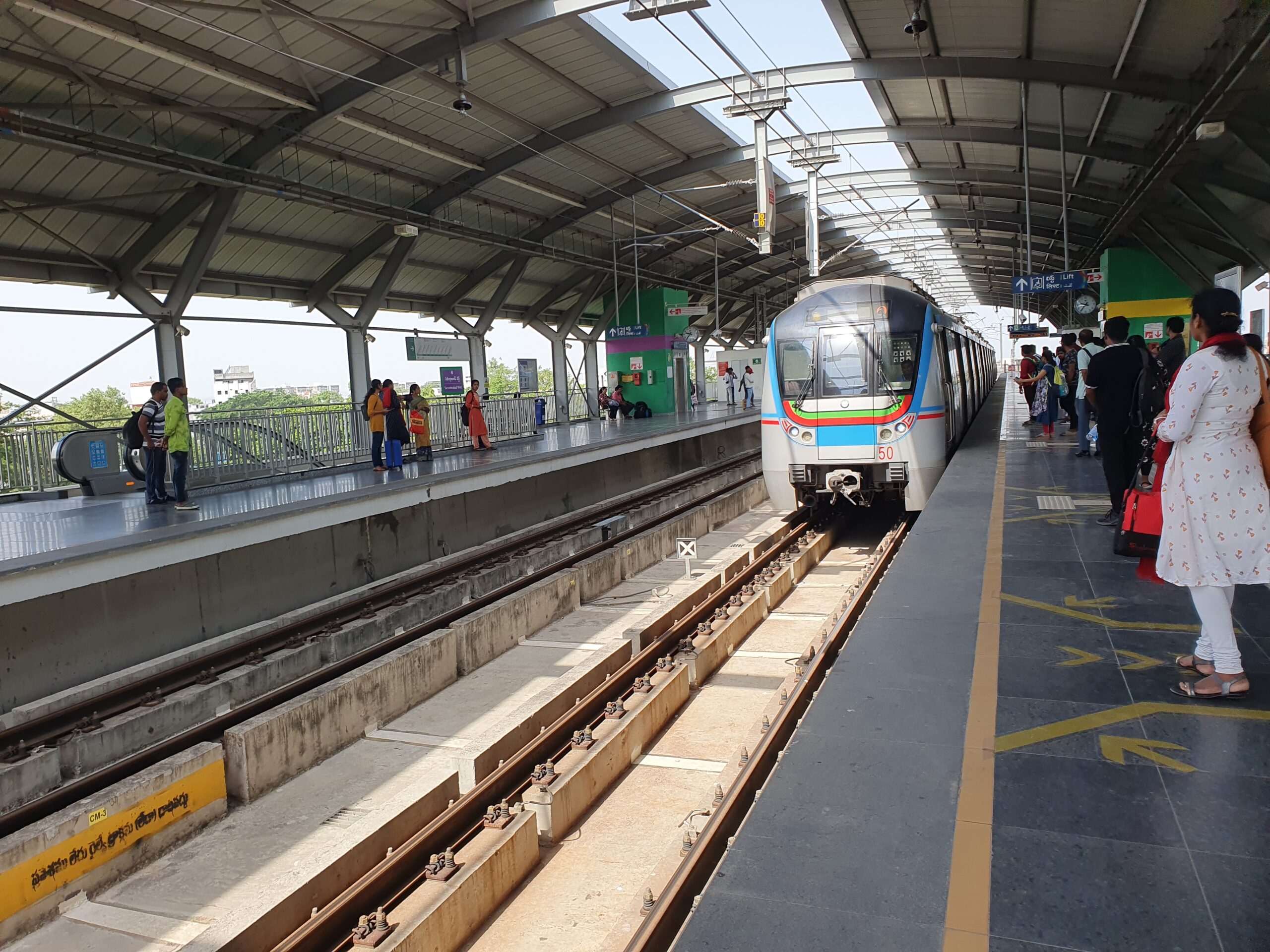
Hyderabad Begins Mapping Utilities For Metro Corridor In Old City
Hyderabad has initiated utility mapping for Phase-II of its Metro Rail Project as part of expanding the Green Line corridor from MGBS to Chandrayangutta in the Old City. Officials from Hyderabad Airport Metro Limited (HAML), the project’s special purpose vehicle, confirmed that road-cutting and non-destructive utility surveys will begin along the 7.5-km Corridor-VI stretch. The underground mapping, which uses ground-penetrating radar technology, aims to identify infrastructure like water pipelines, electricity cables, and drainage systems, ensuring that construction proceeds without disrupting essential public services.
The new alignment cuts through a historically dense and infrastructurally complex region, including the Mir Alam Mandi road and station points named after heritage landmarks like Salarjung Museum and Charminar. Though these names are retained for orientation, the route avoids direct proximity to the sites, maintaining a 500-metre buffer. Road width expansion along the corridor—from the current 60–80 feet to a uniform 100 feet, with 120 feet near stations—is underway. Approximately 1,100 properties will be impacted by the road widening and metro works. HAML has stated that adjustments to pillar locations and construction designs are being made to protect 103 identified religious and heritage structures in the corridor’s path.
The utility survey, scheduled for completion within 30 days once the agency is appointed, marks a critical step in Hyderabad’s infrastructure planning. It ensures technical preparedness, minimises service disruptions, and demonstrates a commitment to data-backed urban development. Metro corridor expansions in older, congested areas often encounter delays due to undocumented utility lines and unplanned civic networks. By initiating mapping early, the city aims to sidestep such issues, offering a replicable model for similar high-density urban projects in Indian cities. This approach blends technological precision with social sensitivity, particularly in heritage zones. HAML officials emphasised that the mapping will help streamline future construction phases, allowing contractors to proceed with confidence and efficiency. Given the cultural and civic complexities of the Old City, the emphasis on non-destructive survey methods and planning ahead is crucial.
By deploying radar-based technologies and involving technical experts, the city hopes to create a synchronised balance between heritage preservation and infrastructure growth. The project also reflects a broader move towards integrating urban rail with existing cityscapes while reducing environmental impact and boosting multimodal mobility. As cities like Hyderabad continue to densify and modernise, sustainable and intelligent planning will be key to inclusive urban transformation. The success of this phase of the Metro project will not only serve as a mobility upgrade for the Old City but also as an urban resilience case study. Prioritising local sensitivities, heritage conservation, and utility integration reflects a mature step in infrastructure governance—one that fosters equity and foresight in development.