


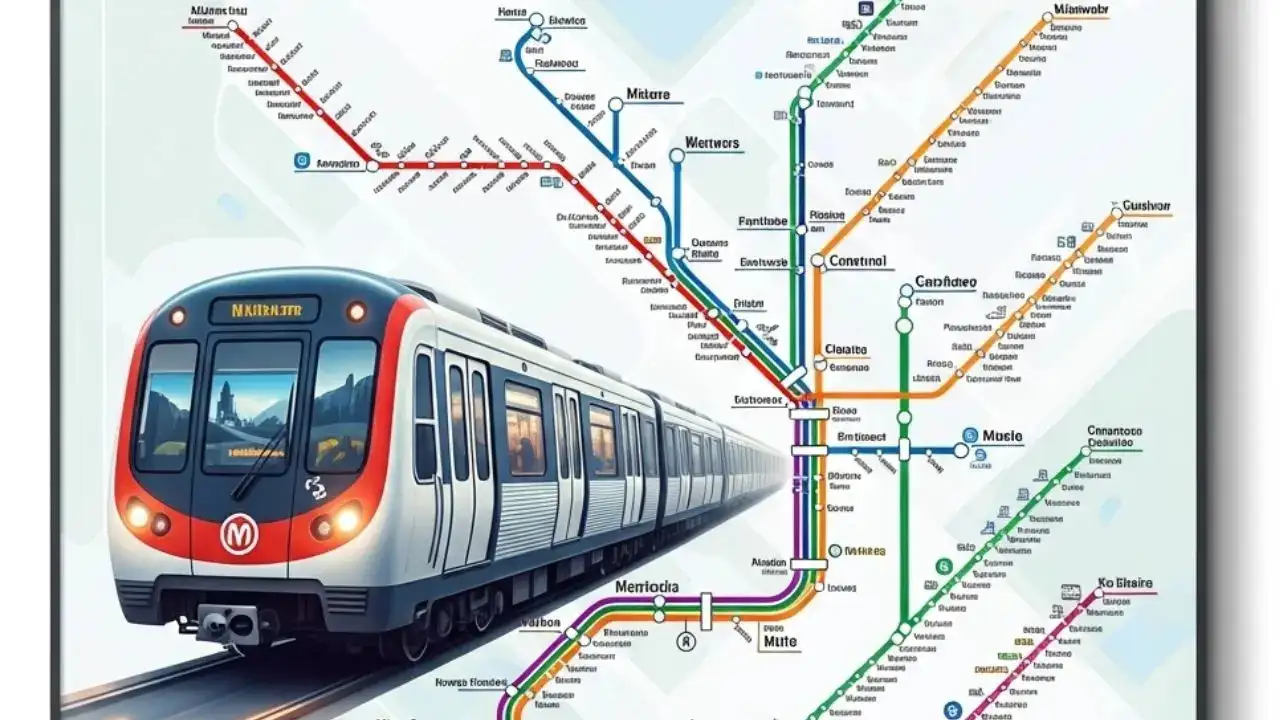
Mumbai’s first operational metro corridor, Metro Line 1, has emerged as a transformative force in the city’s east-west transport landscape, cutting commute time from Versova to Ghatkopar from over 70 minutes to just 21. The 11.4-kilometre fully elevated route is now an indispensable part of Mumbai’s daily transit infrastructure, easing traffic congestion and modernising urban mobility.
Conceived to address the city’s growing commuter load and road saturation, Metro Line 1 features 12 strategically located stations — from Versova to Ghatkopar — passing through key business, commercial, and residential hubs including Andheri, Marol, and Saki Naka. Each of these stations plays a pivotal role in connecting the suburban railway with air and surface transit systems. The sharp reduction in travel time is just one metric of its success. Ridership across the corridor touches lakhs every day, a clear indication of the corridor’s utility in improving accessibility, reducing fuel dependence, and enhancing city-wide productivity. According to transport officials, the Metro has significantly cut down vehicle congestion along the Western Express Highway and arterial roads connecting eastern and western suburbs.
Despite the resounding operational success, the project was not without its fiscal challenges. Metro Line 1’s final construction cost stood at ₹4,321 crore — approximately 84 percent higher than the original estimate of ₹2,356 crore outlined in 2007. Officials attributed the escalation to land acquisition delays, inflation in material costs, and evolving technical requirements during implementation. Yet, many experts argue that the socio-economic benefits outweigh the overrun, especially in a city where time and connectivity translate into direct economic value. The development of this corridor was spearheaded by a public-private joint venture, Mumbai Metro One Private Limited (MMOPL), in collaboration with the Mumbai Metropolitan Region Development Authority (MMRDA). The multi-stakeholder model combined domestic governance with international operational expertise and private capital infusion — offering a replicable model for future urban transport projects.
More than just a rapid transit solution, Metro Line 1 represents Mumbai’s aspiration to build a greener and more sustainable transport ecosystem. With reduced fuel consumption, lower per capita emissions, and cleaner commuting options, it aligns with the broader vision of building net-zero carbon cities. The metro also contributes towards inclusive urban development, making mobility more accessible across gender, age, and economic backgrounds. For millions navigating the chaos of Mumbai’s urban sprawl, the metro is more than just an alternative — it is a necessity. The success of Line 1 stands as a compelling case for accelerating metro expansions across the city’s growing corridors, with integrated connectivity, affordability, and environmental sustainability at the core of future projects.
As Mumbai’s metro network expands further, Metro Line 1 continues to serve as a living example of what visionary infrastructure can achieve in India’s densest cityscape.
Also Read : Chennai Metro Rail To Stop Old Card Top-Ups From August 1
