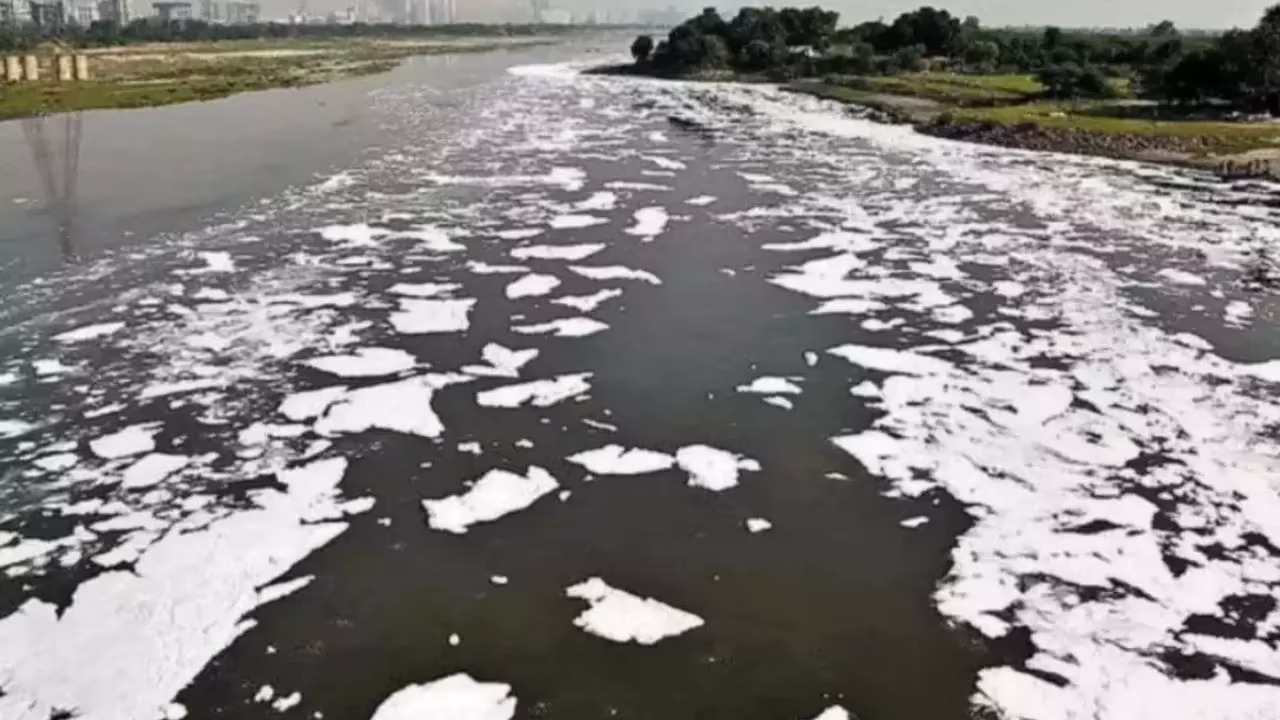
Delhi river tests show 92 lakh pollution units despite July rainfall
Despite sustained monsoon showers through June and July, water quality in the Yamuna has continued to deteriorate, with the latest sampling on July 1 showing a severe rise in toxic contamination. According to data reviewed from city authorities, the level of faecal coliform bacteria in the river surged to 92 lakh MPN/100ml at ITO, nearly 3,680 times the permissible limit for outdoor bathing. This was the second-worst reading recorded in 2025, revealing how critical pollutants remain entrenched despite improved rainfall, which typically dilutes waste concentrations. Officials say the situation signals severe sewage intrusion and insufficient water treatment interventions.
Delhi’s water quality parameters have consistently failed across major test points including Palla, ITO and Asgarpur. Indicators like biochemical oxygen demand (BOD) and dissolved oxygen (DO), both essential for aquatic life and ecological balance, were found well outside the safe range. At ITO, BOD spiked to 70 mg/l in July from 46 mg/l in June, showing declining self-purification potential of the river. Experts interpret BOD levels as a direct sign of excessive organic waste that depletes available oxygen in the water, affecting its ability to support any aquatic ecosystem. Alarmingly, dissolved oxygen levels also failed to meet the minimum threshold required to support life. While earlier rains had slightly improved ammonia concentrations in early July compared to June, the overall water condition remains grim. In June, ammonia levels at Asgarpur were recorded at 7.90 mg/l against the desirable limit of 1.5 mg/l for safe recreational use, and just 0.5 mg/l for drinking.
A sharp rise was also observed at other locations — from 0.26 mg/l at Wazirabad to 5.31 mg/l at ISBT Bridge — highlighting the erratic impact of pollution sources across the city’s drainage basin. By July, ammonia levels fell, but a parallel increase in faecal bacteria made water unsafe for any form of human contact, reinforcing the cyclic nature of pollution dynamics in urban water bodies. Environmental analysts stress that the spike in faecal coliform — traced to untreated domestic sewage and effluent discharges — underlines structural failures in Delhi’s urban sanitation systems. With concentrations as high as 1.6 crore MPN/100ml earlier this year at Asgarpur, the July readings at ITO expose the continuing scale of sewage discharge into the Yamuna, even amid rainfall that ideally should have reduced pollutant loads. The problem, experts say, lies not just in surface-level drainage but in deep-rooted inefficiencies of sewage treatment plants (STPs) and an absence of effective policy implementation across urban governance structures.
Unless consistent and large-scale interventions are launched, Delhi’s river cleanup efforts risk being overtaken by seasonal fluctuations and systemic neglect. With pollution now reaching near-historic highs during a time when dilution from rainfall is expected, experts warn the capital’s flagship waterbody faces long-term ecological collapse unless urban planners prioritise sewage network upgrades and decentralised water treatment. While the government’s Yamuna Action Plan has previously promised revival, ground reports suggest the city’s core waterways are still receiving direct inflows of waste, undermining both environmental health and public safety.