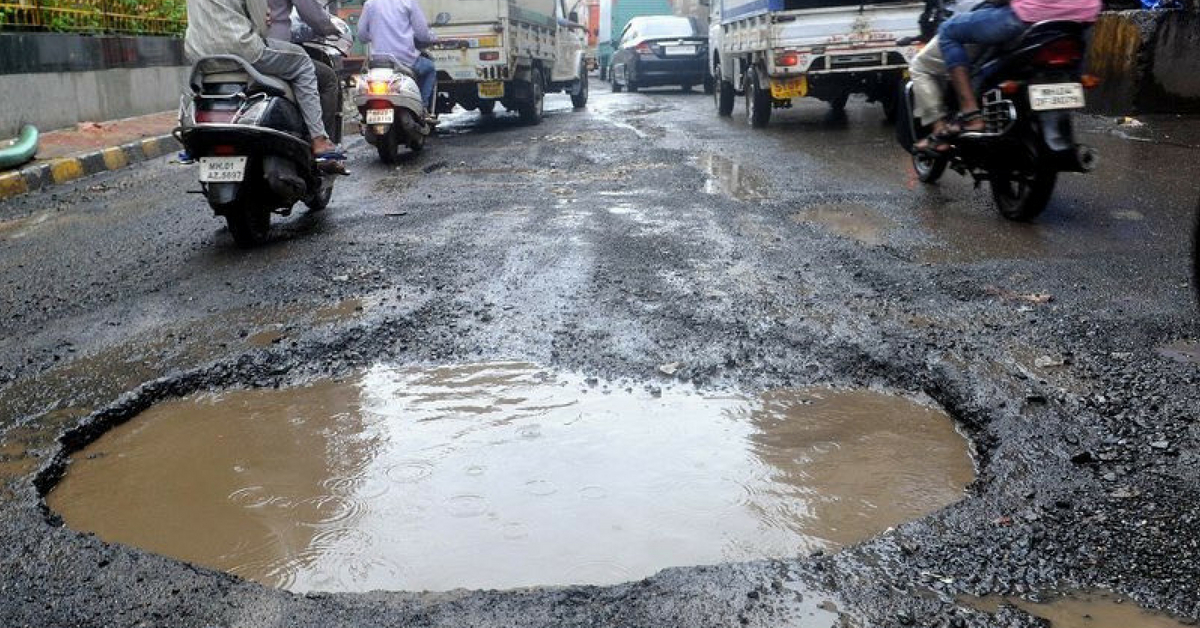
Noida commuters battle monsoon-hit roads and rising pothole dangers daily
The onset of monsoon in Noida has once again exposed deep-rooted structural issues in the city’s road infrastructure. With rains lashing the region over the past week, key routes such as the stretches near Botanical Garden bus stand, Okhla Bird Sanctuary, and the road linking Atta Peer to Sector 16 Metro station have rapidly deteriorated, leaving commuters to navigate craters, broken speed breakers, and prolonged waterlogging. What was once a daily commute has now turned into an obstacle course, particularly for those relying on buses, e-rickshaws, or two-wheelers.
The worst-affected spot appears to be near the Botanical Garden bus stand, where a disintegrated speed breaker has become a daily hazard. Vehicles veer suddenly to avoid the broken patch, risking collisions in an already congested zone. Residents commuting between Sector 37 and Knowledge Park say their travel time has increased drastically, coupled with the looming fear of accidents. The adjoining stretch between Atta Peer and Sector 16 Metro has developed multiple breaks in the surface, worsening under constant vehicle pressure and unchecked rainwater runoff. Another critical pain point is the arterial road near Okhla Bird Sanctuary, a primary entry from South Delhi. Travellers from Kalindi Kunj, Sarita Vihar, and Okhla heading into Noida are routinely held up by stagnant water and eroded road edges. Infrastructure experts warn that poor drainage and unscientific road layering allow rainwater to seep into the surface, loosening the asphalt and accelerating erosion.
Without proper slope design for water drainage, the roads remain waterlogged, breaking down layer by layer with each passing vehicle, and no meaningful maintenance plan in sight. Experts argue that the recurring monsoon damage is symptomatic of reactive, short-term repairs rather than proactive, long-term solutions. Most repairs are patch jobs that barely last until the next rainfall. Civic authorities have promised action, stating that pothole mapping and restoration will begin soon, but residents express scepticism. They stress that the problem demands a complete overhaul in design and material use, including better waterproofing, underground drainage audits, and timely repair works—not just seasonal firefighting after public outcry.
If Noida truly aims to evolve into a smart, sustainable, and commuter-friendly city, monsoon-readiness must be embedded into its infrastructure policy. Ensuring road safety and quality, particularly during the rainy season, is not just a civic duty but a critical urban priority. Without this, citizens remain vulnerable to preventable hazards, delayed transit, and growing frustration. Real progress lies not in patching potholes, but in planning roads that endure.