


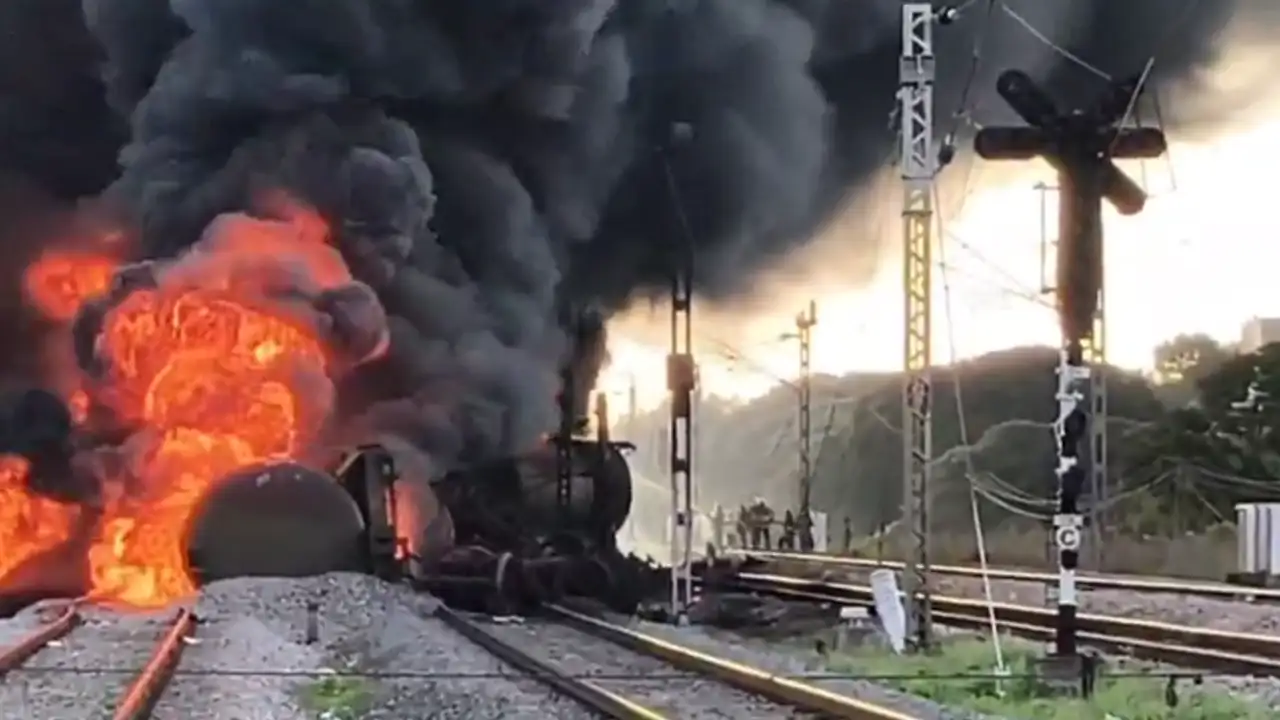
An early morning inferno engulfed five wagons of a goods train carrying fuel near Tiruvallur station on Sunday, bringing train services on the vital Chennai-Arakkonam route to a grinding halt. This critical arterial link connects the Tamil Nadu capital with major metropolitan centres including Bengaluru, Mumbai, Mysuru, and Coimbatore. The incident, which saw thick plumes of black smoke billowing from the 52-wagon train, prompted immediate evacuation of hundreds of residents from homes adjacent to the tracks, underscoring the inherent risks associated with the transportation of highly flammable materials through densely populated areas.
The blaze, which ignited around 5:20 am, quickly escalated, completely gutting four wagons and partially destroying another. Tiruvallur District Collector M. Pratap confirmed the successful detachment of the remaining 47 wagons by railway authorities, in a swift action that averted a far greater catastrophe. The immediate cutting off of overhead power supply for electric trains was a crucial safety precaution, yet it led to widespread disruption, with Southern Railway cancelling at least eight trains, including premium Vande Bharat and Shatabdi services, and diverting dozens of others via alternative routes through Gudur in Andhra Pradesh. This incident highlights the fragility of crucial transport corridors in the face of unforeseen emergencies.
The fire caused immense inconvenience to thousands of passengers whose travel plans were severely impacted. Images of stranded commuters and cancelled departures underscored the human cost of such incidents. The Tamil Nadu government swiftly mobilised transport services from various stations to assist passengers in reaching their destinations, a vital intervention aimed at mitigating the widespread disruption. Beyond immediate travel woes, such events raise pertinent questions regarding the resilience of urban infrastructure and the preparedness for large-scale disruptions, especially in a network as critical as Indian Railways, which is the lifeline for millions daily.
Officials revealed that approximately 27,000 litres of diesel were being transported from the Indian Oil Corporation refinery in Manali to Jolarpet. The prolonged nature of the fire, which burned for about five hours, necessitated the extensive use of foam by the district administration and fire services personnel, as water proved ineffective against the burning fuel. The deployment of over 15 fire tenders, with additional foam-based units rushed from neighbouring districts, demonstrated the scale of the emergency response required to contain the volatile situation. This incident prompts a critical re-evaluation of fire suppression mechanisms for hazardous cargo incidents.
This unforeseen event serves as a stark reminder of the complexities and potential hazards inherent in the movement of essential commodities across the nation’s vast railway network. It brings to the forefront the need for continuous review and enhancement of safety protocols, particularly concerning the transportation of flammable liquids. Ensuring robust emergency response mechanisms, coupled with proactive risk assessments in alignment with the nation’s commitment to sustainable and eco-friendly urban development, remains paramount. Lessons from this incident must inform future strategies to safeguard both human lives and the environment, ensuring that critical infrastructure development is underpinned by stringent safety standards and a commitment to zero net carbon operations.
Also Read: Tiruvallur Freight Train Fire Disrupts Services, Cancels Long-Distance Rail Operations
