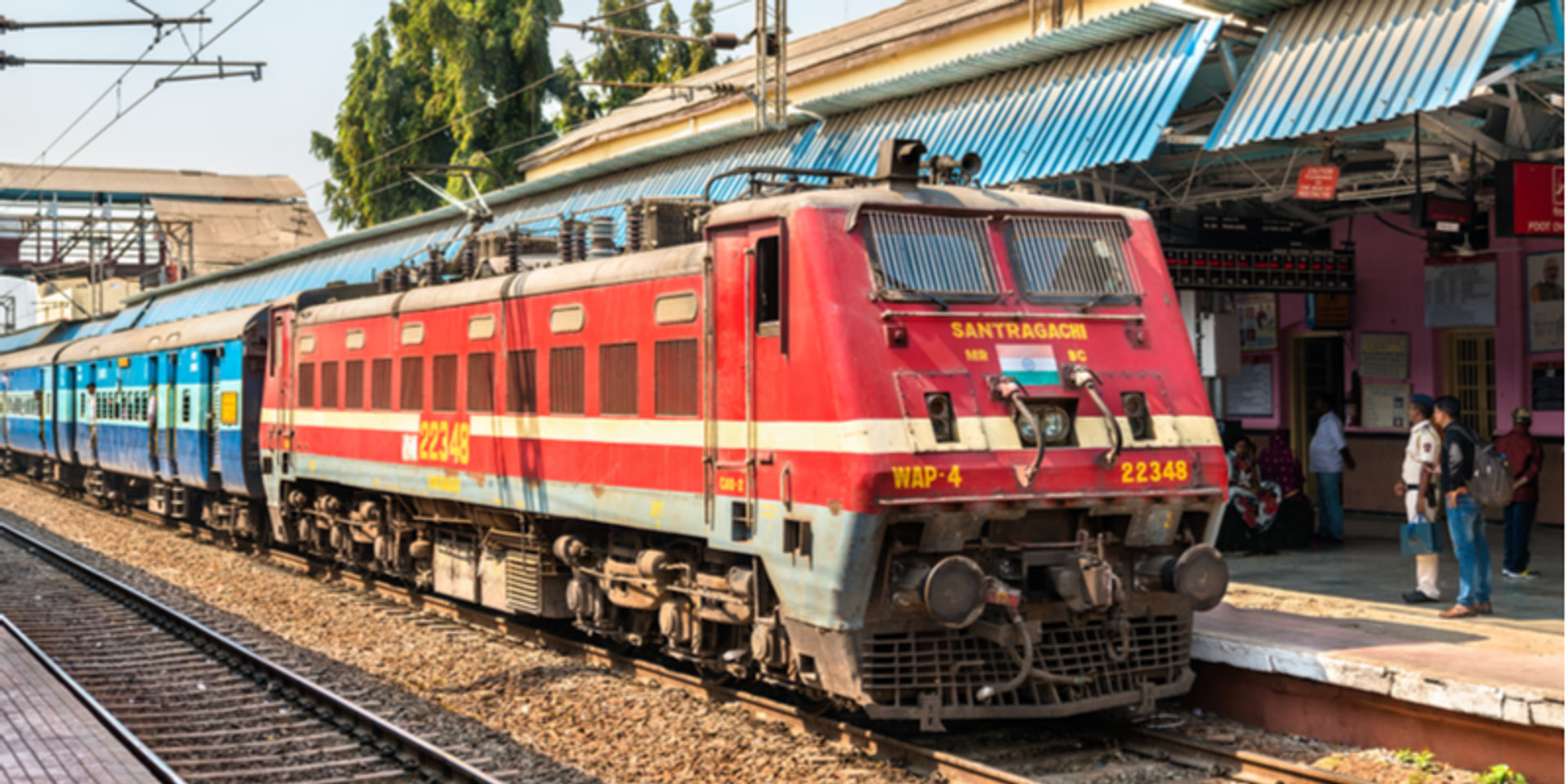
Indian Railways is embarking on a transformative journey, with plans to introduce 1,000 new trains by 2030 and launch the nation’s first bullet train by 2027, Union Minister Ashwini Vaishnaw announced. This ambitious roadmap aims to enhance urban connectivity, reduce carbon emissions, and position India as a global leader in sustainable rail transport, aligning with the vision of eco-friendly, equitable cities.
The initiative builds on significant infrastructure gains, with 35,000 km of tracks laid over the past 11 years, matching Germany’s entire rail network. In 2024 alone, 5,300 km were added, supported by a tenfold increase in investment from ₹25,000 crore to ₹2.52 lakh crore, bolstered by ₹20,000 crore in public-private partnerships. This financial muscle is driving the production of 30,000 wagons and 1,500 locomotives annually, surpassing North America and Europe’s combined output.
Sustainability is at the core of this overhaul. Railways, offering freight transport at half the cost of highways and 95% lower emissions, have increased their cargo share from 26% to 29% over a decade, with a target of 35%. This shift promises to ease road congestion and cut urban pollution, directly benefiting cities like Mumbai and Delhi, where air quality remains a pressing concern.
The Mumbai-Ahmedabad bullet train, a flagship project with Japanese collaboration, is on track for a 2026 prototype run and commercial operations by 2027. Spanning 508 km, the corridor includes a 21-km undersea tunnel and bridges over eight rivers, with 340 km of track already laid. Indigenous manufacturing of components like 40-metre girders, supported by IIT Madras and IIT Roorkee, underscores India’s growing self-reliance and export potential.
Passenger experience is also a priority. The addition of 2,000 general coaches and the launch of Amrit Bharat and Namo Bharat trains ensure affordability, with fares lower than in neighbouring countries. Safety has improved dramatically, with derailments dropping from 170 to under 30 annually and overall accidents down 80%, thanks to rigorous daily reviews and upgrades in track and signalling systems.
Rejecting full privatisation, Vaishnaw cited Japan and Switzerland as models for integrated, professional rail management. This vision not only addresses capacity, technology, and investment bottlenecks but also empowers communities by offering reliable, green transport. As Indian Railways gears up to handle 1,000 crore passengers annually by 2030, it is paving the way for sustainable, inclusive urban futures across India’s cities.
Also Read: Arakkonam train services disrupted as power line snaps halting seven trains including long distance express routes
Indian Railways Plans 1,000 Eco-Friendly Trains by 2030