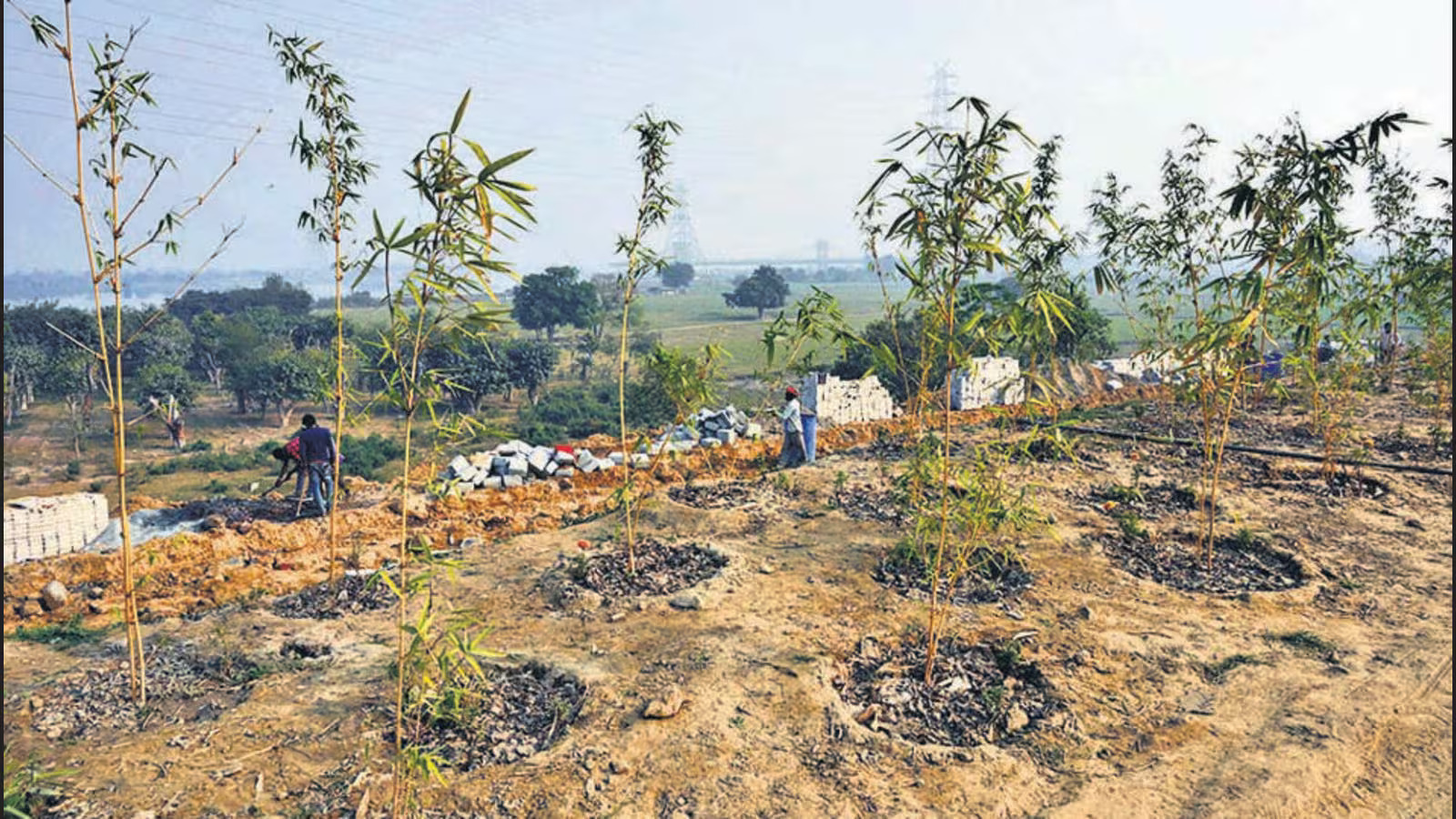
New Delhi to Plant 4,000 Bamboo Saplings in NDMC-Led Green Drive
New Delhi is embarking on an ambitious environmental initiative, with the New Delhi Municipal Council (NDMC) spearheading a comprehensive plantation drive designed to significantly enhance the city’s green cover. This year’s drive marks a notable first with the planting of 4,000 bamboo saplings across prominent city roads and footpaths, alongside a substantial increase in shrub and tree planting targets. This multi-faceted approach underscores the city’s commitment to creating a zero net carbon, eco-friendly, and sustainable urban landscape, setting a benchmark for environmental planning and public well-being in metropolitan areas.
The introduction of bamboo, specifically the golden and Buddha Belly varieties, on key stretches such as Akbar Road, Subramaniam Bharti Marg, Krishna Menon Marg, and Mandir Marg, represents a strategic move. These bamboo varieties are not merely ornamental; they are intended to serve as natural green screens, offering both aesthetic enhancement and a boost to urban biodiversity. This innovative selection of plant species highlights a thoughtful approach to urban greening, aiming for functional ecological benefits alongside visual appeal, contributing to a more harmonious co-existence between urban infrastructure and nature.
A core component of this year’s drive is an intensive “gap filling” campaign. This initiative focuses on covering brown or open areas on central verges and roadsides, with a significant increase in shrub planting from 1.3 million last year to 3.5 million this year. This targeted approach, spanning 80 major junctions and roundabouts, utilises robust shrub varieties such as bougainvillea, murraya, justicia, hemelia, karonda, and Calliandra. The campaign, which commenced on July 1 and is under close monitoring, is anticipated to play a crucial role in reducing airborne pollutants like PM10, PM2.5, and PM1, directly improving the city’s air quality.
Ensuring the long-term survival of these newly planted saplings is paramount, and the NDMC has devised a detailed irrigation strategy to support this. The plan includes the implementation of permanent and smart watering systems, primarily through drip irrigation. This forward-thinking approach aims to lay pipelines directly to green spaces, facilitating the easy supply of treated water without reliance on tankers and minimising water wastage. This sustainable water management strategy is critical for maintaining green infrastructure, especially in a water-stressed urban environment.
Further bolstering its commitment to sustainable water management, the NDMC is set to construct nine new decentralised sewage treatment plants (STPs). These STPs, planned for locations such as Bapu Dham, Nehru Park, Akbar Road, and AIIMS, will augment the supply of treated water, making it readily available for horticulture and reducing the demand on potable water sources. This circular economy approach to water resources is a vital step towards creating a more resilient and resource-efficient city, aligning with the broader agenda of eco-friendly urban development.
The comprehensive plantation target for the current year is substantial, encompassing 3.5 million shrubs, 2,500 trees, and 3,946 bamboo saplings. Plantation activities have already been initiated across 89 locations within six horticulture divisions, covering a wide array of prominent roads and public spaces. The selection of tree species prioritises native and environment-friendly varieties, including Arjuna, peepal, champa, jamun, imli, neem, Cassia fistula (Amaltas), Ashoka, Khirni, silver oak, Harsingar, and Gulmohar, ensuring ecological appropriateness and biodiversity enhancement.
Community engagement is a cornerstone of this greening initiative. The NDMC has actively participated in the “Ek Ped Maa Ke Naam” campaign, planting 204 trees and 18,280 shrubs as part of this national movement. The council anticipates enthusiastic participation from various stakeholders, including Union ministers, foreign embassies, Resident Welfare Associations (RWAs), bar associations, hospitals, and private institutions. Such widespread involvement fosters a collective sense of ownership and responsibility for the city’s green assets, promoting a truly equitable and participatory urban environment.
Beyond planting, the NDMC has invested in robust maintenance infrastructure, including a fully functional “tree ambulance” for avenue roads. A dedicated plant protection cell at Lodhi Garden, staffed by a supervisor and four personnel, is equipped to conduct tree surgeries, manage pests, and provide soil treatments. These proactive measures ensure the long-term health and vitality of the city’s existing green cover. The NDMC’s assertion of being the “greenest urban local body in the country,” contributing nearly 55% of Delhi’s green cover despite occupying only 3% of its geographical area, underscores its remarkable benchmark in urban ecological planning and environmental sustainability.