


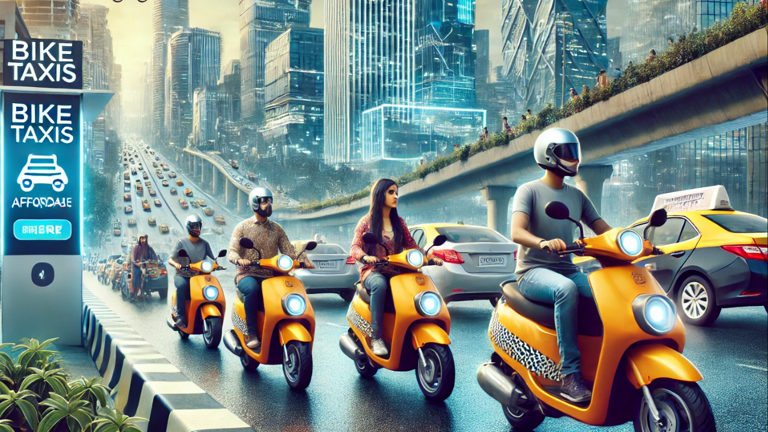
Mumbai is on the brink of launching regulated bike-taxi services, as the state government has formally notified a new policy that paves the way for licensed operators to enter the city’s urban transport ecosystem. With regulatory clearance now in place, legal bike-taxis are expected to hit the roads later this month, marking a major step toward integrating sustainable, last-mile mobility options in one of India’s busiest metropolitan regions.
The notification, issued by the state’s home department and dated 4 July, introduces the Maharashtra Bike-Taxi Rules, 2025. It lays out a comprehensive framework for licensing, safety, operations, and fleet composition for bike-taxi aggregators. The rules are designed not only to legalise an increasingly popular mode of urban transport but also to encourage an eco-friendly, regulated, and inclusive approach to short-distance commuting. Under the newly notified policy, aggregator companies will need to obtain a valid five-year operating licence from the state transport department before commencing commercial services. Applications are already being invited, with approvals expected in the coming weeks. The move signals the culmination of several years of informal experimentation and legal ambiguity around bike-taxis in the city.
To operate legally, drivers will need to meet strict eligibility criteria, including possession of a commercial driving licence and a valid Public Service Vehicle (PSV) badge — similar to what is required for auto-rickshaw and taxi drivers. Moreover, applicants must be between 20 and 50 years of age and undergo mandatory police verification to ensure public safety. Individuals with criminal records will not be allowed to operate as bike-taxi drivers. In line with Maharashtra’s climate and energy transition goals, the policy makes a strong push for clean mobility. Aggregators must maintain a minimum fleet of 50 electric two-wheelers as a prerequisite for obtaining a five-year operational licence. Officials stated that this clause was specifically introduced to promote zero-emission transport, reduce urban congestion, and curb carbon emissions in high-density corridors.
The rules further mandate passenger-centric safeguards, including accident insurance coverage up to ₹2 lakh in the event of a fatality, robust fare regulation based on government-set rates, and operational transparency through official portals or mobile platforms. Aggregators will also need to establish a dedicated 24×7 call centre or function through a certified web-based system that can receive feedback, handle grievances, and manage emergency alerts. An official from the state transport department confirmed that the emergency response system must be capable of notifying not just the aggregator but also law enforcement agencies, local emergency services, and designated personal contacts in real time in case of distress. This provision, officials said, aims to create a secure and responsive ride environment for both riders and passengers.
Beyond technology-driven enforcement, the regulations emphasise local knowledge and rider familiarity with city roadways. All driver applicants are required to have adequate understanding of road routes, traffic systems, and city geography to be eligible for onboarding. This stipulation, experts believe, will help enhance passenger comfort, reduce trip time inefficiencies, and avoid dependence on unreliable navigation systems. From a policy perspective, the Maharashtra Bike-Taxi Rules represent a paradigm shift in how cities approach shared, two-wheeler mobility. Unlike informal ride-hailing setups that have functioned in grey areas of the law, these guidelines are meant to integrate bike-taxis into the formal urban transport matrix while setting benchmarks for safety, service delivery, and environmental responsibility.
Urban transport researchers see the notification as a timely and progressive measure, especially as cities like Mumbai struggle with mounting vehicular congestion, inadequate parking, and high emissions. Short-distance, point-to-point mobility — particularly in areas underserved by buses or metros — can be effectively bridged through bike-taxis. When operated on electric two-wheelers, this model has the potential to make last-mile transport faster, cleaner, and more affordable. Local policy analysts pointed out that Mumbai’s topography, short-distance commuting patterns, and high demand for flexible travel options make it ideally suited for a well-regulated bike-taxi sector. However, they cautioned that implementation will require robust enforcement, technological backing, and periodic performance audits to ensure that aggregators meet licensing conditions without compromising on passenger welfare or driver rights.
The move also opens up new employment avenues for youth, provided the compliance framework is robust and ensures fair wages, insurance, and working conditions. According to a senior urban mobility expert, the bike-taxi ecosystem, if well-governed, can become an important driver of economic inclusion and sustainable employment, particularly in densely populated and underserved urban pockets. As Mumbai prepares to formally roll out this service, transport authorities have assured citizens that necessary systems — including helpline activation, aggregator monitoring tools, and fare auditing protocols — will be ready in time. The model is also expected to be replicated across other urban centres in Maharashtra depending on local infrastructure and commuting needs.
While some concerns remain about traffic management, enforcement of helmet laws, and passenger insurance claims, officials maintained that the policy includes clauses to address these challenges through inter-agency coordination and digital transparency. If all regulatory and operational requirements are met on schedule, Mumbaikars could soon hail licensed, electric-powered bike-taxis from their mobile apps before the end of July — signalling not just the arrival of a new mode of transport, but a step toward cleaner, equitable, and future-ready urban mobility.
Also Read : Mumbai Train Services Suspended After TRT Derails Between Nerul and Seawoods
