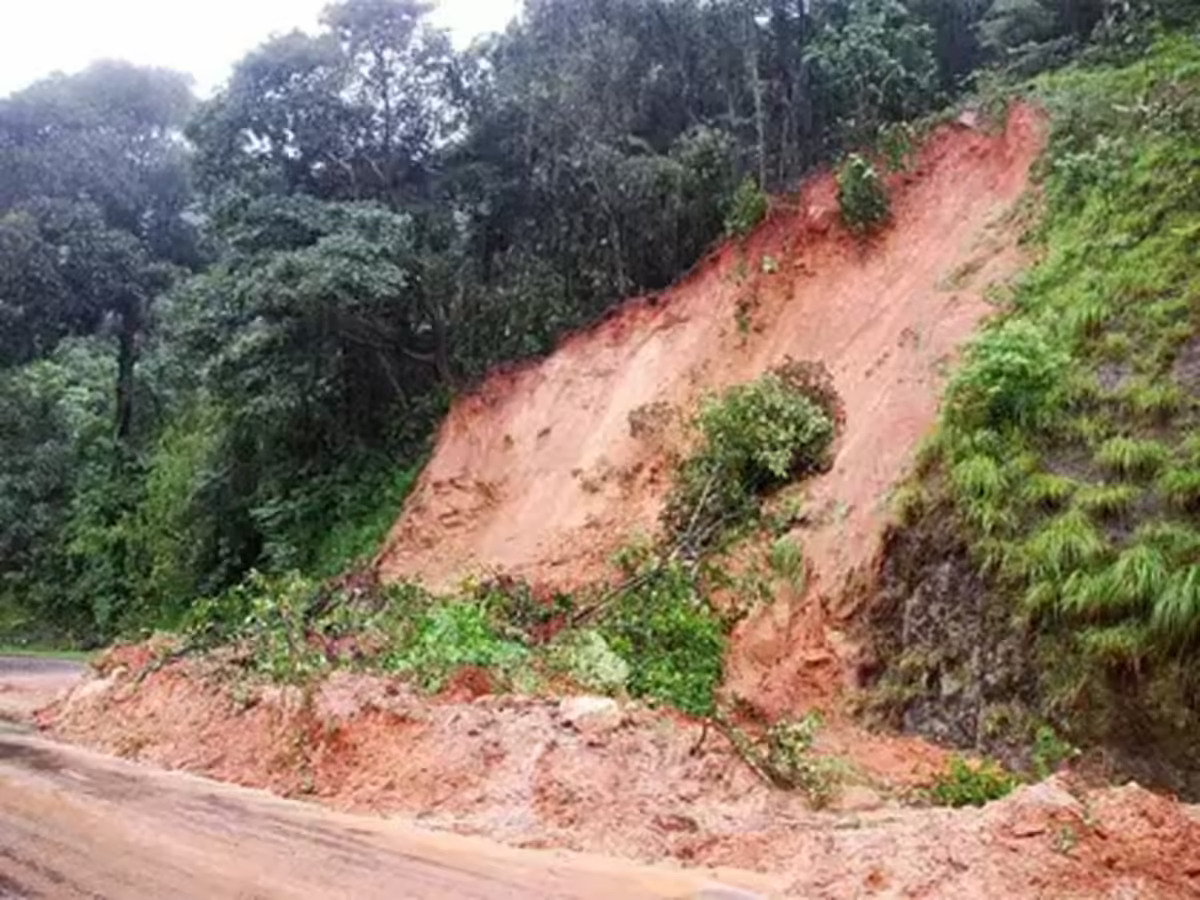
Anmod Ghat Road Collapse Cuts Off Goa and Karnataka as Heavy Rains Wreck Highway Link
A major portion of the Belagavi–Goa Highway caved in at Anmod Ghat late Friday night following intense rainfall, causing severe disruption to vehicular movement between Goa and Karnataka. The affected stretch lies on the Goa side of the route, and authorities have since been racing against time to restore access and ensure public safety. The collapse has not only stranded several vehicles but also triggered emergency diversions, leaving travelers, daily commuters, and logistics providers scrambling for alternative routes.
According to local officials, the collapse was a direct result of relentless monsoon rains that have battered the region for days. The Anmod Ghat section, which cuts through the fragile terrain of the Western Ghats, is particularly susceptible to landslides, waterlogging, and soil erosion during the monsoon season. In this case, a combination of weakened subsoil and inadequate drainage appears to have caused a significant part of the roadbed to give way, leaving behind a dangerous gap that made the highway impassable overnight. Early reports from the scene describe the damage as extensive, with sections of the asphalt fractured, tilted, and sheared off, rendering the site unfit for both light and heavy vehicles.
Emergency teams, including the Goa Public Works Department, police, and disaster management units, were immediately dispatched to the location. Barricades have been set up to prevent vehicles from approaching the site, and engineers are currently assessing the structural integrity of the surrounding road. While no casualties or injuries have been reported, the disruption has caused chaos, especially for vehicles transporting goods to and from Goa’s key commercial hubs and the Mormugao Port. Traffic authorities have urged motorists to avoid the route altogether and have issued advisories recommending the use of alternative roads such as the Chorla Ghat and Mollem routes, though those too are vulnerable during peak monsoon months.
The timing of the collapse could not have been worse. July marks the height of the tourist off-season in Goa, when the state typically deals with heavy rains, reduced tourist inflow, and fragile road conditions. However, the Belagavi–Goa Highway remains a critical economic and supply chain artery throughout the year. With transport and logistics already hampered by seasonal monsoon delays, this latest road failure has added to the challenges. Freight trucks carrying perishables, construction materials, and fuel supplies are among the worst hit, and delays in deliveries are already being reported across several districts.
Local residents and environmentalists have long warned about the vulnerability of the Anmod Ghat section, particularly highlighting the lack of robust infrastructure and pre-monsoon checks. While the highway is technically a national route, its maintenance often sees delays due to jurisdictional ambiguities and sluggish bureaucratic coordination between Goa and Karnataka authorities. Critics argue that better slope stabilization, improved drainage systems, and regular inspections could have prevented the collapse or at least mitigated its impact. With climate change causing more intense and erratic rainfall patterns, experts say the region needs long-term structural planning rather than short-term repairs.
As of now, restoration efforts have begun on a war footing. The Goa government has announced that assessment reports will be expedited to evaluate the full extent of the damage. Geological surveys are being carried out to determine whether the surrounding terrain is safe enough to commence reconstruction. Officials are also considering temporary modular bridges or steel plates to reconnect the route in the short term. However, these are dependent on weather conditions, which remain unpredictable and volatile in the Western Ghats during July. Public safety remains the top concern, and authorities have reiterated that no travel should be attempted via Anmod Ghat until an official green light is given.
The road collapse also raises broader questions about the state’s preparedness for monsoon-related disasters. In recent years, Goa has seen several such incidents—ranging from landslides to bridge cracks to road sinkholes—each revealing gaps in infrastructure planning, early warning systems, and emergency response. While road collapses are not new to monsoon-prone regions, the increasing frequency and severity of such incidents point to the urgent need for climate-resilient infrastructure.
Commuters have taken to social media to express their frustration over the inconvenience, and many are calling for a more transparent update system from the Public Works Department and traffic authorities. Suggestions include real-time GPS tracking of road conditions, pre-monsoon safety audits with published findings, and the creation of an emergency alternate route strategy that kicks in automatically when a major highway fails.
As work continues on the ground, the Anmod Ghat collapse stands as another reminder of how fragile the balance between nature and infrastructure can be, especially in ecologically sensitive zones like the Western Ghats. For now, the focus remains on fast, efficient repair and minimizing disruption, but for long-term stability, the state may need to rethink how it builds and maintains its critical transport corridors.