


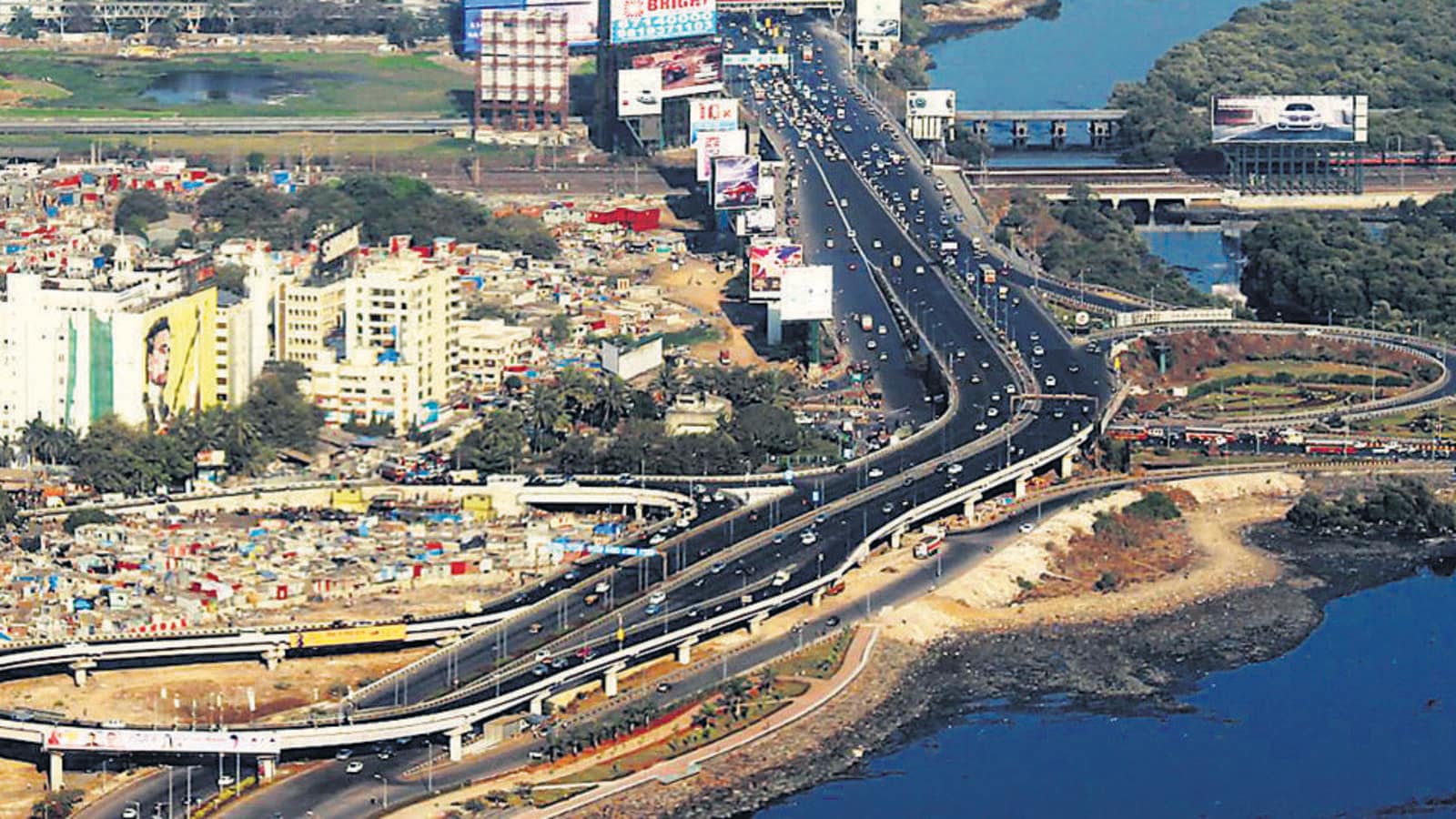
Brihanmumbai Municipal Corporation (BMC) has commenced construction work on the redevelopment of the historic Mahim Causeway bridge. The upgraded bridge will expand into a 10-lane double-arch structure, aiming to significantly reduce travel time between South Mumbai and the city’s western suburbs. Once complete, the new bridge is expected to ease mounting traffic pressure along several arterial roads and improve daily commutes for lakhs of citizens.
The Mahim Causeway, which traces its origins to the 1840s, currently serves as a key connector linking S V Road in Bandra to Mahim and other parts of South Mumbai. However, with vehicular volumes far exceeding its original capacity, the existing three-lane structure on each side has become a notorious bottleneck. In response, the BMC is now executing a phased redevelopment of the 44.1-metre-long bridge, widening it to 52 metres and extending its length to 104 metres. The project’s timeline spans two years and carries an estimated cost of ₹103.26 crore. Civic officials confirmed that the new bridge will be developed in two main phases to ensure that existing traffic flow is not disrupted. In the first phase, new bridges are being built on either side of the current structure. Once those lanes are operational, traffic will be diverted, and demolition of the old bridge will begin, allowing phase two construction to proceed.
The upgraded bridge will feature five lanes in each direction and incorporate a double-arch deck slab, designed for both strength and aesthetics. This engineering choice reflects a growing trend among Indian cities to adopt resilient and climate-conscious infrastructure forms that balance utility with design. The arch design, in particular, offers improved structural performance and flood resilience, a crucial consideration given Mumbai’s vulnerability to heavy monsoons and tidal surges. At present, the BMC has completed work on three of the four required abutments, while fabrication of the metal girders is underway on the eastern side. Civic engineers noted that once the abutments and girder placements are done, superstructure work can begin in earnest. While the groundwork began in earnest only in early 2024, the project itself had been on hold for years due to regulatory hurdles.
One of the major bottlenecks in initiating the project was obtaining clearances from environmental authorities. Since the bridge alignment cuts through a protected mangrove zone along the Mithi River, permissions from the Maharashtra Maritime Board and the state forest department were essential. These approvals were only finalised in January 2024, allowing the BMC to mobilise full resources toward construction. Officials involved in the project stated that the new bridge would ease congestion not only at Mahim Causeway but also across A K Vaidya Marg, Western Express Highway, S V Road and Lady Jamshedji Road. It is expected to be a game-changer for traffic management in North-Central Mumbai.
Beyond its transport efficiency, the redevelopment also speaks to the city’s broader commitment to sustainable and equitable infrastructure. With Mumbai’s population continuing to expand, such upgrades are key to creating mobility systems that serve all demographics—be it car owners, bus users, or pedestrians. While the current design primarily serves vehicles, urban planners and citizen groups are urging the BMC to include provisions for pedestrian paths and cycle tracks to future-proof the project. Environmental oversight remains a crucial part of the project’s execution. Given the ecological sensitivity of the Mithi River and surrounding mangrove zones, the BMC has been advised to implement real-time environmental monitoring, particularly during the pile driving and foundation work stages. Additionally, silt traps, erosion control systems, and noise reduction measures will be necessary to mitigate potential ecological damage.
Transport experts have praised the project’s phased approach, stating that it strikes a balance between continuity of services and long-term capacity enhancement. However, some urban mobility advocates have raised concerns about the lack of transparency in progress updates. They have urged the BMC to provide monthly status reports and ensure civic participation, especially from residents directly affected by construction detours and noise. The Mahim Causeway bridge project also holds symbolic importance. As one of the oldest civic routes in Mumbai, its redevelopment signals a shift in how the city treats legacy infrastructure—by preserving historical utility while integrating modern-day needs. In a city frequently marred by infrastructural delays and cost overruns, delivering this bridge on time and within budget would represent a significant achievement in public project management.
As Mumbai continues its evolution into a more inclusive and climate-resilient metropolis, projects like this must serve not just traffic efficiency but also environmental accountability and design excellence. The success of the Mahim Causeway expansion could serve as a blueprint for other legacy corridors across the city that are now straining under the pressures of rapid urbanisation. The bridge, once complete, will not only restore traffic equilibrium across the Mahim stretch but also stand as a testament to Mumbai’s capacity to rebuild its infrastructure thoughtfully and sustainably.
Also Read : Mumbai Relocates SGNP Residents to NDZ Land Amid Regulatory Shift
