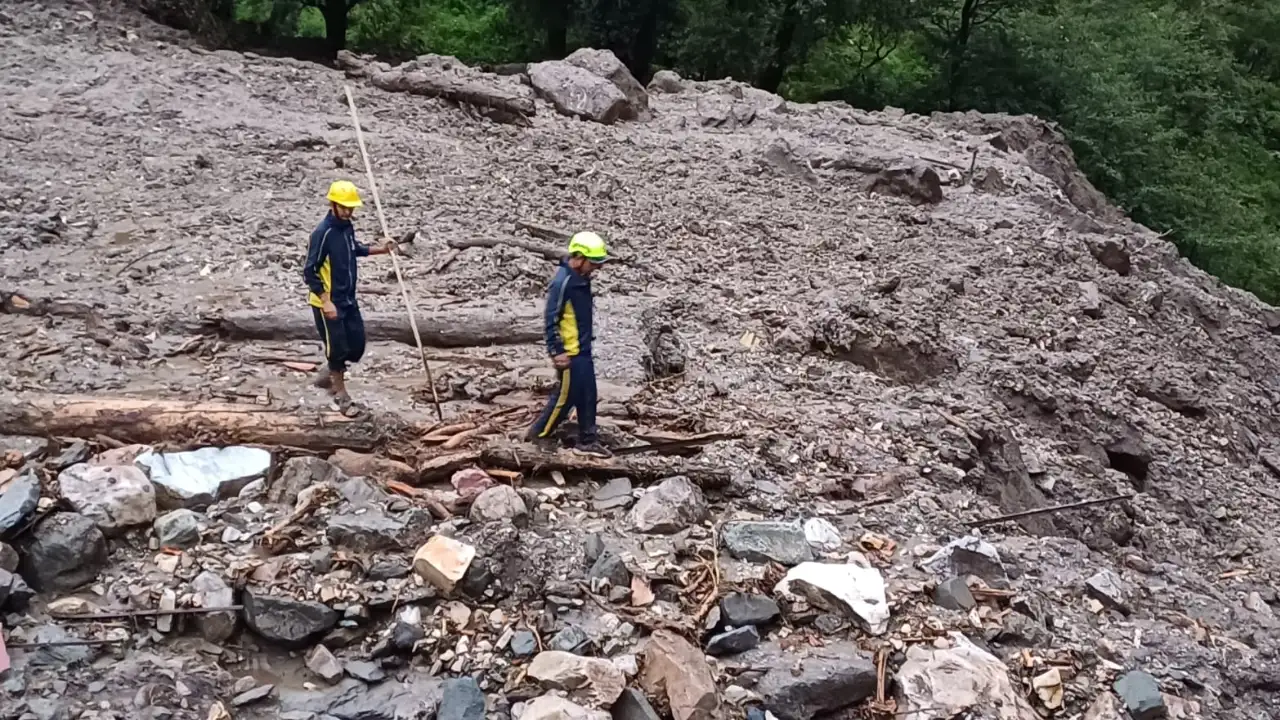
Uttarakhand rains suspend Char Dham Yatra as landslides block highways and yellow alert issued
Uttarakhand is facing major disruption as heavy monsoon rains continue to batter the state, forcing the suspension of the Char Dham Yatra and triggering large-scale road blockages. Landslides, falling debris, and unstable terrain have made travel to major pilgrimage destinations hazardous, prompting authorities to halt movement on key highways and activate emergency response systems.
On Thursday, Chief Minister Pushkar Singh Dhami announced the temporary suspension of the Char Dham Yatra due to unsafe conditions along the routes to Badrinath, Kedarnath, Gangotri, and Yamunotri. The government emphasized that the safety of pilgrims is the top priority, and no movement will be permitted until road conditions improve. In Chamoli district, the Badrinath National Highway has been blocked at multiple critical points, including Pipalkoti, Nandprayag, and Umatta. Heavy debris from recent landslides has covered the roads, and teams from the Border Roads Organisation are working under challenging conditions to clear the obstructions. Despite continuous efforts, poor visibility and frequent rockfalls have delayed progress.
Meanwhile, Rudraprayag district has reported significant damage on the route to Kedarnath. The Sonprayag area, particularly the Munkatia Sliding Zone, has witnessed falling stones and slope erosion, rendering the road unsafe. Authorities have urged all pilgrims to stay back and cooperate with the district administration. In Uttarkashi, the Yamunotri Highway has remained closed for five consecutive days. As a result, more than twenty villages in the Sarbadiyar Patti region have become isolated, with no road access to tehsil or district headquarters. Roads, footpaths, and village-level infrastructure have sustained heavy damage due to erosion and runoff.
The local administration in Rishikesh has begun clearing encroachments and temporary stalls to prepare for the upcoming Kawad Yatra, even as rain continues to fall. Efforts are being made to ensure that emergency vehicles can move freely once the yatra begins. Disaster management teams have been placed on standby in sensitive areas across the Garhwal region. The India Meteorological Department has issued a yellow alert for Uttarakhand from July 3 to July 7. The forecast predicts heavy rainfall, thunderstorms, and lightning in several districts, with Pithoragarh, Bageshwar, and Dehradun expected to experience intense downpours. The alert also includes warnings for localized flooding and possible landslides in high-altitude regions.
In Chamoli and Rudraprayag, rainfall has already exceeded 100 millimeters in the last 48 hours. These regions are classified as high-risk zones for slope failure and flash floods. The continuous rainfall has loosened soil layers on hill slopes, increasing the risk of further landslides. Several homes and shops near vulnerable zones have been temporarily evacuated as a precaution. The state disaster management department has mobilized teams from the State Disaster Response Force and National Disaster Response Force. Temporary shelters have been established for stranded pilgrims and tourists, and food and medical aid are being delivered where road access is still possible. In extremely remote areas, relief material is being transported on foot or via helicopters, depending on weather clearance.
Chief Minister Dhami has appealed to citizens and visitors to avoid unnecessary travel and comply with government advisories. He confirmed that the government is reviewing the situation hourly and that the yatra will resume only after complete safety clearance. The Chief Minister added that medical personnel, road engineers, and emergency services are all on high alert across affected districts. The disruption comes at a time when the state was expecting a peak in pilgrimage-related travel. The Char Dham Yatra, which draws thousands of devotees from across India, also plays a key role in the local economy. Hoteliers, small traders, and transport operators in these regions are now facing significant losses, with no clear timeline for when regular travel can resume.
In addition to religious tourism, local residents are experiencing severe challenges due to broken infrastructure. Access to hospitals, schools, and marketplaces has been affected in at least five districts. Several rivers and streams in the region are flowing above normal levels, prompting further warnings from the water resource department. This year’s monsoon has again highlighted the vulnerability of Uttarakhand’s mountainous terrain. Experts have long warned that unplanned construction, road widening projects, and deforestation have made the region more susceptible to rain-related disasters. The government has indicated that after the current crisis is addressed, a reassessment of infrastructure resilience and environmental policy will be undertaken.
Until then, Uttarakhand remains in a state of caution, with emergency teams deployed, roads closed, and pilgrims waiting for the green signal to resume their journey to the sacred shrines. The administration’s immediate priority remains the restoration of roads, the safety of travelers, and the prevention of any casualties amid the continuing rains.