


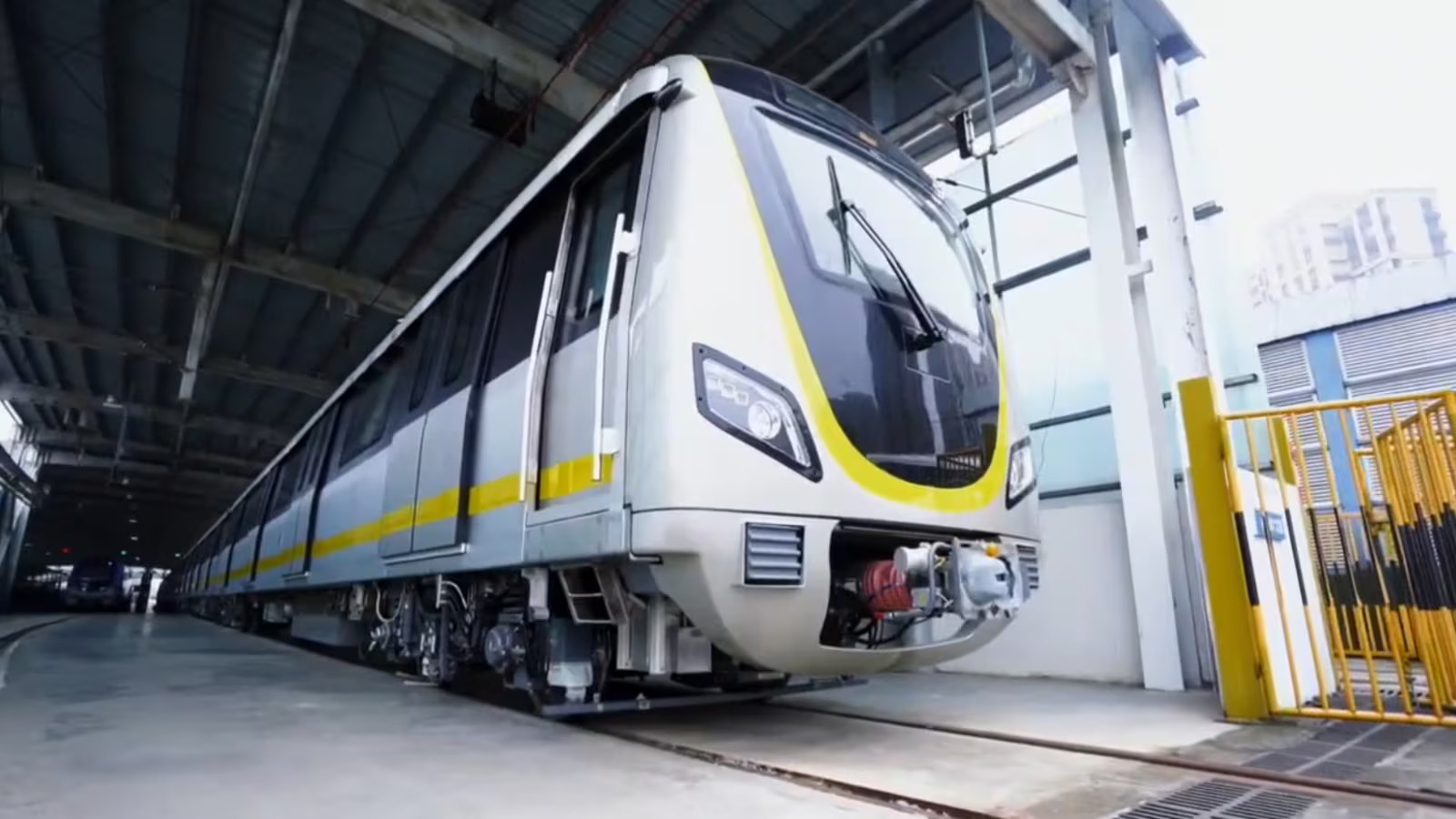
Bangalore Metro Rail Corporation Limited (BMRCL) is preparing to launch the long-awaited Yellow Line by August. The new metro stretch, running from Bommasandra to RV Road, spans 19 kilometres and is expected to push the city’s daily metro ridership from the current 8.5 lakh to a projected 14 lakh.
This new line marks a critical milestone in Bengaluru’s broader infrastructure upgrade efforts, aiming to decongest one of the city’s most notorious choke points—Silk Board junction—and improve cross-city connectivity between key commercial and residential zones. With this, BMRCL is betting big on shifting commuters away from private vehicles and towards cleaner, faster public transport options. Officials said the Yellow Line is more than a metro link—it is part of a larger vision to build an interconnected transport grid for a city facing the compounded stress of urban sprawl, vehicular congestion, and rising pollution levels. Planners are keenly aware that simply building metro lines is not enough. The real challenge lies in seamless integration with other modes of transport.
To tackle this, BMRCL is actively working with local bus operators and municipal authorities to enable smooth first- and last-mile connectivity. This includes the introduction of dedicated feeder bus services from residential hubs and commercial areas directly to metro stations. Officials believe this approach will not only boost ridership but also reduce dependence on autos and taxis for short intra-city hops, which are often expensive and inefficient. According to senior officials at BMRCL, the Yellow Line holds strategic value in connecting IT corridors and industrial belts in the southern stretches of Bengaluru with the rest of the metro network. Bommasandra, a rapidly growing area, houses several tech parks and industrial clusters. Meanwhile, RV Road acts as a vital node linking the new line with existing green and upcoming metro corridors.
Transport analysts say the Yellow Line could become a model for how cities in India should expand metro connectivity—with a firm focus on demand-driven planning, sustainability, and modal integration. Bengaluru, long criticised for its traffic gridlocks and insufficient public transport planning, is finally taking concrete steps to evolve into a city that prioritises clean, fast, and equitable mobility. The Yellow Line’s inauguration is also being seen as a precursor to further expansions, including the proposed Sarjapur-Hebbal line, which aims to connect some of the city’s most underserved eastern and northern stretches. Simultaneously, a series of flyover and signal-free corridor projects are being rolled out in tandem with the metro plan, designed to create a multi-layered infrastructure network that reduces bottlenecks and distributes traffic more efficiently.
At a recent high-level meeting focused on infrastructure and economic development, officials noted that Karnataka’s performance in export and tax revenue rankings remains strong—driven in part by the state’s robust logistics and IT sectors. Bengaluru, as the capital, is central to this success story, but its economic promise is often hindered by slow-moving traffic and unplanned growth. In an ambitious offshoot of this developmental roadmap, authorities also floated the idea of a world-class theme park near Kempegowda International Airport to boost tourism and create a major recreational draw for the region. While still in the conceptual stage, such proposals point to a growing confidence in the city’s infrastructure vision and a shift towards holistic urban planning.
The transport overhaul is also being supported by public-private partnerships and collaboration with research institutions on drone delivery systems, green mobility, and smart traffic solutions. In a recent ceremony, contributions to infrastructure innovation—such as the use of drones and high-speed bridge construction in railway networks—were publicly recognised by the industry. All of this signals that Bengaluru’s development strategy is no longer about isolated projects, but rather about building a smart, sustainable urban ecosystem. Officials stress that mass transit—especially metro expansion—forms the backbone of this approach.
Yet challenges remain. Metro construction delays, land acquisition hurdles, and coordination gaps between agencies have previously marred the project timeline. However, BMRCL appears determined to meet its August deadline, with trial runs already in progress and station-level civil work nearing completion. For commuters, the Yellow Line’s opening could mean shorter travel times, fewer transfers, and less stress on city roads during peak hours. For businesses along the corridor, especially in tech parks and SEZs, improved employee access could drive productivity and boost economic efficiency.
More broadly, the Yellow Line aligns with national goals to reduce transport-related emissions and promote transit-oriented development. In a city where over 40 percent of daily trips are still made using private vehicles, the stakes are high. If BMRCL succeeds in pushing metro ridership toward the 14 lakh mark, it would mark a transformative shift in Bengaluru’s commuting culture. As the August launch nears, all eyes will be on whether the Yellow Line lives up to its promise. What’s clear, however, is that Bengaluru is inching closer to becoming a metro-driven metropolis—where mobility is not just about speed, but also about equity, sustainability, and urban resilience.
Also Read : Telangana Court Seeks Clarification on Encroachment of Bhoodan and Grazing Land
