


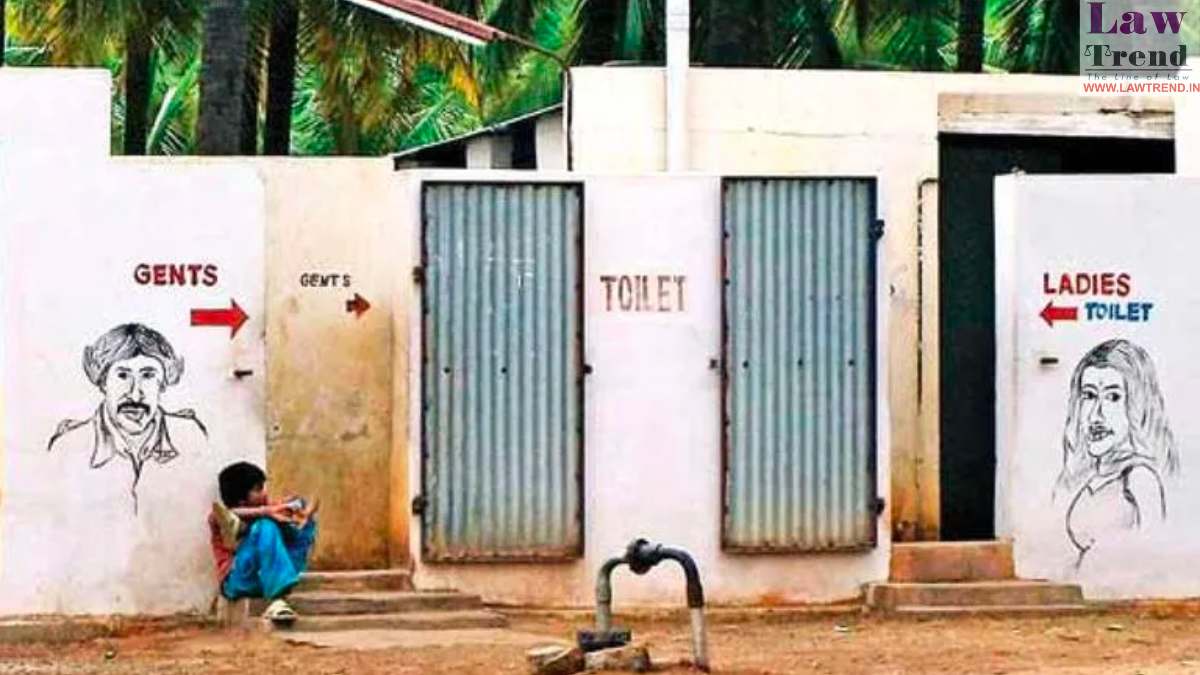
The Delhi High Court has sternly reprimanded the Municipal Corporation of Delhi (MCD), New Delhi Municipal Council (NDMC), and Delhi Development Authority (DDA) for their “complete apathy and insensitivity” concerning the dire state of public toilets and conveniences across the national capital. This judicial censure underscores a systemic failure in providing essential urban infrastructure that is foundational to a dignified, equitable, and sustainable city life. The court’s observations highlight a critical gap in civic responsibility, impacting public health, convenience, and particularly the mobility and safety of women in the city.
The division bench, comprising Chief Justice DK Upadhyaya and Justice Tushar Rao Gedela, expressed profound disappointment while deliberating on a public interest litigation (PIL) filed by Jan Sewa Welfare Society. The PIL sought to ensure the availability of hygienic public urinals with consistent water and electricity supply. The court unequivocally stated that the municipal and development bodies have demonstrated “dereliction of duty” regarding the upkeep of these vital public amenities, directly attributing their current deplorable condition to this widespread insensitivity.
Despite status reports submitted by the authorities detailing steps taken, photographic evidence presented by the petitioner’s counsel starkly illustrated the grim reality on the ground. These images, depicting the unsanitary and often unusable state of public conveniences, spoke volumes, prompting the court to assert that civic bodies should not require repeated reminders of their fundamental legal obligation to provide adequate public facilities. The court emphasised that these agencies, created for the populace’s benefit and funded by public money, are failing in a primary responsibility.
The High Court further noted that the appalling conditions were likely not isolated incidents but indicative of a broader pattern across Delhi’s public sanitation infrastructure. Crucially, the bench highlighted the disproportionate burden poor sanitation places on women. “Given such state of public utilities available in the city, the problems being faced by women lot gets compounded by obvious reasons,” the Court observed. This directly impacts women’s ability to participate fully in urban life, affecting their work, education, and overall social mobility due to concerns over hygiene, safety, and lack of accessible facilities.
In a strong directive, the High Court ordered the MCD, NDMC, and DDA to address the issue at the highest administrative levels. Each authority is mandated to formulate a comprehensive plan for their respective territorial jurisdictions. This plan must be based on an expert study, complete with recommendations to ensure that public utility services remain consistently usable. This judicial intervention serves as a critical push towards a more strategic and professional approach to urban sanitation, moving beyond reactive measures to proactive infrastructure planning and maintenance.
The court has given the authorities two months to take immediate steps to ensure public conveniences function appropriately in the interim, specifically directing MCD to make at least those toilets for which photographs were submitted functional. Counsels representing the civic bodies have been requested to personally engage with the Commissioner of MCD, Chairperson of NDMC, and Vice Chairman of DDA to ensure compliance. Earlier this year, the court had also called for the development of a common application for citizens to register grievances regarding malfunctioning public toilets, aiming to streamline accountability.
The petition itself highlighted that the poor maintenance of public toilets leads to “disgusting atmosphere” and poses risks of “infectious diseases,” constituting a significant societal hazard. Beyond the immediate health implications, the lack of well-maintained public conveniences impedes the vision of Delhi as a truly smart, eco-friendly, and gender-neutral city. Ensuring dignified access to sanitation is a cornerstone of urban equity, contributing to the overall public health and the quality of life for every resident. This judicial emphasis on basic civic amenities underscores their paramount importance in fostering truly liveable and sustainable urban spaces for all.
Also Read: Roorkee Plant Boosts Truflo Growth Amid Piping Demand Surge
