


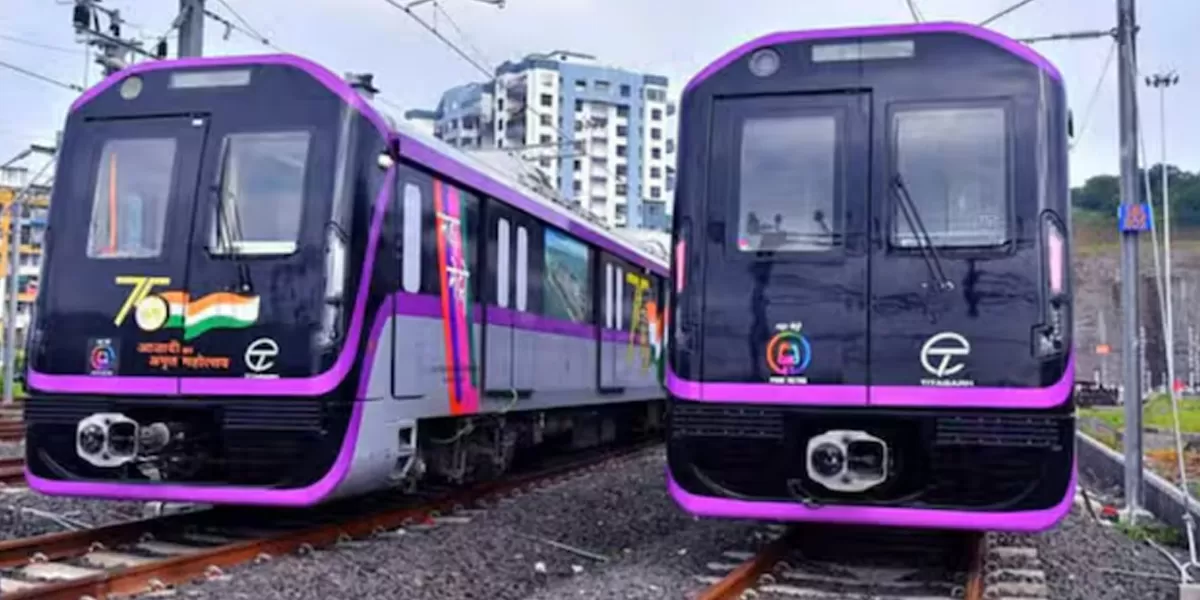
Mumbai Metropolitan Region Development Authority (MMRDA) has sanctioned infrastructure projects worth over ₹120 billion aimed at accelerating metro expansion and smart mobility solutions across the region. The comprehensive set of 19 projects received formal clearance during the authority’s recent executive committee meeting, marking one of the largest investments in the region’s metro network to date.
This strategic financial commitment underscores the city’s ambition to build a more integrated, commuter-centric and environmentally sustainable transport ecosystem. The projects approved are designed to reinforce last-mile connectivity, streamline multimodal integration, and address growing demands on public transport due to urban densification and population growth in the Mumbai Metropolitan Region (MMR). At the heart of the newly approved capital deployment is a ₹47.88 billion contract awarded to a leading engineering conglomerate for the integrated systems package on Metro Lines 4 and 4A. This includes supply and maintenance of rolling stock, advanced signalling systems, depot equipment, and a five-year maintenance commitment. Metro Line 4A’s civil works have also been revised to ₹5.57 billion in alignment with upgraded engineering specifications and coordination with the ongoing works.
Metro Line 6, a crucial east-west connector, also received critical project backing. The electrification and electro-mechanical systems contract, valued at ₹6.68 billion, has been assigned to a public sector infrastructure enterprise. Simultaneously, a separate ₹22.69 billion contract has been sanctioned for the supply of rolling stock and signalling systems on the same corridor, awarded to another major national infrastructure firm. These investments are expected to bring the line significantly closer to completion within the revised project timeline. To complement core infrastructure, the MMRDA has also focused on improving commuter experience through multimodal integration. Four packages totalling ₹5.35 billion have been approved for last-mile works associated with Metro Lines 4 and 4A. These involve improving pedestrian infrastructure, connectivity to bus and rail networks, and seamless transitions to other mobility modes at metro stations.
Key technological upgrades are also in the pipeline. A ₹2.49 billion contract has been approved for an automatic fare collection (AFC) system that will be deployed across Metro Lines 4 and 4A, enhancing the digital user experience and reducing transaction friction. Similarly, the Mumbai Trans Harbour Link (MTHL) project has seen its Intelligent Transport Systems (ITS) and toll management package revised to ₹5.51 billion, signalling an emphasis on integrating real-time traffic control and smart tolling solutions. Power infrastructure remains a core component of this development phase. A joint consortium has been allocated ₹1.18 billion for overhead electrification and power distribution works on Metro Lines 9 and 7A. Meanwhile, the ongoing effort to install ballastless track on Metro Line 2B continues with a ₹990.99 million package to a rail technology firm, reaffirming the MMRDA’s preference for low-maintenance, noise-reducing infrastructure.
Officials involved in the executive committee meeting emphasised that these approvals reflect the authority’s commitment to fast-tracking project completion while maintaining high standards of sustainability and commuter safety. An official stated that “The focus remains on enabling a world-class metro system that is inclusive, efficient, and built for the long-term mobility needs of Mumbai’s growing urban population.” The MMRDA has consistently highlighted its ambition to make Mumbai’s metro network a model for green urban transport. With these latest approvals, the authority has moved further towards achieving its vision of carbon-neutral mobility solutions. Electrified metro corridors, smart fare systems, energy-efficient rolling stock, and multimodal integration contribute not only to emissions reduction but also to improved commuter convenience.
Transport experts note that this financial boost is both timely and necessary. With ridership across existing metro corridors steadily rising post-pandemic, the urgency to complete under-construction lines and introduce tech-based enhancements has become more pronounced. “These are not just transport projects; they’re investments in economic productivity and urban resilience,” remarked an independent urban mobility consultant. Moreover, the emphasis on last-mile connectivity reflects a maturing perspective within transport planning. Past criticisms of disconnected metro stations and inaccessible interchanges have been addressed in recent plans through the prioritisation of walkability, feeder systems, and transit-oriented development. By embedding multimodalism at the core of these contracts, MMRDA is reshaping how infrastructure is perceived — not as isolated construction, but as a connected system of movement.
Although infrastructure delays have plagued Mumbai’s transport development in the past, the authority appears keen to prevent slippages in delivery timelines this time around. With stronger financial clarity, streamlined contracts, and vendor accountability frameworks in place, MMRDA hopes to accelerate the pace of metro completion over the next 24 months. As the city braces for monsoon and traffic bottlenecks return to full intensity, these approved projects offer a path forward for addressing Mumbai’s long-standing mobility challenges. While construction disruptions are expected in the short term, the medium- to long-term benefits in terms of air quality, economic connectivity, and commuter wellbeing may far outweigh the inconveniences.
Ultimately, the scale and composition of this infrastructure push indicate a systemic shift in the way urban transport is being conceived in Mumbai. With clear deliverables, integrated contracts, and forward-looking policy intent, MMRDA’s metro expansion strategy could serve as a blueprint for other Indian metropolitan regions aiming for sustainable urban transformation.
Also Read : Kochi Marina Revamp Planned by KTDC to Boost Seaplane Connectivity
