


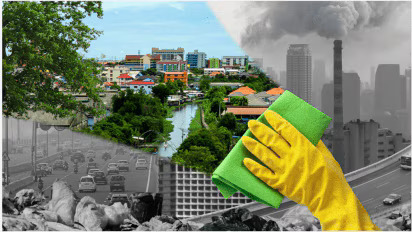
Patna officials have proposed the development of green zones across the city’s rural and urban regions to mitigate rising heat and reduce pollution levels. The initiative, highlighted during Van Mahotsav, integrates tree plantation, rainwater harvesting, solar energy, and medicinal plant cultivation to promote sustainable living while advancing Patna’s environmental and public health resilience.
As extreme weather and air quality degradation strain Indian cities, experts from the Asian Development Research Institute’s environmental arm stressed that green infrastructure must now be viewed as essential civic infrastructure. Terming Patna a “heat-stressed concrete jungle”, officials noted that interventions like the Tarumitra bio-reserve must be scaled to build microclimatic stability across the city. This would not only provide thermal comfort but also address deepening urban inequities by creating greener, healthier, and more inclusive neighbourhoods. The proposal for green zones envisions a multi-functional network of environmentally and socially responsive spaces. These zones would include community forests, rain-fed recharge systems for groundwater, solar-powered amenities, and green buildings. Medicinal plant cultivation, already in practice at select locations, would be scaled to provide income for local communities while bolstering traditional healthcare practices. The integration of clean energy sources and eco-architecture also offers a pathway to lower-cost housing and energy-efficient lifestyles for residents.
The broader strategy goes beyond just planting trees—it proposes an entire urban ecology built around resilience and inclusivity. The plan involves extending green infrastructure to peri-urban and rural belts surrounding Patna, where agroforestry and organic orchards could boost farmer incomes while acting as ecological buffers. By blending rural productivity with urban sustainability, officials believe Patna can craft a citywide climate defence model that benefits all economic classes. Key to this initiative is a formal partnership. The institute signed a memorandum of understanding with Tarumitra, the non-profit that manages one of Patna’s few functional bio-reserves. This alliance will coordinate city-wide greening efforts, organise educational outreach in schools and colleges, and launch citizen science projects focused on urban biodiversity and sustainable living. Officials stated that the collaboration seeks to embed long-term environmental values into the fabric of Patna’s urban identity.
At the Van Mahotsav event, participants engaged in multiple immersive activities to demonstrate the benefits of green living. These included guided walks through the bio-reserve, a film screening on environmental restoration, and community discussions on how cities can adapt to climate pressures. For many attendees, the interaction offered a rare glimpse into what an ecologically conscious Patna could look like. Urban designers supporting the green zones proposal emphasised the importance of mainstreaming passive cooling solutions in Patna’s architecture. Green roofs, vertical gardens, porous pavements and street trees are being discussed as scalable retrofitting options in older localities, while newer developments could incorporate sustainability into design from the start. These innovations support central government missions on net-zero carbon cities and can attract funding and incentives for civic implementation.
Another critical component of the proposal is inclusion. Officials noted that green zones must be usable and accessible for all age groups, genders, and economic backgrounds. Design features under consideration include gender-neutral sanitation facilities, shaded walking and cycling tracks, childcare amenities and dedicated elderly corners in public parks. Such inclusive infrastructure, they argue, is fundamental to ensuring that green zones serve as shared public goods rather than elite enclaves. Citizen engagement has emerged as a strong pillar in the implementation strategy. Van Mahotsav witnessed active participation from schoolchildren, housing society residents, and community leaders who committed to tree plantation and maintenance. Civic bodies are working to involve local residents in monitoring plant health, cleaning green spaces and reporting misuse. This participatory governance model not only ensures upkeep but also builds environmental ownership within the community.
City planners view Patna’s green-zone proposal as a scalable and replicable model for other mid-tier cities facing similar environmental stress. With India’s urban population set to rise sharply, such interventions can alleviate heat-island effects, improve air and water quality, and restore public confidence in civic leadership’s ability to tackle the climate crisis proactively. The cost of inaction, they warn, will be borne not just in lost biodiversity but in worsening public health and diminishing liveability. Environmental scientists consulted during the project’s drafting process reiterated that Patna stands at a crossroads. If the green-zone blueprint is executed with rigour and transparency, the city could become a regional beacon for low-carbon urban development. If delayed, the consequences may include worsening water shortages, respiratory illnesses and more frequent heatwaves—already a growing concern for marginalised communities and essential workers.
With plans taking shape and institutional collaborations underway, the onus now lies on state and local authorities to provide funding, regulatory clarity and monitoring mechanisms to turn this vision into reality. As more citizens join the movement, the green-zone proposal is beginning to reflect not just a policy measure, but a public demand—one rooted in the desire for a healthier, fairer and cooler Patna.
Also Read : Mumbai Launches IndiGos First Long‑Haul Manchester Flights
