


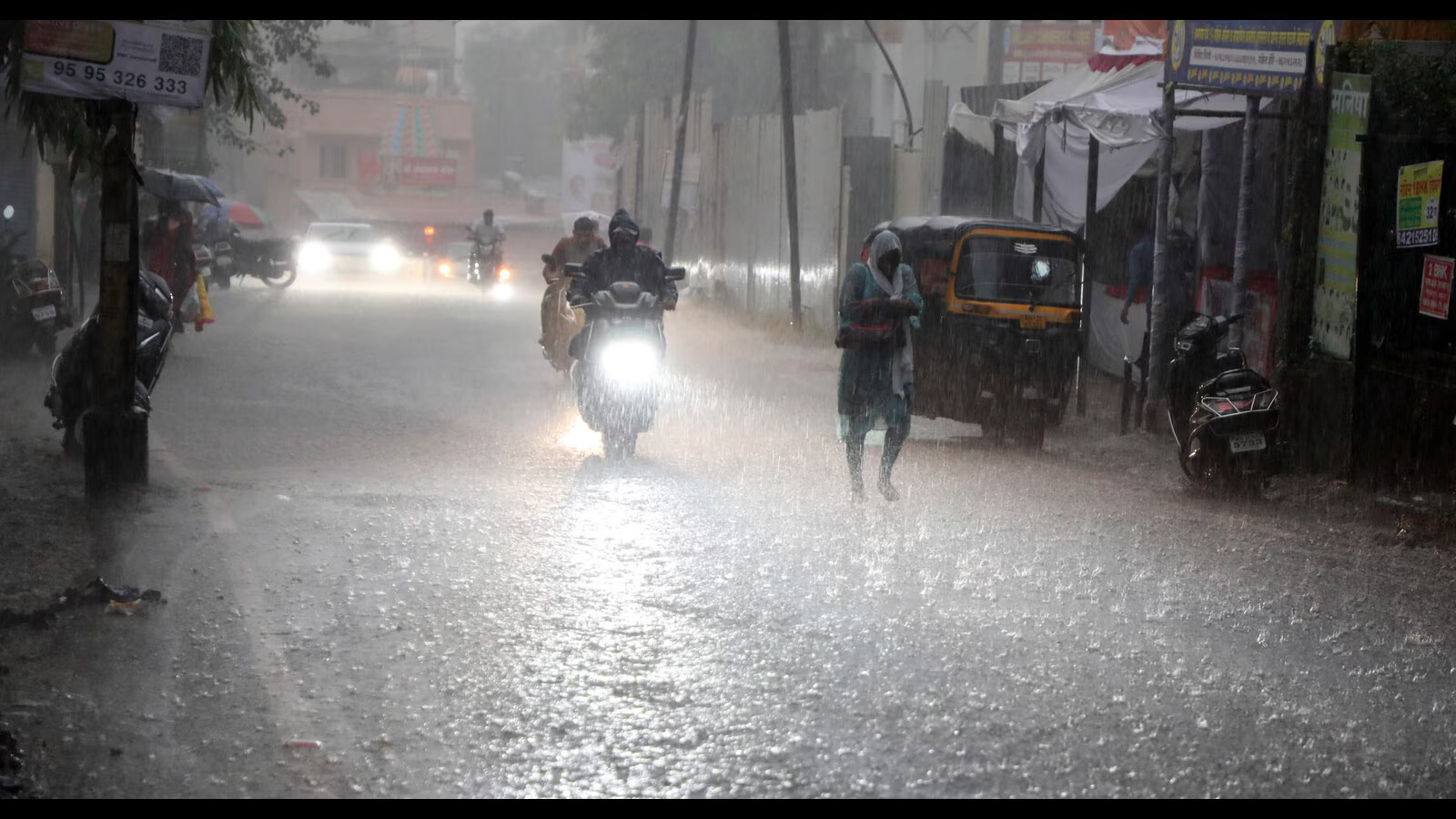
The monsoon season made a vigorous return to Pune and its surrounding hilly terrain on Tuesday, reactivating rainfall over key ghat zones after a subdued spell. This uptick comes at a time when the India Meteorological Department (IMD) has issued an orange alert for Pune and adjoining districts, citing the potential for isolated heavy showers over the next several days.
Western ghat belts near Pune — including Tamhini, Lonavla, Shirgaon, Kuruvande and Girivan — witnessed persistent rainfall throughout the day, marking the strongest activity in over a week. Tamhini led the charts with a substantial 210 mm of rain, followed by moderate but steady showers across other hilly zones. These rainfall levels are significant for their role in replenishing catchments feeding the city’s reservoirs. In contrast, urban Pune remained relatively dry, with localities such as Shivajinagar, Pashan, Lohegaon, NDA, Chinchwad and Koregaon Park recording rainfall below 12 mm. The disparity between the ghat sections and the city centre reflects a familiar monsoon pattern, where orographic effects cause enhanced rainfall in elevated regions while sparing the plains.
Meteorological analysts attribute this resurgence in rainfall to an active low-pressure system stretching across Gangetic West Bengal, Odisha, and Jharkhand. This synoptic feature has reinforced the monsoon trough, currently positioned near its seasonal mean, strengthening the southwest monsoon over western and central India. Officials at the IMD expect this system to remain in place for several days, keeping monsoon conditions favourable for more widespread rain. The orange alert for Pune is part of a broader weather advisory that covers Satara, Kolhapur, Nashik, Raigad, Ratnagiri and Sindhudurg — all districts with terrain susceptible to flash floods and landslides. IMD forecasts indicate light to moderate showers across most of Pune, with heavier precipitation likely in the western hills. The department continues to monitor rainfall intensities and has urged residents and local administrations to remain vigilant.
Amid these conditions, the Khadakwasla dam — one of Pune’s primary water sources — saw a noticeable rise in water levels. Officials from the irrigation department confirmed that discharge from the reservoir was increased to 2,400 cusecs on Tuesday. Other key dams such as Varasgaon, Temghar and Panshet received rainfall between 16 mm and 19 mm, modest but meaningful amounts given the cumulative deficit faced earlier in the season. Hydrological experts note that this rainfall is critical not only for urban water security but also for ensuring that hydroelectric projects remain functional and efficient. The rains are expected to feed catchment areas, raise reservoir levels, and prepare the system for potential high demand in the coming months.
This renewed monsoon pulse arrives after an unusually dry start to July, when early rainfall forecasts failed to materialise across parts of western Maharashtra. Civic officials and climatologists alike had expressed concern about the lag, citing increased risk to crops and water storage. Elsewhere in the country, the monsoon is showing similar signs of revitalisation. The IMD has forecast extremely heavy rainfall — over 200 mm — in isolated locations across Madhya Pradesh, west Uttar Pradesh, and east Rajasthan. Central Maharashtra and the Marathwada belt are also expected to receive enhanced rainfall, although the impact is likely to vary depending on local conditions.
Farmers in Konkan and ghat regions of Madhya Maharashtra have been advised to take proactive measures. The agromet division of IMD has suggested draining excess water from paddy fields, finger millet plots, and orchards to prevent waterlogging and crop damage. These advisories reflect not just immediate weather concerns but also a broader shift in how the agricultural sector must respond to increasingly unpredictable rainfall patterns. Within Pune’s urban limits, public services continued without major disruption on Tuesday. Traffic remained steady despite isolated road slowdowns in areas with poor drainage. Public transport services operated normally, although local authorities said they were monitoring updates closely and would issue warnings if rainfall intensity increased significantly.
In more vulnerable ghat roads leading to tourist destinations like Lonavla and Tamhini, district officials have deployed teams to monitor slopes and road conditions. These stretches are often affected by landslides and clogged culverts during prolonged rains, and early intervention can prevent significant disruption or injury. The increase in outflow from Khadakwasla dam has raised awareness among riverbank residents, especially those living downstream of the Mutha river. While no emergency alerts have been issued so far, disaster management officials have confirmed that teams are on standby should water levels rise rapidly in the event of a cloudburst or unexpected dam inflow.
Environmental experts see the current monsoon rebound as a reminder of the urgent need for resilient infrastructure. They argue that cities like Pune must build adaptive systems that account not only for average rainfall but also for extreme events. Drainage, reservoir spillway planning, slope stabilisation, and urban planning must be coordinated under a climate-resilient framework, they say. The ghat regions around Pune serve multiple roles — as water sources, biodiversity corridors, and tourism assets. Protecting these landscapes during the monsoon is essential to sustaining the wider ecological balance and ensuring uninterrupted access to water. Authorities have acknowledged that real-time rainfall and flow monitoring is being stepped up across all major sites.
While Tuesday’s showers provided much-needed relief and ecological benefit, weather experts warn that the coming days may see even stronger rainfall episodes. With saturated soil and rising reservoir levels, the focus will now shift to ensuring preparedness across rural and urban systems alike. As Pune moves deeper into the monsoon season, the confluence of weather patterns, civic planning, and citizen responsiveness will determine whether the rains become a seasonal asset—or a climate risk left unmanaged.
Also Read : ICRA Projects Moderate Growth for Indian IT Sector in FY26
