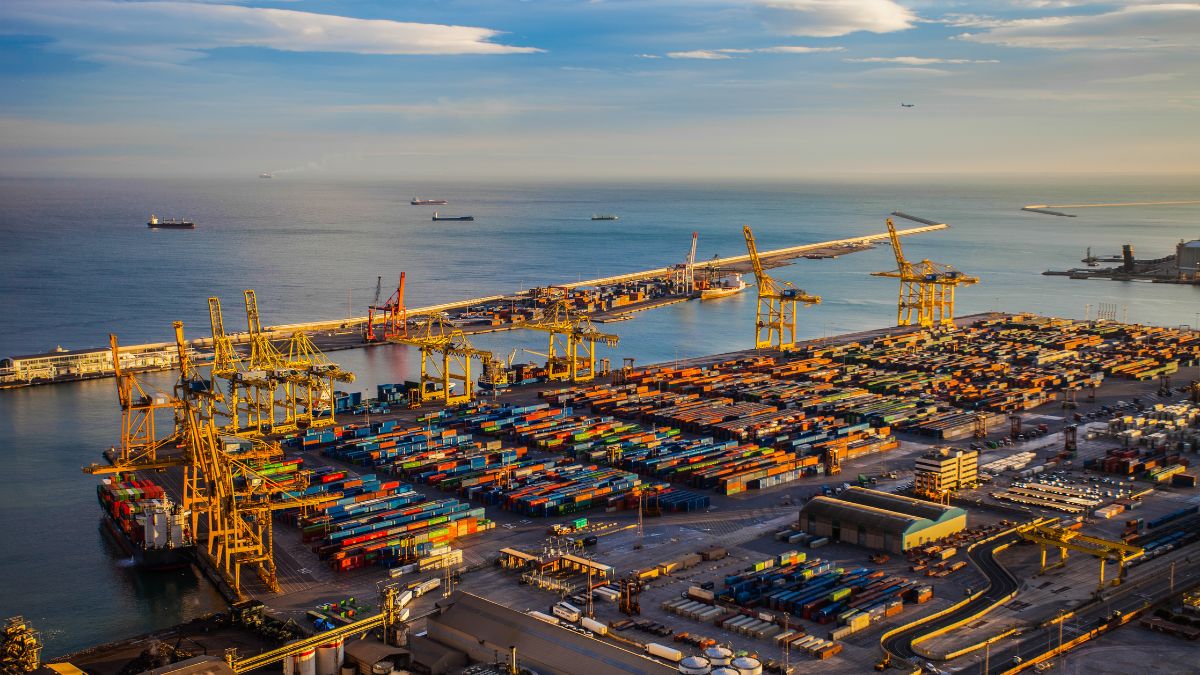
Kolkata Port Switches to Electric Cranes Paving Way for Greener Cargo
Kolkata’s Netaji Subhas Dock has deployed its first-ever electric-powered mobile harbour cranes, marking a major green milestone in port operations. Commissioned by Syama Prasad Mookerjee Port (SMP) and implemented by Adani Ports and SEZ, the electric cranes symbolise a decisive shift from fossil fuels to clean energy in one of India’s busiest ports. This transition not only enhances operational efficiency but reinforces the port’s commitment to eco-conscious infrastructure modernisation.
Deployed by Adani Ports and Special Economic Zone (APSEZ), the electric cranes aren’t merely upgraded hardware. They represent a systemic pivot from diesel-fuelled cargo handling to cleaner, electrified alternatives. This transition comes at a critical juncture for Indian ports, as the nation ramps up its net-zero commitments and aims to decarbonise hard-to-abate sectors like maritime logistics. The introduction of these energy-efficient MHCs at Netaji Subhas Dock increases the total number of mobile cranes at the Kolkata Dock System to six, but more importantly, it sets a precedent. Kolkata becomes one of the first Indian ports to adopt electric heavy cargo equipment in an operational capacity, moving from pilot-phase sustainability rhetoric to real-world deployment.
These electric cranes are equipped to handle high-volume container and bulk cargo while significantly reducing carbon emissions, air pollutants, and noise pollution. By eliminating diesel consumption per operation cycle, SMP estimates that these cranes could collectively slash tonnes of carbon dioxide annually—directly contributing to India’s broader decarbonisation roadmap under the Maritime India Vision 2030. Adani Ports, the logistics operator behind the deployment, underscored its alignment with India’s sustainable infrastructure goals. “This is not just a technical upgrade—it’s a green leap forward. We’re committed to building logistics infrastructure that’s future-ready and environment-friendly,” said an APSEZ official involved with the project.
The integration of electric MHCs also exemplifies the kind of inter-agency and private-public cooperation India’s port modernisation requires. SMP Kolkata, a key player in India’s eastern maritime corridor, has been under pressure to improve both efficiency and environmental standards amid rising global scrutiny on port emissions. As international shipping firms pivot towards ESG compliance and greener supply chains, ports like Kolkata must respond with cleaner operations or risk logistical irrelevance. What makes this move more than symbolic is its replicability. Ports across India—Mumbai, Chennai, Visakhapatnam, and beyond—are evaluating electric cargo-handling alternatives. However, Kolkata’s lead in deploying the technology sets it apart, making it a case study for other ports eyeing similar transitions.
Environmentally, the shift is a win. Traditional diesel-powered harbour cranes are not only fuel-intensive but also emit fine particulate matter and NOx gases, contributing to localised air degradation—especially in high-density port cities. Electric cranes, on the other hand, cut emissions at source and can be powered by renewable energy sources over time, making the move both impactful and scalable. Operationally, electric MHCs are less prone to mechanical failure due to fewer moving parts, lowering maintenance costs and downtime. They also enhance precision and speed during cargo transfers, which translates into faster vessel turnaround and better berth management—critical factors in a port’s global competitiveness.
For Kolkata, the timing couldn’t be better. With eastern India gaining traction in inland waterways and Bangladesh trade corridors, Kolkata Port stands to benefit from enhanced cargo volumes and regional economic integration. By going green now, it positions itself as not just a logistical node—but a sustainable one, prepared to anchor eco-conscious trade in the Bay of Bengal and beyond. Officials at SMP confirm that more electric upgrades are in the pipeline. Feasibility studies are underway for electrifying yard equipment and introducing onshore power supply (OPS) for berthed vessels—allowing ships to switch off their diesel engines and plug into the local grid while docked. These innovations could further slash the port’s carbon intensity and align with global benchmarks like the IMO 2030 decarbonisation targets.
Still, challenges remain. Grid infrastructure at many Indian ports is yet to be upgraded to support high-voltage, high-frequency port operations. Moreover, upfront investment for electric cargo equipment remains significant, although life-cycle cost savings and central government subsidies under schemes like FAME and Sagarmala could ease the burden. Crucially, this transformation is not just about machines—it’s about people. Training crane operators, maintenance teams, and logistics planners to work with high-tech electric systems will require upskilling and certification initiatives. For Kolkata’s maritime workforce, this may be the beginning of a broader professional evolution—one that blends heritage with high-tech.
The broader implication of this move extends beyond Kolkata. If India’s ports are to keep pace with global logistics shifts and climate mandates, sustainable upgrades will be essential—not optional. Electrifying heavy cargo equipment, digitising port operations, and reducing water and air pollution will become the new standard for competitiveness.
As global shipping giants lean towards low-carbon terminals and clients demand eco-compliant logistics chains, the cost of inaction grows. With the deployment of electric cranes at Netaji Subhas Dock, Kolkata has shown not only readiness but resolve—a green signal for the rest of India’s port ecosystem.