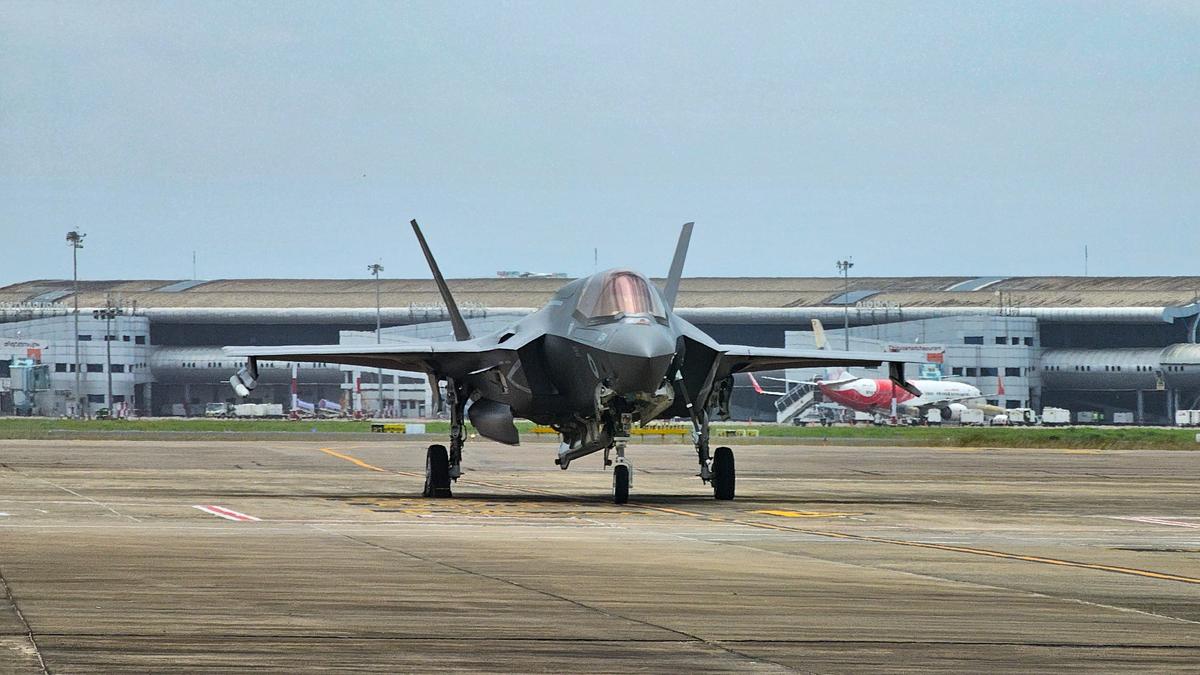
A stealth-capable F‑35B fighter jet from the UK’s Royal Navy remains grounded at Thiruvananthapuram International Airport following an emergency night landing on 14 June due to deteriorating weather and low fuel levels. An ensuing hydraulic system snag has necessitated specialist repair, but logistical delays in bringing essential equipment and technicians from the UK—not aircraft design flaws—have kept the jet earthbound, officials confirm.
The aircraft touched down safely at 9:28 pm amid poor visibility and fuel concerns, with the pilot executing standard emergency procedures. Routine inspections revealed a malfunction in the landing-gear hydraulic subsystem. Given the complexity and security classification of the jet, repairs must be carried out using certified tools and UK-cleared personnel. These requirements have resulted in a delay as the necessary resources are marshalled overseas. A Royal Navy spokesperson has emphasised that the grounding arises purely from logistical constraints. There are no national security concerns or mistrust with Indian authorities; rather, the placeholder location reflects the absence of specialist handling equipment at the airport. “All protocols have been meticulously followed,” said a senior official, “and the jet is secure awaiting certified repair support.”
Defence aviation experts highlight that hydraulic systems on fifth-generation fighter aircraft demand extreme precision and regular certification. Specialist tooling is typically only available at official service hubs. Alerted to the issue, the UK’s logistics command has expedited shipment of parts and support staff, but transit and customs processes in both countries have introduced unavoidable delays. Analysts point out that such contingencies are inherent to deploying advanced platforms far from their home bases. “This is not an operational failure but a demonstration of robust safety protocol,” explained one defence procurement expert. “When a fault arises, the jet is grounded until its requirements are met—not patched with improvised solutions.”
Equally, this incident has not affected India’s ongoing interest in procuring F‑35 variants, industry sources indicate. The aerospace community views the episode as a logistical rather than technological challenge. Indeed, discussions between New Delhi and London on basing and repair-rights infrastructure have already begun to ensure future contingencies are addressed. Moving forward, observers expect this incident to catalyse potential investments in ground support systems at Thiruvananthapuram—bolstering its capacity as an emergency-landing site for allied aircraft. Proposals include acquiring certified towing tugs, hydraulic test rigs, and ramp-mounted toolkits to reduce future downtime.
Importantly, rumours circulating on social media suggesting a design flaw have been debunked. Defence ministry officials and independent aviation analysts have dismissed the claims, asserting that the jet functions within expected safety margins. One civilian aerospace consultant remarked: “Global aircraft platforms routinely rotate maintenance teams internationally; the process here unfolded as anticipated.” Once the UK repair team arrives with requisite tools, the aircraft will be moved into a secure hangar for detailed maintenance and safety inspections. Local authorities confirm that rigorous security and airspace protocols are being upheld throughout.
Ultimately, the prolonged grounding emphasises the logistics-critical nature of deploying next-generation aircraft abroad. It underlines the need for collaborative maintenance frameworks and swift movement of specialised spares. For the F‑35 programme, the incident has provided a valuable case study in operational continuity beyond national boundaries. As India continues to evaluate procurement of F‑35B and F‑35A variants, defence planners are expected to factor in ground infrastructure readiness, international logistics coordination, and bilateral service agreements. This episode at Thiruvananthapuram will likely shape future policy on high-tech aircraft deployment, training, and sustainment—acting as a reminder that logistical agility is as vital as aeronautical innovation in modern warfare.
For now, the grounded jet stands as a symbol of global defence cooperation and the seamless safety net that underpins complex military aviation.
Thiruvananthapuram F35B Fighter Jet Still Grounded Due To Equipment Delay From UK