


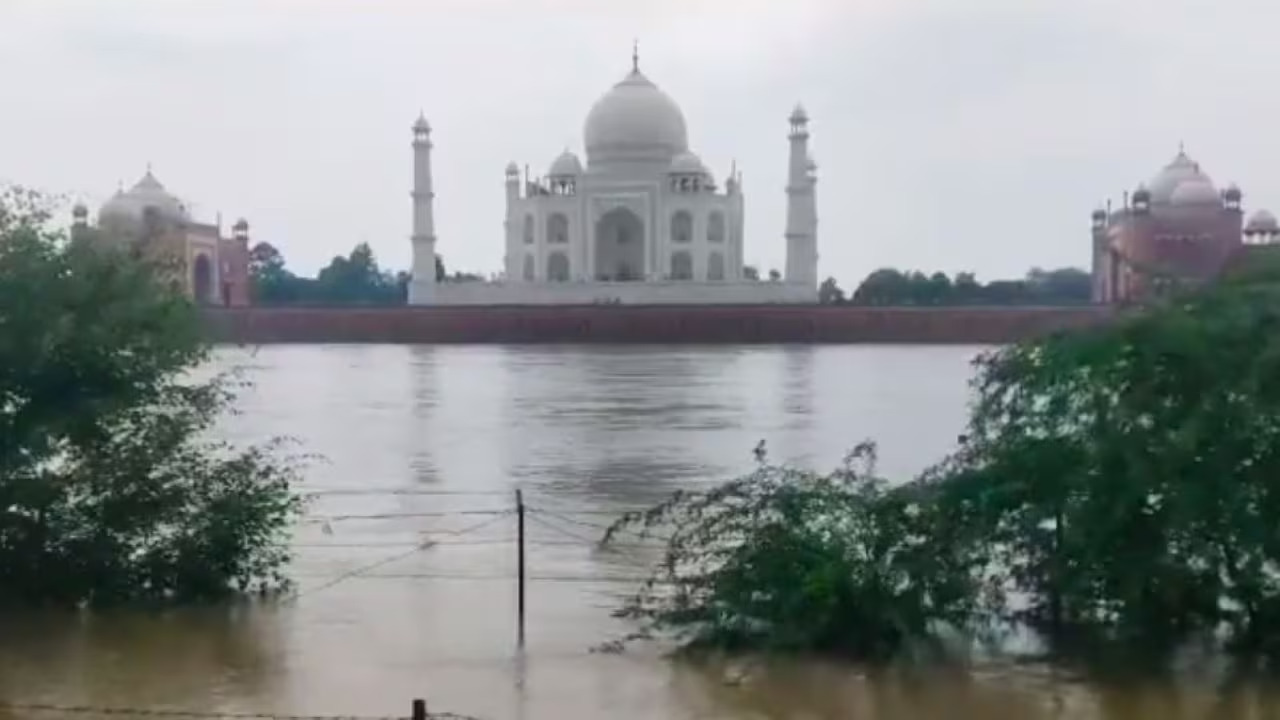
Agra’s Taj Mahal, along with several other iconic Indian heritage sites, is increasingly threatened by severe water-related risks such as drought, water scarcity, and flooding, according to new global data. An analysis based on World Resources Institute’s Aqueduct Atlas reveals that over 70% of UNESCO’s non-marine heritage sites are exposed to at least one form of extreme water stress—posing long-term threats to both cultural preservation and environmental resilience.
In India, the sites identified as facing serious water-related vulnerabilities include the Taj Mahal, Kaziranga National Park, the Western Ghats, Mahabalipuram’s Group of Monuments, and the Great Living Chola Temples. These locations, each bearing deep ecological and cultural significance, are witnessing either dwindling water availability, excessive flooding, or an unpredictable alternation between both extremes. The findings stem from the Aqueduct Water Risk Atlas, a globally recognised platform that monitors and evaluates hydrological risks. The data shows that about 21% of global heritage sites face the paradox of dealing with both too much and too little water within short spans of time—a dynamic that puts immense pressure on preservation systems and built infrastructure.
The Taj Mahal, one of the world’s most visited heritage landmarks, exemplifies how water stress is already taking a toll. Reduced groundwater levels around Agra, combined with increasing pollution in the Yamuna River, have accelerated degradation risks to the monument’s white marble. Conservation experts point out that low groundwater not only affects structural integrity but also increases atmospheric pollutants that cling to the surface of the building, accelerating discolouration and corrosion. In the Western Ghats—home to rich endemic biodiversity and a range of protected forests—the pressures are different. Here, changing rainfall patterns and deforestation are disrupting natural water cycles, causing irregular flooding that threatens both human settlements and fragile ecosystems. Meanwhile, in the flood-prone Kaziranga National Park in Assam, recurring high waters not only endanger its famed one-horned rhinoceros population but also strain conservation resources during rescue operations.
According to experts in ecological planning and heritage conservation, climate change is intensifying these risks by altering rainfall patterns, accelerating glacial melt, and shifting the timings and intensities of monsoon seasons. Such changes are especially damaging in regions like South Asia, where rivers are heavily dammed, urbanisation is rapid, and groundwater over-extraction is common. The report also underscores that water-related stress is not limited to India or developing nations. Globally, more than 470 UNESCO World Heritage Sites are already affected by one or more forms of water scarcity or flooding. From the marshlands of Iraq’s Ahwar, where water diversion and pollution have shrunk entire wetland systems, to Yellowstone National Park in the US—where a single flood event in 2022 caused over $20 million in damage—heritage conservation is being transformed into a battle against extreme hydrological volatility.
In India, heritage sites are particularly vulnerable because urban pressures often add to ecological degradation. For example, the Group of Monuments at Mahabalipuram—located along the Tamil Nadu coast—faces heightened coastal flood risks and salinity intrusion. The lack of buffer zones, inadequate rainwater harvesting, and unchecked tourism are aggravating the impacts. Officials working in cultural heritage protection argue that adaptive management strategies must be mainstreamed urgently. This includes building hydrologically informed buffer infrastructure, revising conservation masterplans to incorporate water risk data, and establishing collaborative mechanisms between environmental agencies and heritage boards.
The analysis suggests that if global warming and regional mismanagement persist unchecked, the percentage of heritage sites facing extreme water stress will climb from the current 40% to 44% by 2050. The impact will be most pronounced in water-stressed regions such as the Middle East, parts of northern China, and South Asia—including key Indian heritage zones. In such contexts, combining traditional water management wisdom with modern climate adaptation tools becomes crucial. Restoration of wetlands, desilting of ancient water tanks, rainwater harvesting, and ecological zoning around protected monuments could collectively offer long-term relief.
Equally important is the role of public awareness. Without strong civic engagement and policy advocacy, water risks may be addressed too late or in a fragmented manner. Experts advocate for interlinked action plans that address both heritage conservation and water security under a single urban planning umbrella. Although water-related challenges to cultural assets are now drawing international attention, tangible policy shifts in India are still evolving. Conservation scientists warn that delayed mitigation, particularly at active heritage and tourism hotspots, could lead to irreversible loss—of architecture, of biodiversity, and of collective memory embedded in these spaces.
As the world navigates a future marked by environmental unpredictability, the preservation of heritage must extend beyond stone and structure. It must engage directly with the hydrological systems that have shaped and sustained these sites for centuries. In doing so, India—and indeed the world—must confront an inconvenient truth: that without sustainable water governance, even humanity’s most iconic wonders may become relics of a lost ecology.
Also Read : Thane Transport Minister Seeks Renaming Of Metro Stations To Reflect Local Identity
