


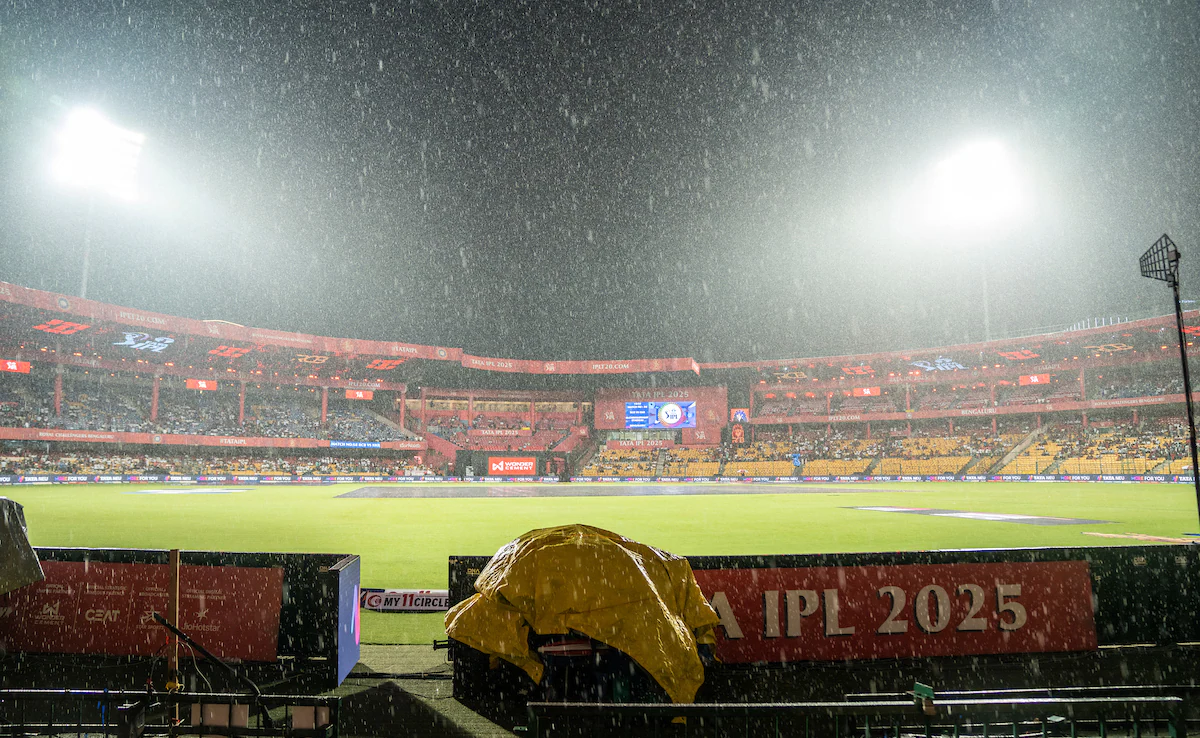
Bengaluru’s iconic cricket stadium plunged into darkness this week as authorities disconnected its power supply for violating fire safety regulations, just days after a deadly stampede outside its premises. The move, enforced by the city’s electricity board following repeated non-compliance notices, has triggered scrutiny over safety lapses during recent high-attendance events, including the IPL victory celebrations that drew massive crowds and left 11 dead. Officials now face growing pressure to enforce accountability and ensure disaster preparedness.
The decision to cut electricity at the stadium was prompted by a formal directive from the Fire and Emergency Services Department, citing persistent disregard for basic safety standards. According to government officials, the Karnataka State Cricket Association (KSCA), which manages operations at the stadium, had received multiple reminders over the past year to address critical fire safety deficiencies—none of which were adequately resolved. A letter dated June 4 had reportedly flagged these violations and requested immediate compliance. When no substantial corrective action was undertaken, the Bangalore Electricity Supply Company (BESCOM) acted upon the advisory by suspending power at the stadium, signalling a rare but significant move against institutional negligence. The notice was received by BESCOM on June 10, but enforcement was delayed to allow for coordination among regulatory bodies and to ensure public communication.
What makes the development more alarming is that several of this season’s Indian Premier League (IPL) matches hosted at the venue proceeded without full adherence to mandated fire protocols. Thousands of spectators, including families with children, attended these matches under the illusion of safety, unaware of the infrastructure vulnerabilities beneath the surface. The situation reached a breaking point during the post-season felicitation ceremony earlier this month. The event, held to celebrate Royal Challengers Bengaluru’s title win, drew an unmanageable crowd outside the gates of M Chinnaswamy Stadium. Poor coordination, lack of controlled entry points, and the absence of emergency crowd management measures led to a stampede-like situation, resulting in 11 reported fatalities and numerous injuries. Eyewitness accounts and amateur footage from the scene painted a grim picture of chaos and inadequate emergency response.
Authorities have now confirmed that the stadium was non-compliant with fire safety norms on the very day of the tragic incident. The violation not only exposes institutional gaps in enforcing safety at large venues but also raises broader concerns about public infrastructure readiness in Indian cities experiencing rapid urban growth and surging crowd dynamics. Senior officials involved in the review process stated that this is not an isolated case. Rather, it points to a systemic issue plaguing many urban entertainment venues where footfall can spike dramatically. They added that while energy efficiency and event profitability often dominate operational priorities, life-saving infrastructure such as functional extinguishers, alarm systems, emergency exits, and regular evacuation drills are either under-maintained or ignored altogether.
The KSCA had reportedly asked for a one-week extension to address the safety mandates, but failed to provide a concrete timeline for implementation. In the current regulatory landscape, such delays are increasingly viewed as unacceptable. Municipal bodies and civic administrators are under pressure to demonstrate stricter enforcement, particularly when non-compliance could endanger lives. In light of the power cut, upcoming scheduled events at the stadium remain uncertain. While no matches are immediately planned, the episode is expected to influence venue licensing across other high-capacity spaces in the city. Urban planners and public safety experts are calling for a pan-city audit of stadiums, convention centres, and large halls that host public gatherings exceeding prescribed limits.
From a policy perspective, the incident has renewed calls for integrating sustainability with safety. As Bengaluru positions itself as a smart city with global aspirations, stakeholders argue that infrastructure resilience must become central to urban planning—not an afterthought. Disaster-preparedness training, real-time monitoring systems, and community-responsive emergency design must all be included in the blueprint of future-ready civic spaces. Activists advocating for safer public spaces have also pointed to the cultural tendency to sideline regulations in favour of short-term convenience or commercial gains. They argue that unless public safety norms are enforced through meaningful penalties, accountability will remain elusive. The decision to cut power is thus being seen as a turning point—symbolic of a more assertive governance approach that puts public welfare first.
Also Read : Kashmir’s Rail Link to Delhi Fulfils Long-Held Dream of Integration
