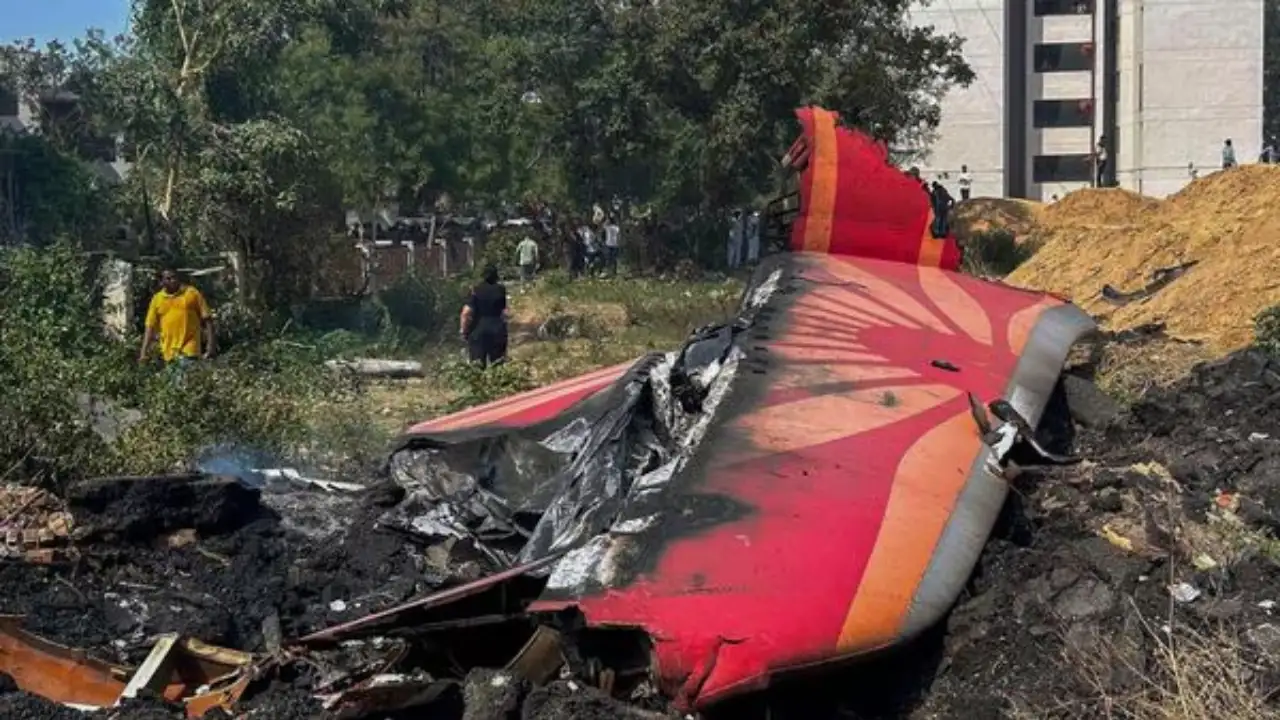
The AAIB has launched a comprehensive investigation into the shocking Air India Flight AI 171 crash near Ahmedabad on June 12, with officials now openly examining the possibility of sabotage. Speaking at Pune’s Emerging Business Conclave, Civil Aviation Minister Murlidhar Mohol emphasised that the bureau will assess every conceivable scenario, backed by footage from multiple CCTV cameras and collaborative coordination with national and international bodies.
This crash, which saw both engines reportedly fail in mid-air—a rarity in commercial aviation—has confounded experts. Veteran pilots describe dual engine failure as “almost unprecedented,” heightening concerns that external interference or mechanical manipulation could be at play. Such a scenario would mark a serious deviation from the more typical causes such as technical malfunction or pilot error.
Crucial evidence for the investigation resides in the recovered cockpit voice recorder (CVR) and flight data recorder (FDR). Located on June 13 atop a nearby building and June 16 amidst wreckage, these black boxes remain within AAIB’s custody. Mohol reaffirmed the government’s intent to perform all analyses domestically, flagging no intention to dispatch the data overseas for decoding. The ministry assured the public that this process is fully aligned with both Indian regulations and global aviation standards.
To ensure a multi-disciplinary approach, the AAIB assembled an investigative team on June 13, comprised of its Director General, an aviation medicine specialist, an air-traffic control officer, and representatives from the U.S. National Transportation Safety Board (NTSB), in line with the Chicago Convention’s protocols for aircraft manufactured abroad. This cooperative framework underpins efforts to deliver a transparent, credible, and scientifically rigorous outcome.
The crash claimed approximately 241 passengers and crew, sparking national and global concern over aviation safety. Its high fatality toll and unusual engine shutdowns have prompted authorities to reaffirm the importance of real-time maintenance tracking and more resilient risk management systems. Aviation analysts note that any confirmation of sabotage would shatter existing safety paradigms, potentially triggering widespread regulatory and security reviews.
While traditional investigations typically focus on design flaws, human error, or maintenance gaps, the line of inquiry into sabotage introduces a complex new dimension. It also raises broader strategic questions about supply chain security, airport perimeter protection, and cyber-physical vulnerabilities across India’s aviation network.
As international experts converge and data analysis intensifies, AAIB aims to finalise its findings within a three-month window. The forthcoming report is expected to shape immediate policy debates on aircraft safety, open new lines of inquiry into aviation security, and influence investment decisions within India’s expanding civil aviation sector.
With public interest and global scrutiny at an all-time high, authorities face a pivotal moment. Whether the cause proves mechanical, operational, or malicious, the outcome will demand concrete reforms and assurance that no stone was left unturned.