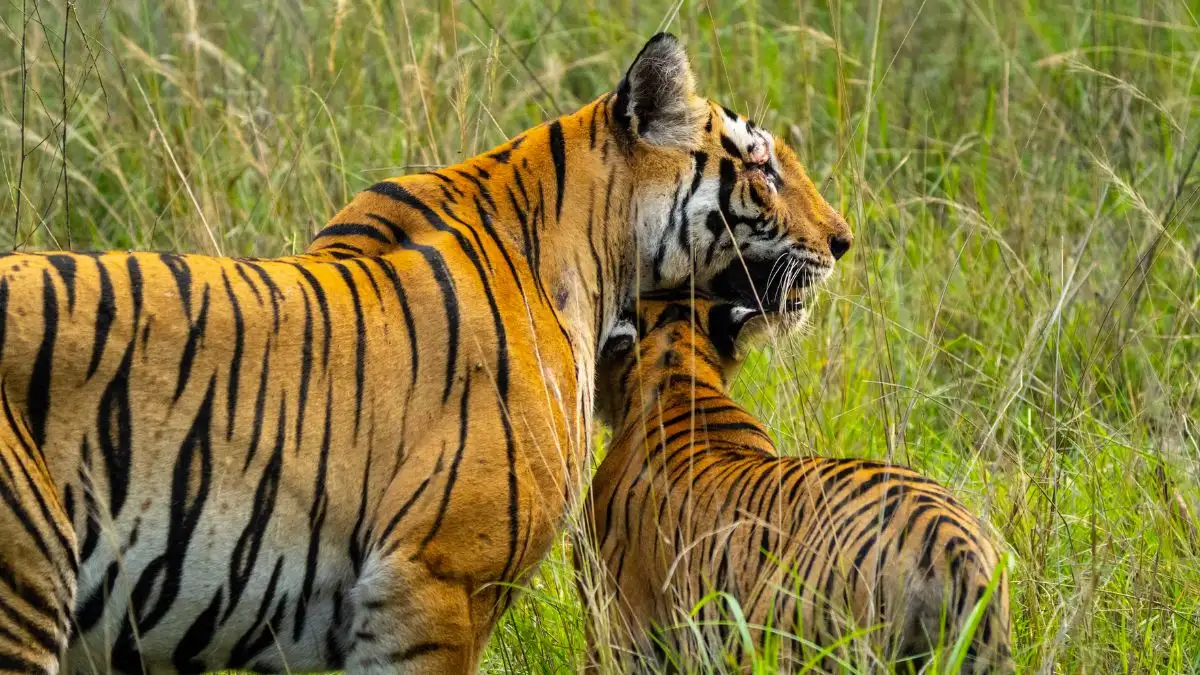
Karnataka Sanctuary Loses Five Tigers to Suspected Poison
Chamarajanagar, Karnataka – A harrowing incident in the MM Hills Wildlife Sanctuary has devastated conservationists and local communities, as five tigers—a mother and her four cubs—were discovered dead on June 26. Authorities suspect poisoning, finding a cow carcass nearby that may have been used as bait.
The sanctuary’s Gajanur beat, in the Hoogyam range, became the tragic scene. Officials believe the adult female, approximately 11 years old and a long-standing resident documented since camera-trapping in 2014, dragged a cow into the forest and partially consumed it. When the mother and cubs returned, they likely ingested poison intended to defend livestock, resulting in a mass fatality. Forest Minister Eshwar B. Khandre has expressed grave concern, directing a high-level inquiry led by senior National Tiger Conservation Authority officials and the chief conservator for Chamarajanagar. With necropsies under NTCA protocols underway, toxicology, histology, and DNA testing are being conducted. The committee is expected to report within 14 days.Karnataka, which hosts the country’s second-largest tiger population, with 563 individuals, has boosted sanctuary monitoring.
Authorities have deployed infrared cameras, GPS-assisted patrols, anti-poaching camps, and created reward-based informant networks to detect poison baits and traps. The state now faces renewed scrutiny over its efforts to upgrade MM Hills to tiger-reserve status, a process stalled by previous electoral politics. Environmentalists say the incident underscores the delicate balance between wildlife conservation and rural livelihoods. “Conflict arises when tigers prey on livestock,” notes Dr Sanjana Rao, a Bengaluru-based wildlife ecologist. “Effective mitigation requires timely compensation, safer animal enclosures, and stronger community ties to sanctuary management.” The deaths raise further concern amid Karnataka’s conservation success. Recent wins mask this unsettling reversal of fortune. Government officials say that, if poisoning is confirmed, the perpetrators will face strict legal action, including criminal prosecutions under wildlife laws.
While the inquiry unfolds, MM Hills Sanctuary remains under close watch. The poison trace indicates systemic gaps in protection and signage. Conservationists argue that restoring tiger numbers requires more than monitoring—it demands proactive cohabitation frameworks between villagers and forest staff. In the coming weeks, Karnataka’s response will be pivotal. Effective enforcement, community engagement, and finalising the MM Hills tiger-reserve proposal could set a national example. The state now faces a defining moment: whether it can translate this tragedy into stronger protection for its most iconic wildlife.