


The MMDA has reaffirmed its commitment to road safety at its 2025 summit, Road Safety Action Plan with a view to reducing traffic fatalities—particularly among pedestrians—and installing eco‑friendly solar LED lighting across major thoroughfares. At the Metro Manila Road Safety 2025 summit, attended by national agencies and transport stakeholders, MMDA officials unveiled updated data showing pedestrian fatalities at 111 cases, self‑accidents at 77, and rear‑end crashes at 60 for 2024.
These sobering statistics reflect the urgent need for evidence‑based interventions under the five pillars of the MMRSAP: Road Safety Management, Safer Roads, Safer Vehicles, Safer Road Users and Post‑Crash Response. Since its launch in 2024 with international support—including the WHO and JICA—the action plan aims to cut road fatalities in the National Capital Region by 35 percent by 2028. MMARAS records approximately 92,583 annual road crashes in recent years—averaging 410 deaths per year—with drivers comprising 51 percent, pedestrians 36 percent and passengers 13 percent of the toll. Pedestrians emerged as the most vulnerable group in 2024’s data.
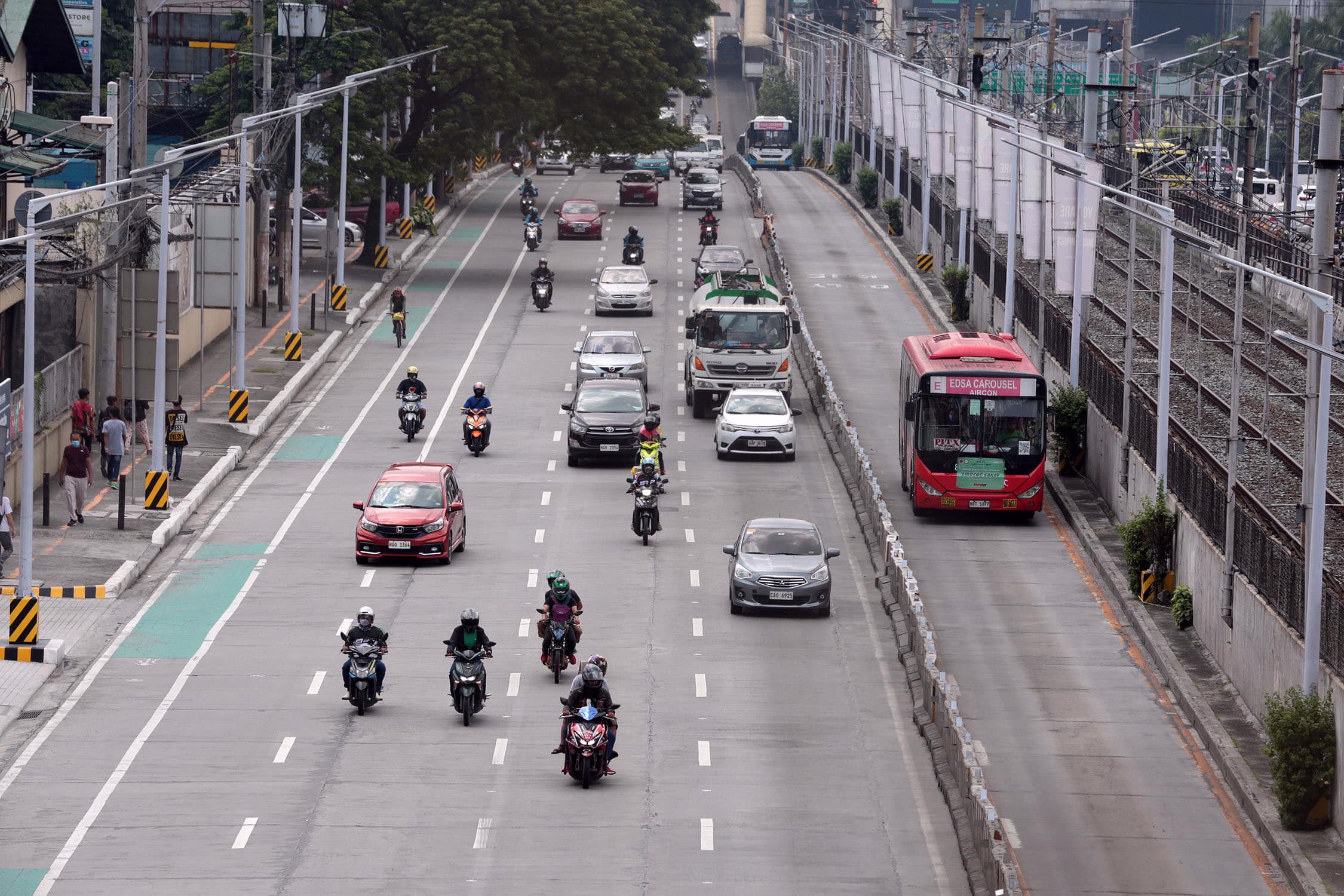
Officials highlighted a range of new initiatives to reinforce safety and environmental resilience. Among these, MMDA has deployed 8,210 solar‑powered LED streetlights along EDSA, C‑5 and Roxas Boulevard by June 2025—a key step towards reducing energy consumption, cutting carbon emissions, and enhancing night‑time visibility. The summit also doubled down on strengthening inter‑agency collaboration. Agencies such as the DPWH, DOTr, LTO, LTFRB and DOH formally committed via a “Wall of Commitment” to align policies and education efforts. Their joint focus ranges from infrastructure design—like safer crossings and green pedestrian zones—to vehicle standards, user education, and healthcare logistics for crash response. The approach emphasises inclusive, gender‑neutral planning that meets the needs of commuters, including women, the elderly and people with disabilities .
Data‑driven road design was central to the discussions. Traffic engineers presented detailed crash categorisations, enabling targeted interventions such as speed management in high‑risk zones and lane reconfiguration on accident‑prone corridors .Sustainability was a recurrent theme. Civil society participants urged inclusion of renewable energy—such as solar lighting—alongside green urban features like dedicated cycling lanes. The solar LED rollout is seen as a promising model to scale green technology within urban mobility frameworks. While summit delegates celebrated progress, critics cautioned that the 35 percent reduction goal requires sustained funding and active community involvement. Multisectoral backing from LGUs, private partners, and media engagement will be essential to uphold accountability.
Experts stressed that performance measures must underpin all interventions—monitoring vehicle standards, infrastructure compliance, and post‑crash response times. Nevertheless, the summit delivered a strong signal: Metro Manila will not tolerate rising road fatalities. With enhanced street lighting, data‑led design, and inclusive governance backed by national agencies, the MMDA‑led framework is now more robust than ever. If executed faithfully, it promises not only safer roads but a shift towards more equitable, low‑carbon urban mobility across the capital.
ALso Read :Bhopals 90-Degree Bridge Sparks Safety Concerns
