


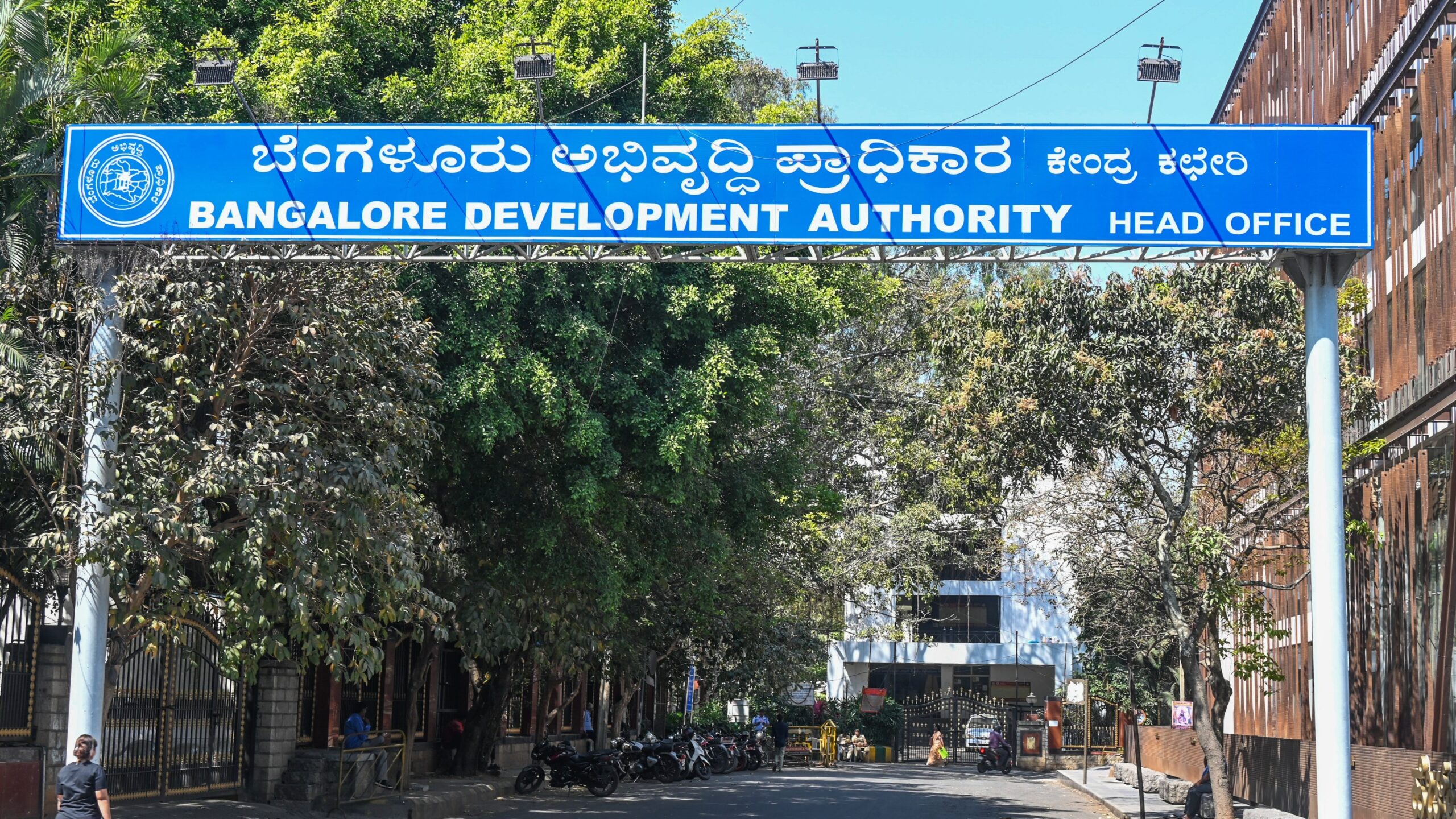
The Bangalore Development Authority (BDA) has announced an e‑auction of 133 corner and intermediate sites across multiple well‑developed layouts, with bidding open until 19 July and live auctions commencing from 21 July. The move aims to generate revenue while increasing equitable access to urban land in an efficient, transparent digital format.
Identified across Anjanapura Township, JP Nagar Phase 9, Sir M Visvesvaraya, BTM 4th Stage, Banashankari 3rd Stage, Nagarabhavi 2nd Stage, HBR 1st Stage 2nd Block, Austin Town, Jakkur Arkavathi 7th Block, among others, the plots span sizes from 600 sq ft to approximately 4,500 sq ft. Offered on an “as‑is‑where‑is” basis, bidding starts at Rs 500 per sq m increments—a structure designed to streamline access and promote fiscal discipline in land allocation. Property experts see multiple benefits. The e‑auction enables decentralised transparency and maximises revenue without manual processes. It also suits investors and homebuyers seeking high‑ventilation, well‑positioned corner sites—sought after for both residential and small‑scale commercial use, reminiscent of strong sales seen in previous BDA auctions.
These sites have consistently delivered revenue boosts: in January 2022, a BDA auction for 296 corner sites yielded ₹133 crore—₹348 crore in total bids. BTM and Visvesvaraya layouts recorded some of the highest bids, with one site selling at three times base price. Such success stories underscore the attractiveness of corner plots, thanks to their natural light, ventilation and development value. Yet critics caution that e‑auctions may disadvantage everyday buyers who lack awareness, digital literacy or upfront liquidity, potentially deepening urban inequality. Previous Court rulings have also flagged concerns: only corner and commercial plots may be auctioned, while intermediary plots must be allotted to eligible applicants. This raises questions about access in mixed neighbourhoods.
Subject matter experts suggest that the BDA must address geographic transparency to ensure affordability. A 2023 Bengaluru Mirror investigation revealed that many bidders struggled to locate plots due to lack of geo-tagging—potentially limiting participation by non-local buyers. Providing map integration and layout clarity could broaden access. Significantly, BDA also aims to finance critical urban infrastructure—such as stormwater drains and water supply—through revenues from these plots. Government sources indicate that reinvesting proceeds into civic services may enhance resilience in Bengaluru’s rapidly developing suburbs.
The e‑auction’s digital format, part of Karnataka’s broader urban‐digitisation campaign, promotes efficient, auditable and inclusive land allocation. Bidders will deposit earnest money online, with a refundable security deposit required upon registry. Further payment is expected in stages—25% initial, balance in instalments—with annual taxes coming due post-registration. However, caution remains regarding plot verification. Some buyers have reported legal complications around Arkavathi layouts, with builders allegedly promoting non-verified BDA plots for high prices. BDA guidance to inspect and confirm titles in person may help reduce speculative issues.
The BDA is expected to release geo‑location data and layout plans within the week. If fully integrated into e‑auction portals with visuals, it may level the playing field for informed consumers across socio-economic brackets. Support services from registrars, legal aid centres and NGOs could further uphold equitable access. Looking beyond revenue, this initiative reflects broader societal priorities: sustainable urban growth, equitable land access, and low‑carbon cities. By promoting compact, well-located development in built-up layouts, it counters urban sprawl—aligning with environmental goals shared by civic planners.
Also Read: India Unlocks 12 Crore Homes as CNG Network Expands Rapidly
