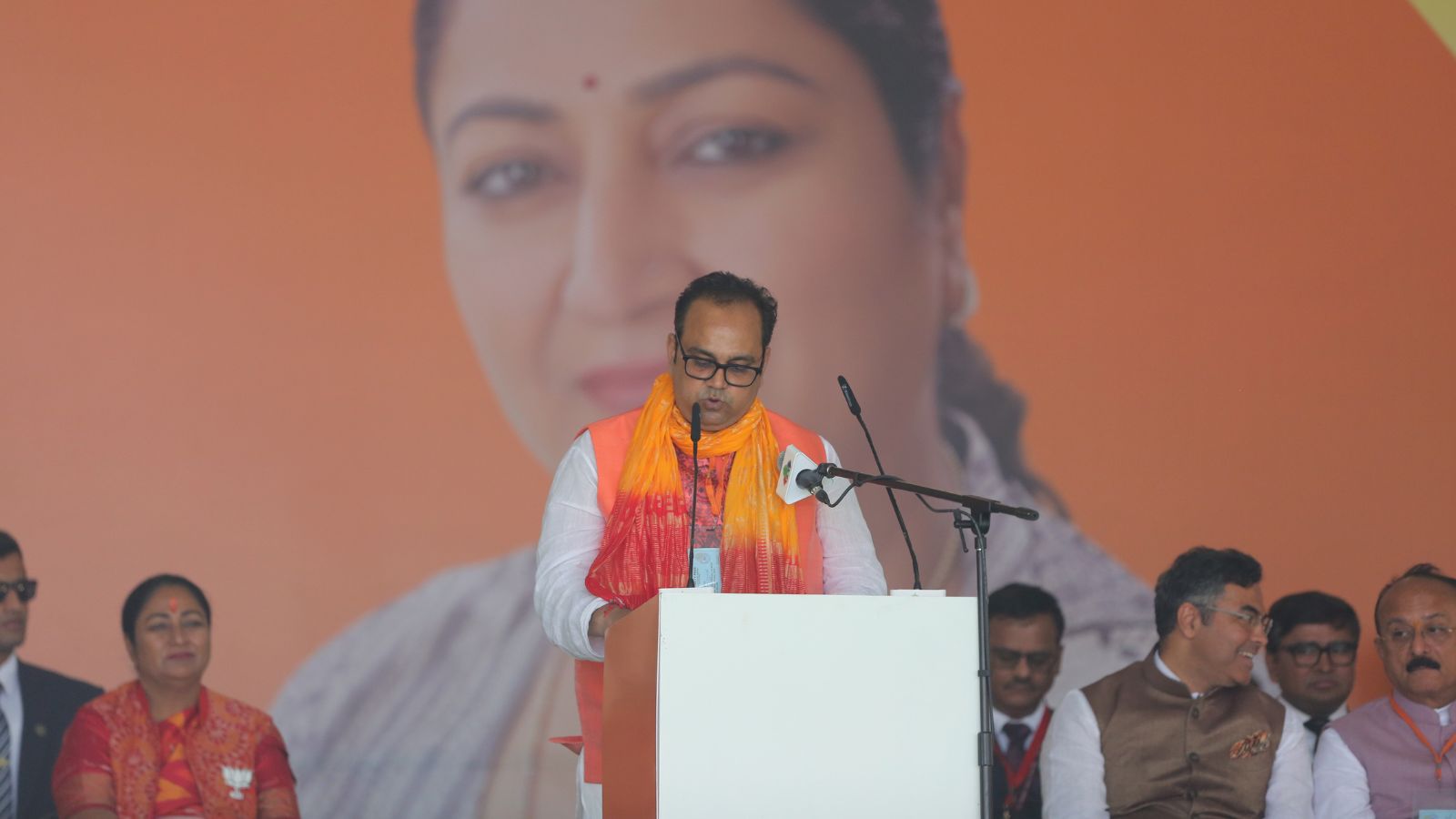
Delhi Health and Transport Minister Pankaj Kumar Singh
Delhi has rolled out a twin initiative in Vikaspuri, merging long-awaited road infrastructure upgrades with a mass plantation drive of 501 trees. Aimed at improving daily mobility and enhancing environmental health, the project focuses on easing commutes for over 3,000 schoolchildren while encouraging community-led greening. This move reflects the city’s renewed push for sustainable, inclusive, and culturally rooted urban development with people’s wellbeing at its core.
Transport and Health Minister, addressing residents, said the new road “addresses a public demand unresolved for years”, particularly benefitting children whose safety was previously jeopardised on the dilapidated route. His remarks highlighted a broader governance strategy: urgent infrastructure coupled with environmental care, ensuring the benefits are felt by every age-group and gender‑identity group in the community. Local residents in G‑2 Jai Vihar, Prashant Enclave, Bajrang Chowk and Harphool Vihar have welcomed the announcement. Overcrowded roads and unsafe school commutes have long frustrated families; this new thoroughfare represents both practical relief and a symbolic step forward for inclusive urban design.
Under the leadership of Chief Minister, this road project joins a larger effort to expedite stalled civic works and invest in youth‑friendly public assets. By foregrounding pedestrian safety, youth mobility and equitable access, the project aligns with global best practice in gender‑neutral and equitable infrastructure planning. The plantation drive, held under the “Ek Ped Maa Ke Naam” campaign, sought to create emotional connection—each sapling symbolising maternal blessings and a collective responsibility to nature. The Minister urged Delhi residents to replicate the act by planting a tree in their mother’s name, weaving personal narratives into environmental responsibility.
Urban ecologists view this blend of infrastructure and greening as a step towards a zero‑carbon city ethos. Street trees cool micro‑environments, reduce smog, and channel rainwater, while safe roadways mitigate greenhouse‑gas emissions by optimising vehicle flow and encouraging active travel such as walking and cycling. The minister noted that the new road is not merely a commuter’s convenience but a structural solution to equity. By prioritising areas with high school‑age populations, the Government underscores how urban upgrades should serve the broader goals of public health, gender safety and community dignity.
This model is particularly significant given Delhi’s entrenched patterns of haphazard urbanisation, where recurring road repairs and sporadic greening remain disconnected from residents’ daily realities. Vikaspuri’s initiative instead merges urban planning, environment and social welfare under one programme—ensuring the benefits are inclusive across age, gender and income spectrums. Local community groups have welcomed the effort, saying the project’s people‑first orientation helps rebuild trust in urban governance. “We have waited years for safe access to school,” said a resident. “This is encouragement that our concerns matter.”
Experts caution that maintaining such progress will require long‑term care and follow‑through. Ensuring sapling survival, monitoring road quality, and mapping intersections for pedestrian safety will determine whether this initiative truly redefines neighbourhood resilience. Delhi’s move aligns with wider urban and environmental policy goals. As India’s cities grapple with pollution, heat stress and growing populations, integrated initiatives combining road improvements with urban forestry are gaining attention. Pilot programmes in Europe and China, for instance, have shown that planned greening alongside infrastructure reduces carbon output while enhancing liveability.
Moreover, by anchoring the campaign in maternal symbolism, Delhi introduces a gender‑sensitive cultural framing that broadens civic participation. Women and children are central beneficiaries of safer, greener streets, reinforcing the notion that urban renewal must be socially inclusive as well as physically sustainable. The Vikaspuri project also dovetails with Delhi’s larger climate commitments, including the Municipal Corporation’s carbon reduction roadmap and the state’s expanding green cover targets. By choosing existing residential corridors over unregulated expansion, planners demonstrate how retrofit‑focused urban upgrades can complement new‑build greenfield projects elsewhere.
For now, the key is execution. The Baprola–Harphool Vihar route must be completed with quality materials, accessible crossings and safe walkways within the promised timeframe. Saplings must be maintained through established stewardship, involving local schoolchildren, civic bodies and resident associations. Tracking progress through transparent city dashboards may build further confidence. Ultimately, Vikaspuri’s twin projects embody a modern urban paradigm: infrastructure for all, greening that reflects culture, and a design ethos that advances equity and climate resilience. If successfully executed, this could serve as a replicable template for neighbourhood‑level regeneration across Delhi and other Indian cities.
Delhi now has a tangible opportunity to show how combining road safety and tree planting in underserved areas not only serves local families, but also strengthens equity, sustainability and community spirit—delivering true green growth in every neighbourhood.