


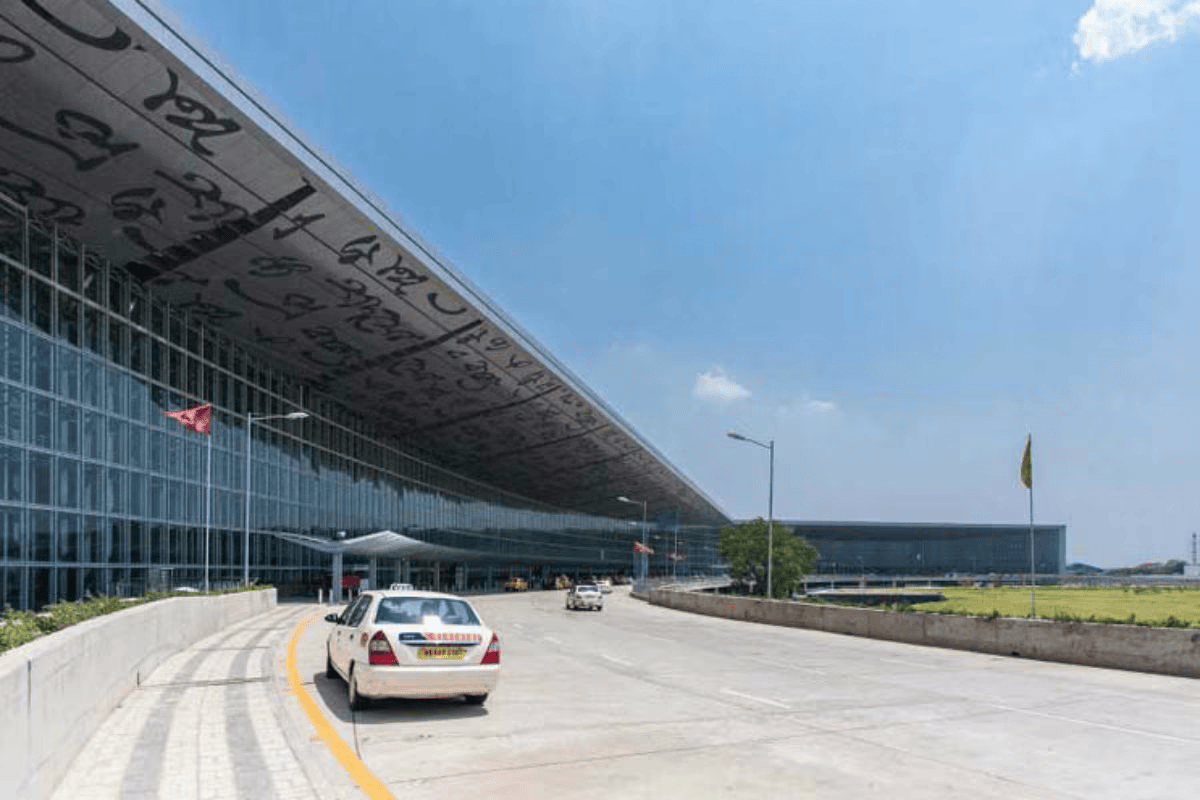
The Kolkata Municipal Corporation (KMC) has announced a temporary halt on the approval of buildings taller than G+8 within a 20-kilometre radius of Netaji Subhas Chandra Bose International Airport. This decision comes as the Airports Authority of India (AAI) reviews and updates its guidelines on height restrictions for structures in proximity to airports.
The move follows a recent tragedy in Ahmedabad, which highlighted the potential risks posed by unauthorized high-rise constructions near airports. In light of this, KMC has directed its buildings department and municipal authorities to suspend sanctions for buildings exceeding eight floors until the AAI provides updated clearance protocols. According to the Ministry of Civil Aviation’s “Height Restrictions for Safeguarding of Aircraft Operations” Rules, 2015, no construction or plantation activity is permitted within a 20-kilometre radius of an airport’s Aerodrome Reference Point without prior clearance. Builders, developers, and individual property owners must secure a mandatory No Objection Certificate (NOC) before undertaking any such activity. The regulation lays out detailed height limits depending on the area’s proximity to the airport and its operational zones—namely, approach, take-off, transitional zones, and others demarcated in Colour Coded Zoning Maps (CCZM).
Construction plans within these marked zones must either conform to the specifications in the CCZM or obtain a valid NOC. Special attention is being given to areas such as the Cossipore-Dum Dum belt, which is in close proximity to the airport, and the vicinity of the Behala Flying Club. In these zones, even small constructions like G+1 buildings are being assessed carefully. KMC officials have emphasized the need for heightened vigilance and adherence to AAI guidelines to ensure the safety of flight operations. Industry stakeholders have expressed concerns over the blanket suspension of high-rise approvals. Builders argue that safety and security should not be compromised, but they also seek clarity on the specific guidelines that need to be followed. The AAI’s online system for granting height clearances is cited as a tool that can help streamline the approval process and address safety concerns.
Legal experts point out that the mandatory NOC requirement for constructions within the 20-kilometre radius is well-established under the Aircraft Act, 1934, and the 2015 rules. Any construction exceeding the permissible height without an NOC is subject to penalties, including demolition orders and fines. In addition to regulating new constructions, efforts are underway to address existing structures that pose risks to flight operations. An Obstacle Limitation Surface (OLS) study by Kolkata airport authorities identified 377 obstacles around the airport, including unauthorized high-rise buildings, water tanks, mobile towers, lightning arresters, and tall trees. While 98 of these obstacles have been removed, approximately 287 remain, including 103 unauthorized building cases.
The AAI has issued notices demanding the removal of these obstructions and is coordinating with local authorities to expedite the process. However, challenges such as bureaucratic delays and legal disputes have hindered progress in some cases. As the AAI reviews and updates its guidelines, KMC has pledged to work closely with the authority to ensure that building height regulations are aligned with aviation safety standards. The temporary halt on high-rise approvals is seen as a precautionary measure to mitigate risks until clearer guidelines are established.
Urban development experts emphasize the need for a balanced approach that considers both safety and the city’s growth. They advocate for transparent and consistent regulations that provide developers with clear parameters while prioritizing the safety of flight operations. In the coming months, stakeholders anticipate the release of updated AAI guidelines that will provide clarity on permissible building heights in airport proximity zones. Until then, KMC’s interim measures remain in effect, underscoring the city’s commitment to safeguarding both its residents and air travelers.
Also Read :Hubballi Airport Exports Rs 12 Crore Solar Power
