


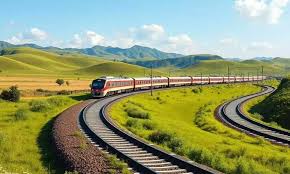
Indian Railways on 19 June 2025 launched its inaugural direct service between Bengaluru and Rishikesh, forging a crucial link between southern India’s tech hub and the spiritual heart of Uttarakhand, while advancing sustainable mobility and strengthening regional integration.
The Yeshwantpur–Rishikesh Express Special (06597/06598) departs Yeshwantpur at 07:00 hours on 19 and 26 June, and 3 July, arriving in Rishikesh at 10:20 the next day. The return leg begins at 17:55 hours on 21 and 28 June, and 5 July, reaching Bengaluru by 19:45. The train traverses an eclectic route—Nagpur, Bhopal, Agra Cantt, Haridwar and more—uniting diverse cultural corridors. Operating at 130 km/h maximum and averaging 47 km/h, the service includes AC First Class, AC 2‑Tier, AC 3‑Tier, Sleeper and General coaches, completes with onboard catering and e‑catering support. Expansive windows offer passengers scenic Himalayan vistas, blending comfort with connectivity.
This direct link embodies multiple strategic goals. It fosters pilgrimage and eco‑tourism to Rishikesh—globally recognised as the ‘Yoga Capital’—while reducing greenhouse gas emissions through long‑distance rail travel. Scheduled across inclusive coach classes, it upholds equity, enabling budget-conscious travellers to enjoy spiritual, cultural, and eco‑friendly transit. The service also dovetails with the mega Rishikesh–Karnaprayag broad gauge rail line, currently under construction and expected to complete by December 2026. With 176 km of tunnelling already done across 11 stations—through rugged Himalayan terrain—this route forms a backbone for sustainable regional transit.
Analysts see multiple ripple effects. Economically, the link can prolong visitor stays and spend in Uttarakhand, strengthen local hospitality sectors, and usher in off-season tourist flows. Socially, it enhances inter‑regional understanding, enriching Bengaluru’s cosmopolitan spirit while offering Uttarakhandis greater access for educational and urban opportunities. Challenges persist. The average speed of 47 km/h suggests infrastructure constraints—track capacity, signalling systems, and corridor congestion require urgent attention. The upcoming Karnaprayag line must integrate green engineering—bioswales, energy‑efficient stations, EV charging, gender‑neutral facilities—to realise the vision of a zero‑carbon, equitable rail network.
If nurtured correctly, this corridor could become a template for sustainable inter‑regional rail: integrated with local commuter systems, solar‑powered station precincts, regenerative braking, and supportive First‑Mile Last‑Mile solutions such as shuttle buses and bicycle rentals. Such innovations would enhance access, reduce carbon intensity, and deliver inclusive, climate‑aligned mobility for all.
Also Read: Kolkata Gets First AC Local Train at ₹29 Fare
