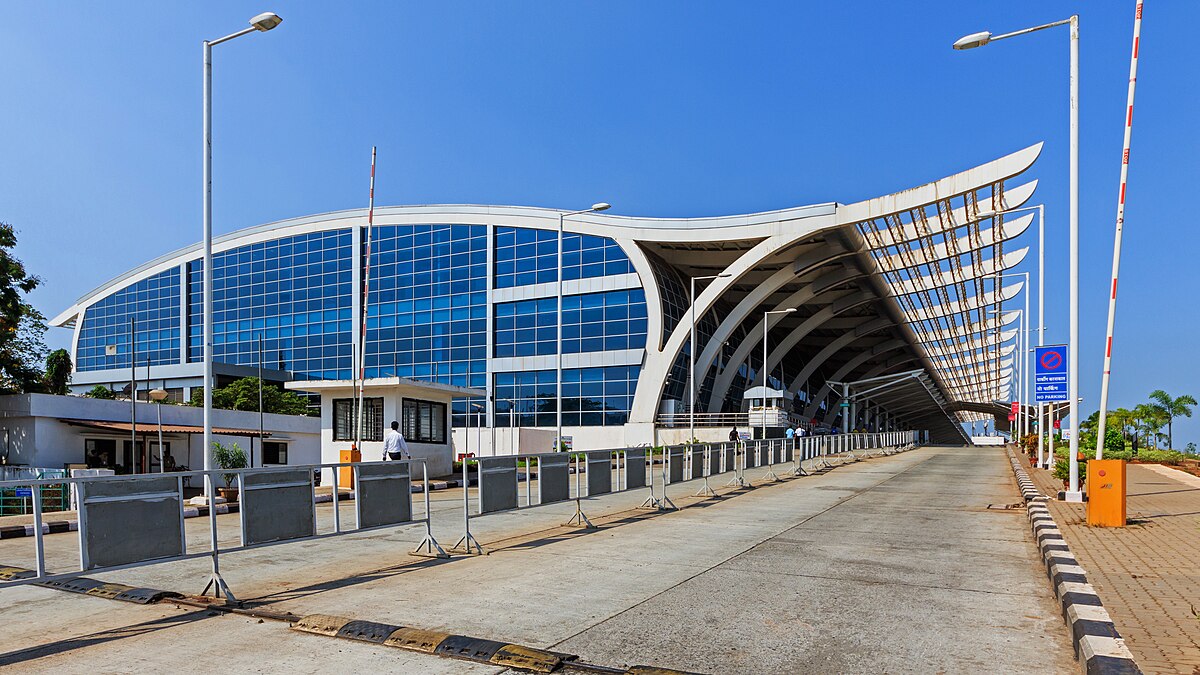
The recent air crash involving a Boeing 787 in Ahmedabad has triggered renewed anxiety among residents living near Goa’s Dabolim Airport, as attention returns to the growing number of high-rise buildings encroaching into the airport’s critical flight funnel zone. Many of these structures have reportedly been erected without mandatory naval clearances, raising serious concerns about aviation safety and civic accountability.
Despite a 2018 directive from the Goa Bench of the Bombay High Court ordering the demolition of unauthorised constructions near the airport, including structures in Survey No. 60/2 in Chicalim village, construction continues with impunity. The Court had clearly stated that buildings lacking No Objection Certificates (NOCs) from the Indian Navy were to be razed. However, enforcement of these orders remains slow and inconsistent.
Numerous communications from naval authorities dating back nearly a decade had warned about unauthorised developments near the airbase, flagging the risk to both air traffic and public safety. These alerts were sent to multiple local and state-level bodies, including municipal and planning agencies, but were largely overlooked, leading the High Court to reprimand authorities for inaction.
Reports accessed from the Indian Navy, detailing “Obstacles Infringing Obstacle Limitation Surfaces (OLS) around Dabolim Airport,” reveal that several buildings were granted occupancy certificates without the required defence clearances. Some of these constructions are said to exceed permissible height limits and lie within restricted zones that directly affect the airport’s safe flight paths.
For residents, the uncertainty has become a source of daily fear. Occupants of several apartment complexes claim they were unaware that their buildings were located within the airport’s approach funnel. Many say they were shown valid occupancy documents at the time of purchase and only later realised that their homes may be in violation of aviation norms.
Concerns have escalated in the wake of the recent air crash, which underscored the catastrophic potential of inadequate safety enforcement around airport corridors. Though the incident occurred in another state, its implications have reverberated across regions with similar vulnerabilities—particularly Dabolim, where defence operations coexist with civilian air traffic in a densely built-up area.