


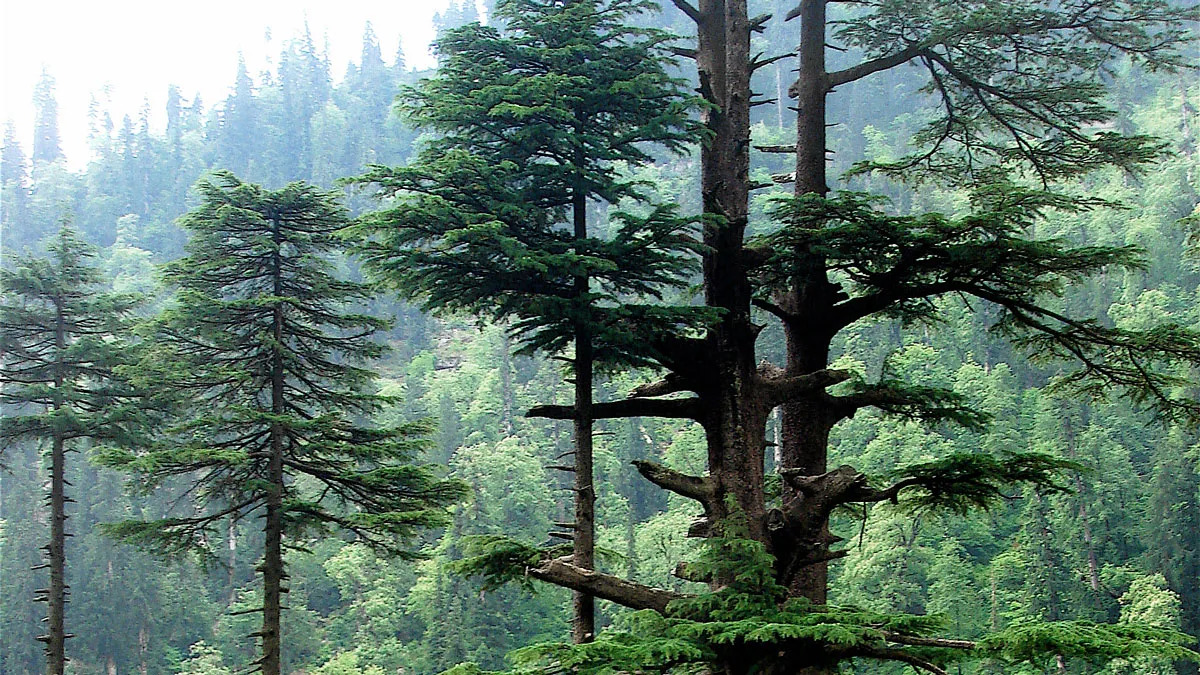
The Centre has approved a pan‑India plantation drive under the Green India Mission to reinforce Himalayan landscapes across 12 states, aiming to combat landslides, erosion, biodiversity loss and climate vulnerability. India’s ambitious National Mission for a Green India (GIM) now includes targeted interventions across the Himalayan region to restore eroded hillsides, prevent soil degradation and build a sustainable green buffer.
This initiative prioritises landslide‑ and flood‑prone zones in Jammu & Kashmir, Ladakh, Himachal Pradesh, Sikkim, Uttarakhand, Arunachal Pradesh, Nagaland, Manipur, Mizoram, Tripura, Meghalaya, Assam and West Bengal . This move is grounded in a recent study by the Indian Institute of Science showing that nearly 39 % of India’s forest grids—especially in the Himalayas—are vulnerable to climate‑induced vegetation shifts. The Himalayan biodiversity hotspot, facing accelerated warming, has also experienced over 240 disasters between 1900 and 2022, including landslides, flash floods, forest fires and glacial bursts.
This strategy will deploy native saplings through slope re‑vegetation, gully plugging, contour trenches and drainage‑line treatment to stabilise fragile mountain terrain. The mission emphasises natural regeneration, agro‑forestry and mixed plantations guided by detailed land‑use assessments. The planning process builds on the strength of successful green‑infrastructure initiatives, such as bio‑engineering techniques in Himachal Pradesh where vegetation‑anchored slopes reduced landslide risk effectively during monsoon peaks. Harnessing plant roots in slope stabilisation is an effective, low‑cost method that also enhances carbon sequestration, biodiversity and local livelihoods.
In the Himalayan context, the mission will also promote seabuckthorn cultivation in select zones of Himachal, J&K, Uttarakhand and Sikkim. This indigenous shrub offers soil binding, commercial value and environmental resilience—dimensions that dovetail with ecological and rural‑livelihood objectives. An estimated 5 million ha of critical land are targeted for plantation or quality improvement nationwide under GIM, with an equal area focused on ecosystem services—including water, biodiversity and carbon storage. In the Himalayan belt alone, land‑use mapping will inform interventions such as agro‑forestry, natural regeneration and traditional hill‑paddy field plantations—a gender‑neutral approach that supports tribal economies and equitably distributes environmental benefits .
By reinforcing vulnerable Himalayan hillsides, GIM contributes to India’s sustainable development commitments under the UN SDGs, particularly forest restoration, desertification control and land degradation prevention . Strengthened forest cover is expected to stabilise soil, regulate hydrology, and reduce disaster risk in communities downstream. Despite robust design, challenges remain. Evidence from research at IISc and elsewhere suggests that 39 % of forest zones in the Western Ghats and higher Himalayas are already under high vulnerability. Past forest grids in central Indian landscapes have experienced ecosystem shifts, intensified pest outbreaks and invasive species threats.
Execution will require cross‑sectoral synergy across land‑use planning, local communities, disaster management and forest departments. Implementing agro‑forestry and jhum‑land restoration must also respect tribal land rights and customs to ensure gender‑inclusive, equitable outcomes. Crucially, monitoring and maintenance are non‑negotiable. Seed survival rates, biodiversity indices and slope stability must be continuously assessed, supported by local oversight and potentially carbon‑finance incentives—as demonstrated in Himachal’s watershed and bio‑carbon initiatives .
If successfully delivered, the GIM mission could set a blueprint for climate‑resilient urbanised states too, catalysing natural defences along infrastructure corridors and human settlements. This Himalayan endeavour thus aligns with national climate action, eco‑city ambitions, and equitable rural growth. For communities dependent on Himalayan ecosystem services—from water to agriculture—the green shield offers long‑term protection. While climatic pressures persist, India’s strategic green mission could turn hills into guardians, not victims, of climate resilience.
Also Read :Mumbai seeks SC approval to remove 95 trees for tunnel project
