


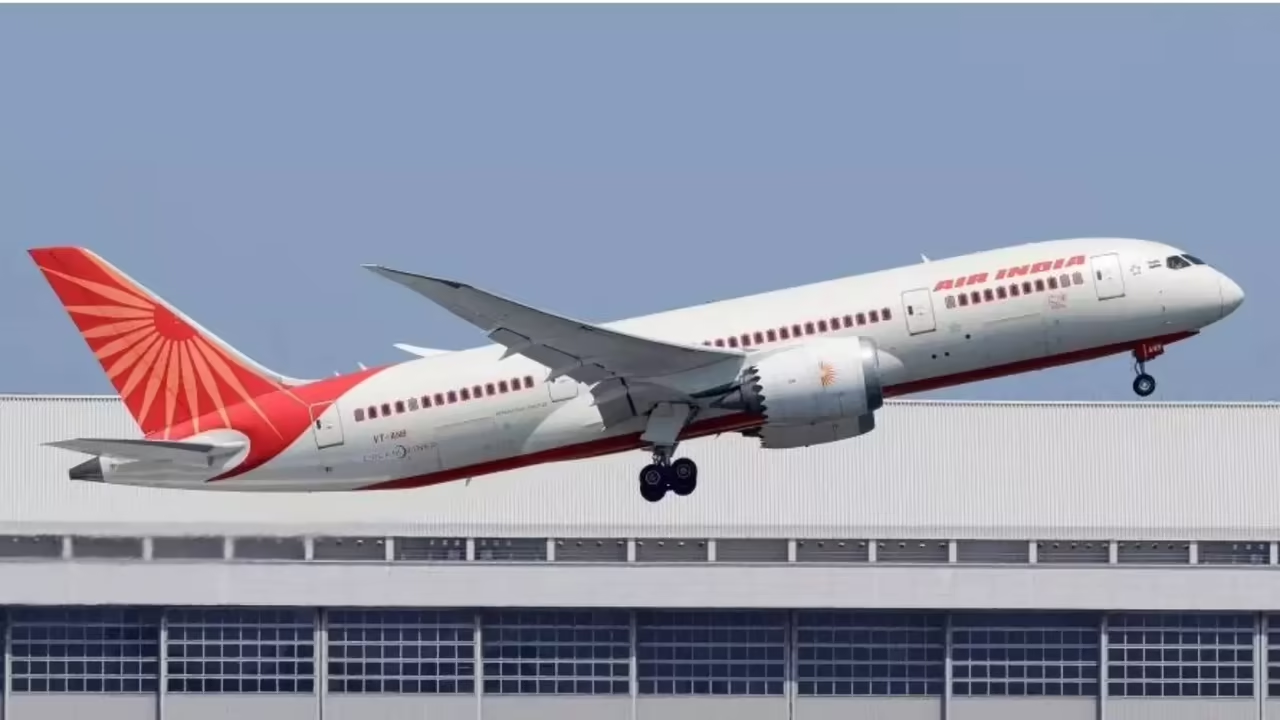
Air India has announced a temporary reduction in its international flight operations on wide-body aircraft by 15 per cent, effective immediately and lasting until at least mid-July. The move is driven by multiple operational challenges, including enhanced safety inspections of its Boeing 787 Dreamliner fleet and ongoing geopolitical constraints affecting flight paths.
Air India, which typically operates approximately 70 international flights daily on its wide-body fleet consisting of Boeing 787s, Boeing 777s, and Airbus A350s, has seen significant pressure on its capacity in recent weeks. Between 2 and 17 June, the airline scheduled 545 international flights but was compelled to cancel 83 of them, a cancellation rate of over 15 per cent. This figure has prompted the airline to realign its flight schedule with its current operational capability.
The disruption was exacerbated following the tragic crash of Flight AI171 from Pune to Ahmedabad on 12 June, which triggered an industry-wide safety probe. In the aftermath, India’s aviation regulator, the Directorate General of Civil Aviation (DGCA), ordered comprehensive inspections across the airline’s entire Dreamliner fleet. Of the 33 Boeing 787s operated by Air India, 26 have successfully passed these checks and returned to service, while the remainder are undergoing evaluation.
To enhance operational resilience, Air India also announced it would begin similar safety checks on its Boeing 777 aircraft, which form the backbone of its long-haul services, particularly to North America. The airline emphasised that these pre-emptive inspections and service adjustments are meant to ensure minimal inconvenience for passengers by reducing the risk of unplanned flight disruptions.
In addition to technical inspections, external constraints are adding to the operational strain. Airspace restrictions in parts of the Middle East, combined with night-time curfews at several global airports, have further stretched Air India’s scheduling capabilities. The airline, still recovering from the pandemic and amid slower-than-expected aircraft inductions from Airbus and Boeing, had already been operating under tight equipment and crew margins.
Acknowledging passenger inconvenience, Air India stated it is making every effort to communicate cancellations in advance and will provide affected travellers with options to rebook at no extra cost or opt for a full refund. The revised international schedule, effective 20 June, will reflect the adjusted capacity and is expected to bring greater predictability for passengers during the busy summer travel season.The airline also reassured the public that it continues to cooperate with regulatory authorities investigating the AI171 crash. “The fact that 26 aircraft have been cleared is reassuring. We remain committed to prioritising the safety of our passengers, crew, and fleet,” Air India said in its official communication.
This round of cuts underscores a more cautious and calculated approach by Air India, now under the Tata Group, as it seeks to balance expansion ambitions with operational discipline and regulatory compliance. While the timing coincides with peak travel demand, aviation analysts suggest that the decision to reduce flights now, rather than risk last-minute cancellations later, reflects a maturing outlook on airline management.
As India’s flagship carrier positions itself for a global push, the latest developments mark a critical phase in its transformation—one defined not by aggressive route expansion, but by reinforcing trust through transparency and safety-led decisions.
Also Read : BMC steps up junk vehicle removal drive
