


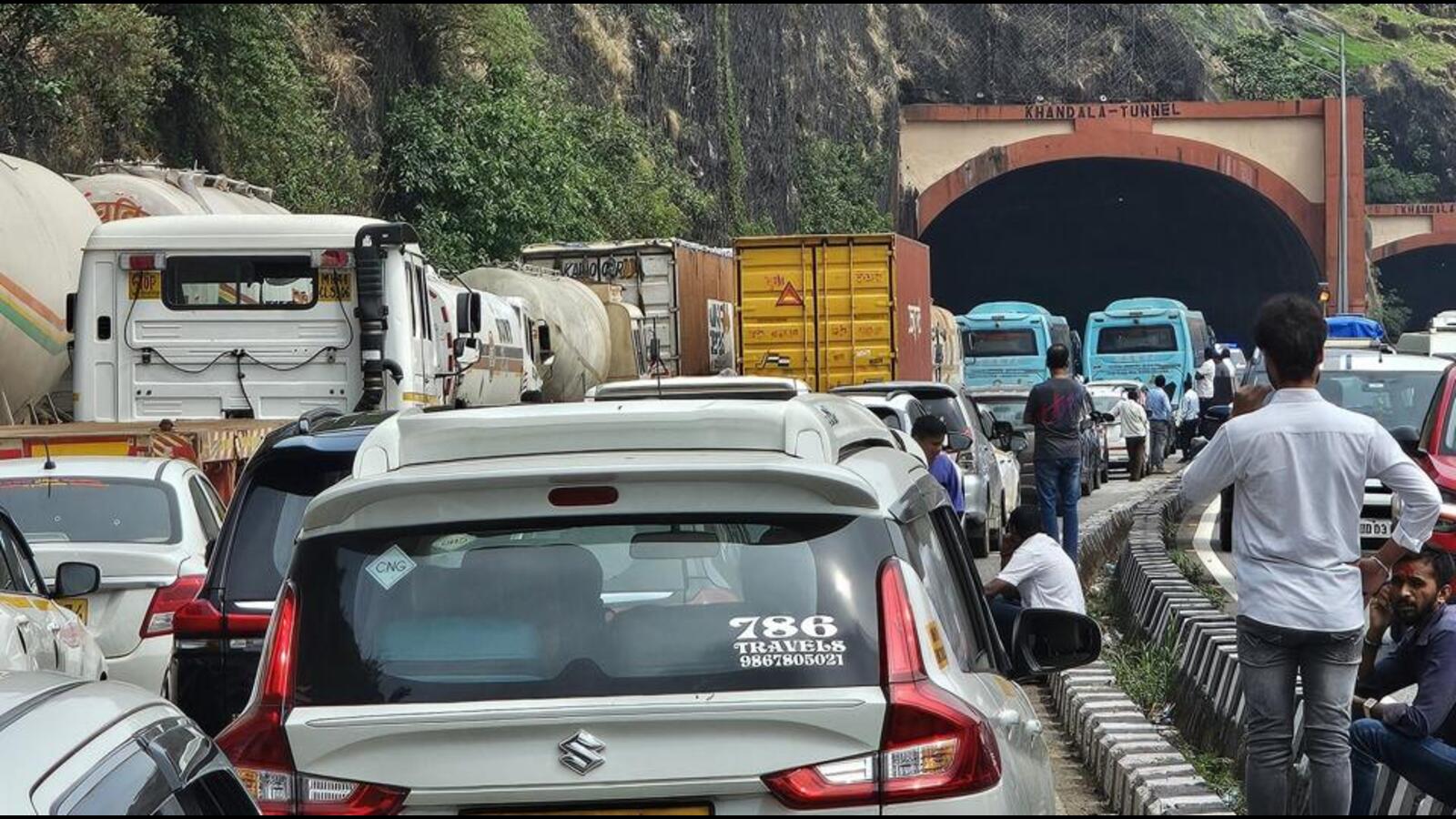
Infrastructure delays on the Pune–Satara Highway, managed by the National Highways Authority of India (NHAI) Pune, risk undermining efforts to create an eco-friendly, efficient travel network in Maharashtra. Officials admit that while the Khed Shivapur underpass is operational, key upgrades at Shivare and the Kapurhol–Harishchandri sections will not conclude until later this year. As a result, heavy rainfall exacerbates chronic pothole breakdowns, patchy signage and stalled widening efforts—factors critically slowing traffic and disrupting essential commuter routes.
NHAI Pune’s deputy manager Ankit Yadav recently confirmed that the Khed Shivapur underpass is the only fully functional section. However, “the project at Shivare will require at least three more months,” while the Harishchandri stretch remains on track for release only by year-end. The delays reflect the difficulty of managing large-scale infrastructure upgrades during monsoons, when resource access, earthworks and safety compliance can be severely impacted. Commuters have voiced mounting frustration. Sheetal Jagtap, who travels daily from Wai to Pune, described a tortuous 3–4-hour commute on what should be a two-hour route. “There’s no proper signage, diversions are confusing, and potholes are everywhere. During rains, waterlogging becomes even worse. It’s mentally and physically exhausting every day,” she said.
Transporters echo this sentiment. Prakash Gawade, who drives goods along the same route, warned of a mounting economic impact. “We are already burdened with rising fuel prices and delivery deadlines. Now, traffic jams and poor road conditions are a nightmare. Even emergency vehicles get stuck. Authorities should have fast-tracked work before the monsoon,” he commented. These disruptions extend across western Maharashtra. On the Pune–Bengaluru national highway, which includes the Satara stretch, heavy rains and expanding six-lane works have forced numerous sections onto waterlogged service roads lined with dangerous potholes. This has added up to 2–3 hours to travel times during weekdays. In some cases, commuters report daily trips stretching from two to three hours, while goods carriers report perilous conditions, especially for two-wheeler riders reluctant to navigate the uneven, slushy path.
Authorities plan to alleviate the situation via drainage clearing teams and ongoing maintenance. Yet villages such as Khed Shivapur still report severe weekday congestion at toll booths—known chokepoints even before the monsoon. Vehicles often queue for 45 minutes without visible cause, prompting questions about FASTag inefficiencies and inadequate infrastructure resilience. The NHAI’s response has included commissioning a new 32.4-km two-lane service road from Khed Shivapur to Ravet. Budgeted at ₹604 crore, the road is designed to ease pressure on the main highway and enhance safety during peak conditions. Construction starts in March 2025, with the aim of cutting travel by 20 minutes and offering a safer route during monsoons.
Even so, critics argue these strategies are not enough. As one regional highway safety officer warned, construction must be sequenced to avoid monsoon bottlenecks: “A three‑lane highway narrows into a single or double lane due to ongoing road development work, creating a bottleneck… We’re coordinating with agencies to minimise inconvenience”. Local authorities have tried limited relief measures near Pune city. For example, partial barricade removal near Swargate Chowk on Satara Road has provided short-term traffic relief, though persistent autorickshaw encroachment continues to exacerbate congestion and pedestrian risk.
From a climate-resilient planning perspective, the current scenario highlights urgent gaps in sustainable highway upgrades. Without stabilised earthworks and reinforced drainage infrastructure, road projects are susceptible to monsoon damage and can impede the intended carbon and congestion-reduction gains of high-speed corridors. Reform advocates argue that a one-off service road cannot substitute for long-term systemic planning — including underground utilities, structural mitigation strategies, and smart-intelligence-driven monitoring. Urban infrastructure experts also stress equity considerations: excessive delays for commuters and commercial traffic alike have ripple effects beyond inconvenience. Road accidents, logistics costs, and emergency service blockages all amplify social and economic vulnerabilities across the region.
Yet, pro-active frameworks are emerging. NHAI teams are reviewing toll-free trials during severe highway congestion, deploying Highway Safety Patrol units in vulnerable ghat zones, and collaborating with local authorities to fast-track water-shedding solutions . Nevertheless, the overarching challenge remains synchronising highway expansion with monsoon-ready design principles and municipal road maintenance cycles. Looking ahead, citizens are calling for higher coordination: reliable progress dashboards, queue-free toll collection systems, and seasonal waiver schemes during peak monsoon months. Meanwhile, land acquisition bottlenecks, global supply chain inflows of construction materials, and urban growth patterns in Pune–Satara–Kolhapur corridor continue to complicate acceleration.
For now, travellers remain trapped between infrastructure ambition and ground-level reality. The extended timeline to year-end suggests that until monsoon is paired with monsoon-proof design, Pune–Satara commuters can expect frustrating delays—and planners must accelerate resilience-oriented interventions before next year’s rains.
Also Read : Government approves Virar-Alibaug Phase 1 on BOT model
