


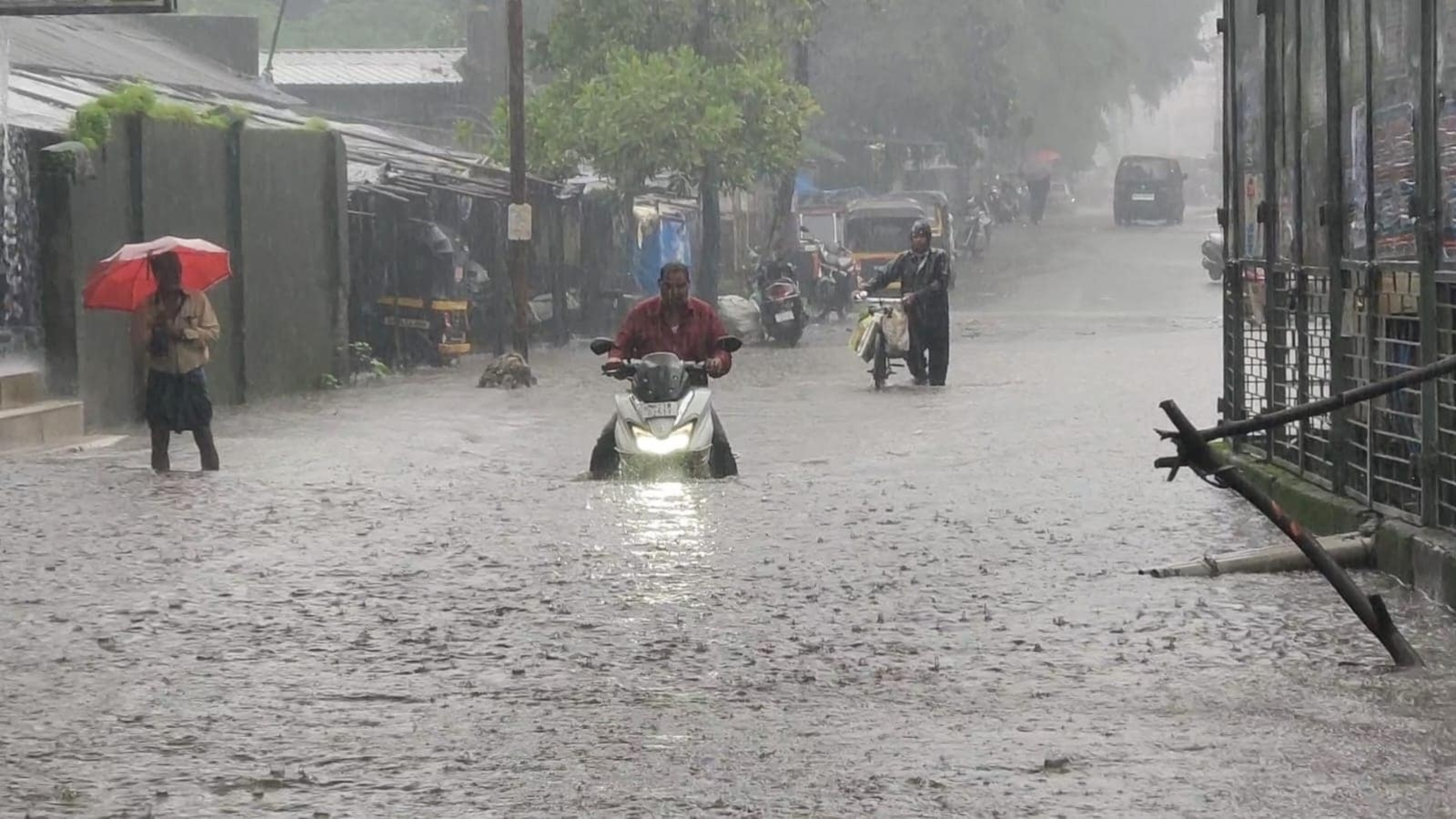
Ahmedabad and several parts of Gujarat were thrown into disarray on Monday evening as a powerful monsoon system swept through the region, bringing intense rainfall, widespread waterlogging, and a tragic electrocution death. Authorities were placed on high alert as key city services were disrupted, particularly in low-lying and densely populated urban zones.
The downpour began late afternoon and intensified by evening, overwhelming drainage infrastructure across Ahmedabad. Areas like Kankaria, Maninagar, Vadaj, and Astodia reported strong wind gusts that uprooted more than 15 trees. In Saijpur-Garnala and other eastern neighbourhoods, rainwater quickly accumulated, submerging roads and rendering parts of the city inaccessible. Commuters returning home from work found themselves stranded in rising water as thunderstorms rolled in with renewed intensity post 7 pm.
The Mithakhali underpass was shut to vehicular movement by 7.55 pm after water levels crossed 1.5 feet. Similar scenes played out in Odhav, Vatva, Ramol, and Nikol—areas historically prone to flooding due to poor drainage and unchecked development in natural run-off zones.Data from the Ahmedabad Municipal Corporation showed Ramol received over 2.5 inches of rainfall between 6 am and 9 pm. Bodakdev and Jodhpur registered 45 mm, while the city’s overall average touched 39.10 mm, bringing the season’s total to 6.76 inches. Multiple neighbourhoods reported repeated flooding, including Chandkheda, Usmanpura, Gota, Vasna, and Ranip.
The disruption was more than just civic inconvenience. At the Civil Hospital in Asarwa, the handover of bodies from a recent plane crash had to be halted as families waited under temporary tents in heavy rain. The situation underscored the intersection of extreme weather and the already fragile state of public healthcare and emergency response infrastructure.In a grim incident that cast a shadow over the city, a 20-year-old man, Jashraj Jagdishbhai Gohil, died of electrocution near a power pole in Gheekanta during the rainfall. The incident reignited longstanding concerns about electrical safety in urban centres during monsoon conditions—particularly the failure to insulate or isolate active lines in public spaces.
Elsewhere in Gujarat, the state government ramped up emergency preparedness. Bhavnagar’s Palitana recorded a staggering 11.5 inches of rain, while more than 200 talukas across the state saw moderate to heavy precipitation. The Saurashtra region, including Amreli, Botad, Junagadh, and Rajkot, bore the brunt of the showers. In Bhavnagar alone, 10 inches fell in just six hours, prompting urgent evacuation measures in low-lying zones.The Chief Minister’s office issued directives to district administrations, asking them to activate evacuation protocols and maintain round-the-clock monitoring of flood-prone areas. State-run disaster response teams were also deployed in coastal and river-adjacent regions.
This early and aggressive burst of the monsoon has once again highlighted the precarious balance between Gujarat’s urban expansion and its underprepared civic systems. Despite years of warnings and climate resilience planning, flooding remains a regular fixture every monsoon—raising fresh questions about whether city and state authorities are investing enough in sustainable drainage, real-time weather data integration, and preventive maintenance.
With the Indian Meteorological Department forecasting an above-normal monsoon for the season, the focus now shifts to how quickly the government can respond to subsequent spells without repeating the lapses of previous years. Cities like Ahmedabad, in particular, will need to rethink not just emergency response, but also long-term investment in eco-sensitive urban infrastructure and stormwater planning.
Also Read : Pune Monsoon Tourism Surge Raises Safety Concerns After Kund Mala Collapse
