


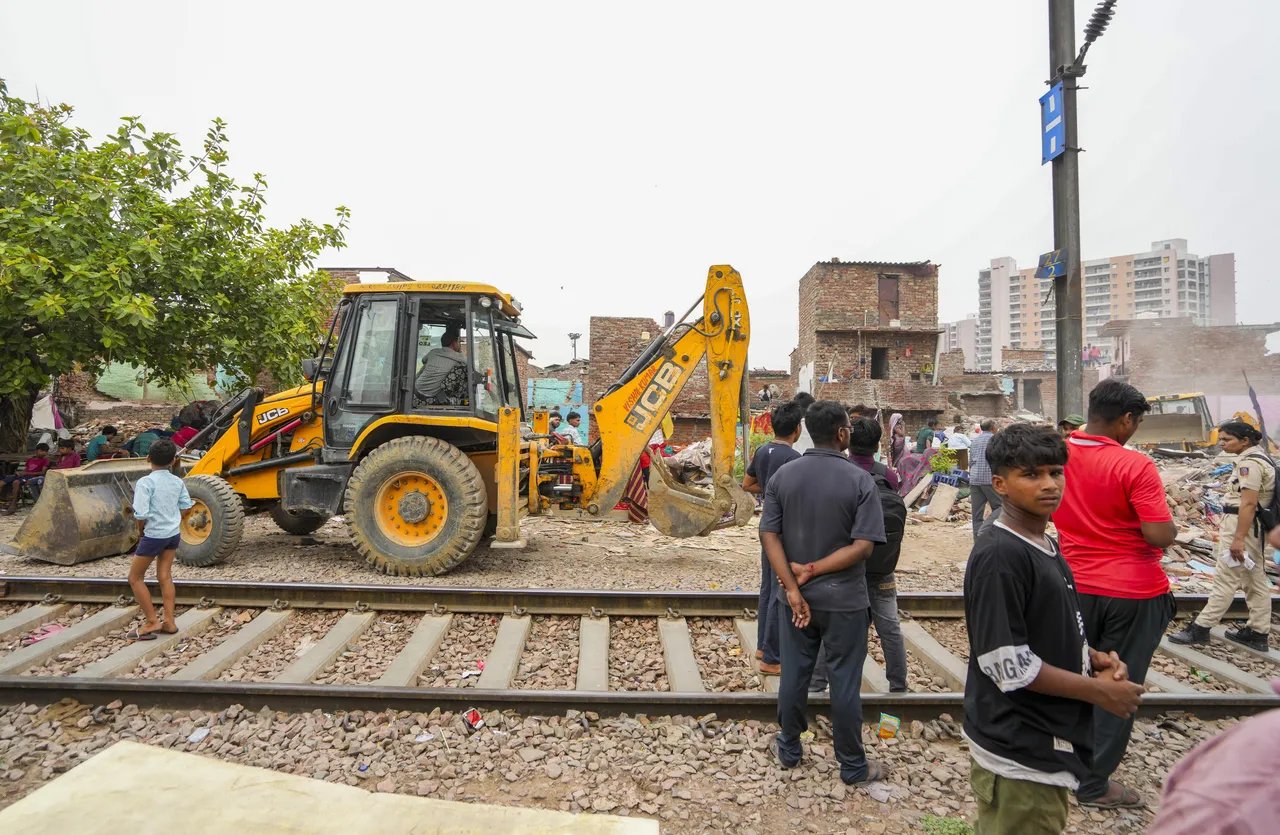
A demolition drive in Ashok Vihar’s Jailorwala Bagh JJ cluster razed approximately 200 jhuggi structures encroaching on government land, intensifying debate over the pace and fairness of Delhi’s in‑situ slum rehabilitation efforts under a ₹421 crore DDA project.
Early Monday, a specialist taskforce equipped with excavators entered the northwest Delhi settlement under heavy police presence to remove unauthorised dwellings. The Delhi Development Authority (DDA) confirmed that this action follows the rollout of the Swabhiman Apartments in‑situ rehabilitation scheme, where 1,078 eligible households received subsidised 1‑BHK flats, while unqualified residents’ jhuggis were also cleared. However, structures belonging to around 250 applicants with active court stays were untouched. Under Delhi Urban Shelter Improvement Board (DUSIB) guidelines, eligibility required households to appear in voter rolls between 2012–15 and hold ID documentation such as passports or electricity bills. Those using homes commercially, minors under 18, upper-floor occupants, or without separate ration cards by January 1, 2015, were deemed ineligible. The DDA also offered an appellate window—nine households succeeded via draw of lots.
DDA emphasises that the ₹421‑crore project, built on its land at ₹25 lakh per flat, ensures beneficiaries only pay ₹1.4 lakh plus ₹30,000 in maintenance over five years. The broader initiative, aligned with the Prime Minister’s ‘Jahan Jhuggi Wahan Makaan’ scheme, includes earthquake‑resistant flats with lifts, community spaces, basement parking, green zones, sewage‑treatment facilities and other civic amenities. Yet the demolition drive has triggered controversy. An opposition leader accused the ruling party of targeting marginalised populations, arguing that dwellers lost both homes and livelihoods without adequate rehousing. Critics, including housing rights advocates, argue that decades‑long residents were excluded, questioning the integrity of eligibility criteria and dismissing legal documentation as bureaucratic barriers.
Long-term dwellers and grassroots organisations raise concerns that promotional documentation may mask actual chronic displacement, unfairly erasing historical claims. Reaction to the Swabhiman Apartments has been mixed: while some residents express gratitude for formal housing security, others complain about unfamiliar high-rise environments, detached communities, and delayed delivery of facilities. Urban planning analysts say that large‑scale rehousing can improve quality of life but risks neglecting the social fabric and support systems intrinsic to informal settlements. They propose community‑focused designs, phased transitions, and better grievance redress mechanisms. They also emphasise adaptive infrastructure—safe vertical housing equipped with water‑saving systems, local clinics, schools, and social spaces in line with eco‑city principles .
Administrative oversight adds complexity. CIDCO, DDA and DUSIB each carry distinct responsibilities, from land pooling and slum surveys to project implementation. Effective slum redevelopment demands better coordination across these agencies to avoid inter‑departmental bottlenecks that delay consent, appeals, or essential housing entitlements. On the ground, remaining JJ dwellers point to rent dependence, informal businesses established over years, and lost savings from self‐finance or loans extended against jhuggis. The transition to formal flats often entails rental liability, maintenance obligations, and unfamiliar monthly payments—costs not sufficiently explained during resettlement.
Social equity concerns also emerge. Though 1,078 flats were allocated, at least 567 residents were denied due to policy inflexibility. Additionally, with only nine appeals approved, dozens of households remain displaced, while legal stays shield another 250 homes—some amid uncertainty over squatters versus legal residents . Despite these issues, public infrastructure improvements accompany the project. The flats include basement parking for 337 vehicles, nearly 9,300 m² open green space, recreational areas, anganwadis, clinics, and a sewage treatment plant—demonstrating integrated civic design. A neighbouring 33‑acre Vaishnavi park will further enhance local amenity provision.
Broader policy observers note that Delhi has completed 376 in‑situ projects, with Jailorwala Bagh as its second to date. While Kalkaji saw inauguration of over 3,000 flats in November 2022, the Peel‑Ashok Vihar model showcases site‑integrated strategies vs. more common off‑site resettlement. Looking ahead, experts insist on periodic auditing of rehab projects—tracking occupancy, usage of flats, amenities functionality, residents’ social well‑being, and environmental sustainability outcomes. They recommend more lenient eligibility definitions, responsive appeals processes, longer grace periods, and livelihood protection schemes to ensure communities aren’t eroded.
Delhi authorities maintain that the drive is a legally mandated step to reclaim public land for community infrastructure, while supporting an eco-friendly, equitable urban baseline. Yet the unaddressed gaps and selective rehousing process prompt calls for review. Transparency, inclusive policymaking, and a people‑centric approach are essential next steps to fulfil the promise of dignified, climate‑resilient neighbourhoods for India’s urban poor.
Also Read : Turbhe Subway Floods Again After Heavy Monsoon Rain
