


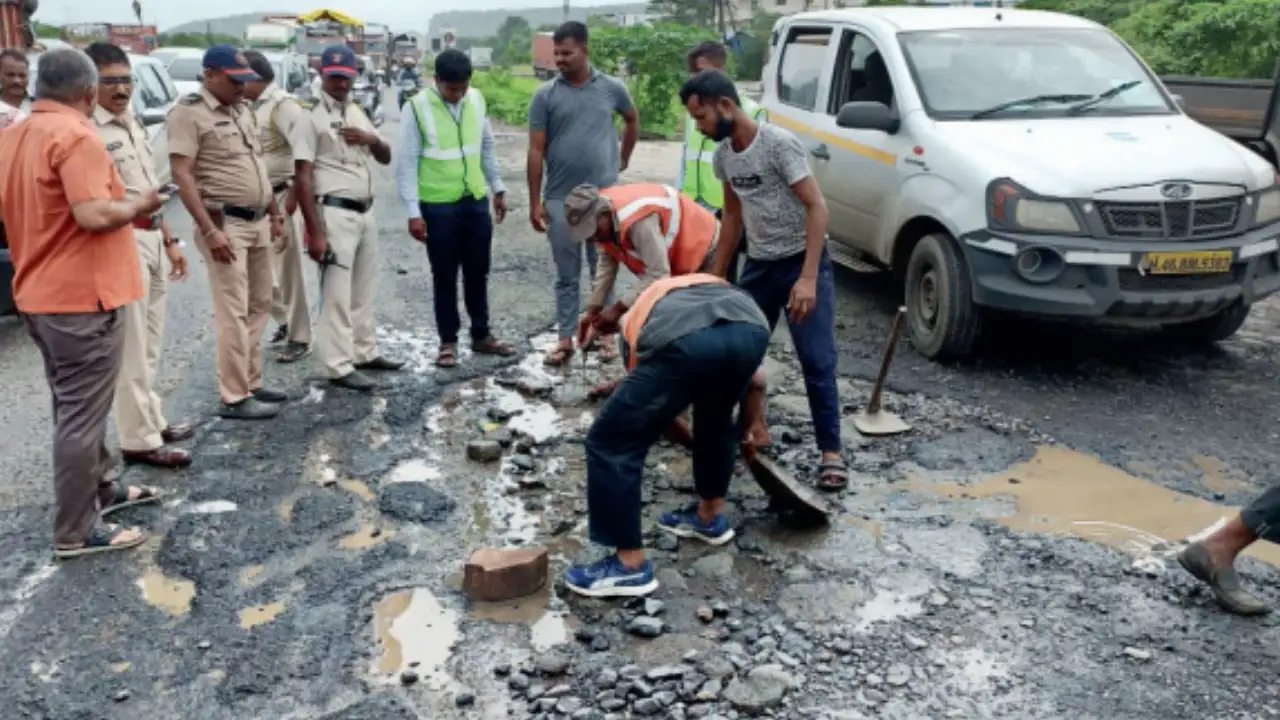
Thane Traffic Police have stepped beyond their usual remit to tackle a persistent problem — potholes — aiming to reduce traffic congestion and improve road safety.
Armed with basic tools and materials, officers have begun repairing potholes on critical stretches of the Mumbai-Nashik highway and Ghodbunder Road, in a direct response to growing public frustration over delayed civic action. Traffic congestion in Thane has escalated sharply in recent months, largely due to deteriorating road surfaces compounded by ongoing metro construction and heavy monsoon rains. Ghodbunder Road, a major arterial route connecting Thane to Mumbai, has become particularly problematic, with potholes causing bottlenecks and frequent minor accidents. Similarly, the Mumbai-Nashik highway, especially the Bhiwandi section, suffers from numerous potholes, resulting in significant delays and safety hazards.
Despite repeated assurances from the Maharashtra State Road Development Corporation (MSRDC), Thane Municipal Corporation (TMC), and the Public Works Department (PWD) that the majority of potholes had been addressed, residents and commuters continue to report deteriorating conditions. Frustrated by these gaps in civic maintenance, the Thane Traffic Police have now taken proactive steps by equipping officers to perform immediate minor repairs, bypassing the traditional delays associated with municipal bodies. Officials explained that this initiative stems from directives to avoid passivity while waiting for external agencies to act. The objective is twofold: to enhance commuter safety by preventing pothole-induced accidents and to mitigate the gridlock that these road defects exacerbate during rush hours. The initiative also represents a pragmatic approach to urban governance, leveraging front-line enforcement agencies to undertake essential maintenance duties in the absence of timely civic intervention.
The area around Anand Nagar, in particular, has drawn concern from local authorities and citizens alike. This locality’s signal junction is riddled with potholes that resurface quickly even after repairs, with monsoon rains accelerating road damage. Traffic officers have reported frequent calls from residents urging more regular and durable repairs to prevent further deterioration. While the police initiative has been welcomed by the public, it is widely seen as a temporary fix rather than a long-term solution. Experts in urban infrastructure and sustainable mobility stress that addressing the root causes of road degradation requires comprehensive planning, including better drainage systems, use of sustainable and durable materials, and coordinated maintenance schedules.
This episode also highlights broader challenges faced by rapidly urbanising regions like Thane, where infrastructure development such as metro construction often disrupts existing traffic patterns and adds to wear and tear on roads. Sustainable urban transport planning experts argue that multi-agency collaboration is essential to balance development needs with everyday commuter welfare. From a sustainability perspective, smoother road surfaces not only improve safety but also contribute to reducing vehicular emissions. Traffic congestion leads to higher fuel consumption and pollution levels; by facilitating uninterrupted traffic flow, such maintenance efforts can indirectly support the city’s carbon reduction goals.
The proactive role of the Thane Traffic Police thus serves as a notable example of local agencies adapting to evolving urban challenges. Yet, sustained success will require civic authorities to prioritise infrastructure resilience, invest in eco-friendly road construction technologies, and ensure transparent, timely public communication. As the monsoon season continues to test the resilience of Mumbai’s suburban transport network, the question remains whether this police-led intervention will prompt a more systemic overhaul of road maintenance and urban mobility strategies in Thane and adjoining areas.
Also Read : Mumbai BEST Introduces AC Buses on More Routes
