


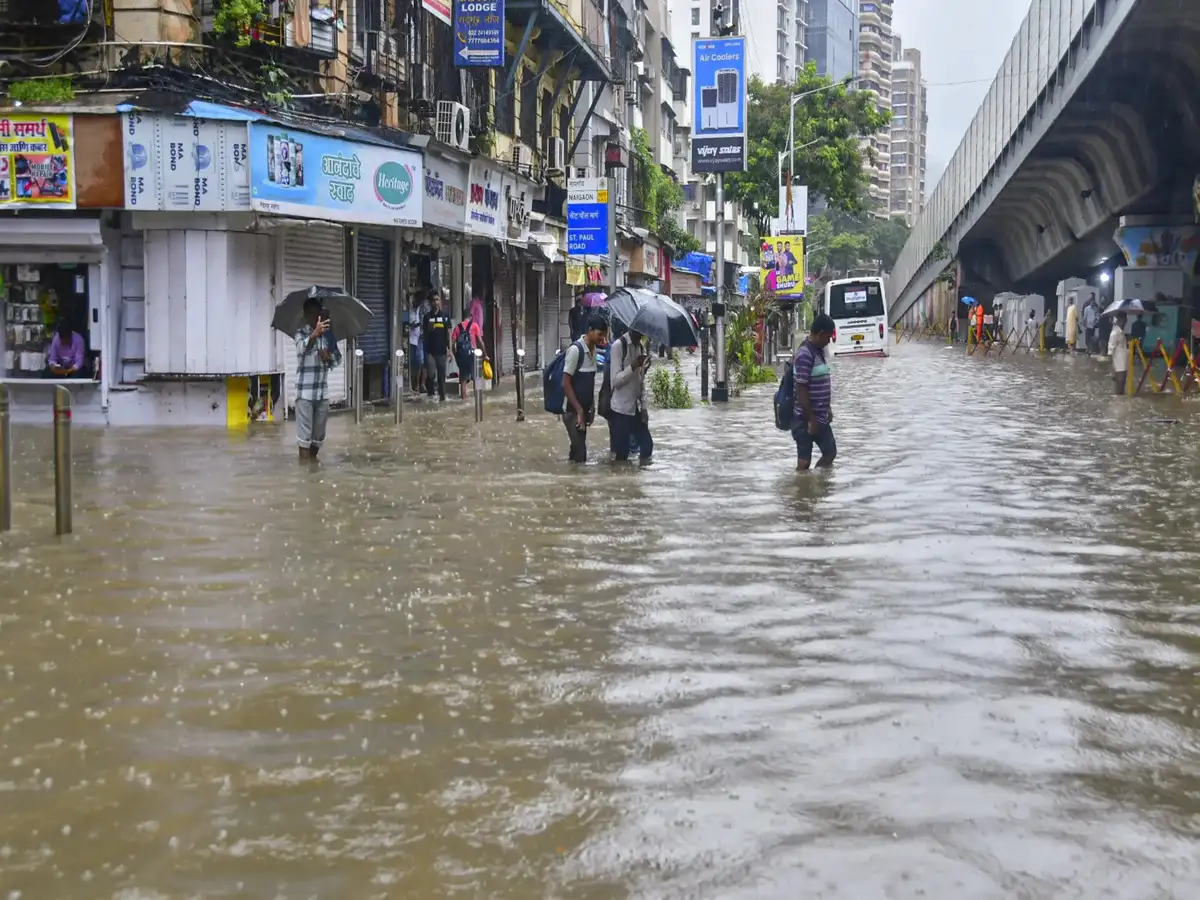
Mumbai’s first spell of monsoon rain this week has laid bare an unsettling truth—at least 59 locations in South Mumbai, many of which had never experienced flooding before, were waterlogged after a single downpour.
This revelation has sparked concern among residents and experts alike, highlighting both the city’s fragile stormwater infrastructure and the increasing complexity of urban climate resilience. The rains, which lashed the city between the night of May 25 and the morning of May 26, turned parts of Fort, Colaba, Dongri, and Byculla into impassable pools, leaving daily commuters stranded and businesses struggling to reopen. These are not traditionally flood-prone areas, raising alarms over how rapidly Mumbai’s drainage vulnerabilities are expanding in the face of erratic weather and urban sprawl.
According to civic data, 22 of these newly flooded spots were in A Ward (Fort–Colaba), 21 in B Ward (Dongri), nine in C Ward (Marine Lines), four in D Ward (Malabar Hill), and three in E Ward (Byculla). Key locations like Metro Cinema junction, Captain Pethe Marg in Cuffe Parade, Mantralaya, Churchgate Station, DN Road, and Nehru Nagar were all inundated. These are prime commercial and administrative zones that remained unaffected even during Mumbai’s notorious July 2005 floods, making this year’s waterlogging even more concerning. Civic officials attributed the flooding partly to a high tide that coincided with the downpour, peaking between 9 am and 10 am on May 26, causing seawater to backflow into the drainage lines. However, this alone does not fully account for the scale or location of the flooding. Experts point to a more systemic issue: clogged and under-maintained stormwater drains, exacerbated by unchecked construction debris and plastic waste choking the city’s already ageing drainage infrastructure.
In fact, despite repeated warnings from urban planners and disaster management experts, the city’s pre-monsoon desilting operations had not been completed in several key areas before the early rains arrived. Brihanmumbai Municipal Corporation (BMC) data revealed that Nariman Point recorded 252 mm of rainfall in just 13 hours, followed by the BMC headquarters at 216 mm and the Colaba pumping station at 207 mm. Across the island city, the average 24-hour rainfall measured up to 106 mm—more than enough to test the efficiency of stormwater systems. Officials admitted that only 417 dewatering pumps were active across the city this year, down from 482 in previous years. Several pumps were reportedly either non-functional or underused due to lack of maintenance. In many areas, water receded only after the tide levels dropped, exposing the dependency on natural drainage cycles rather than engineered flood mitigation systems.
At Oval Maidan and near Azad Maidan, leaves, construction sediment, and solid waste had blocked covered inlets, significantly slowing water dispersal. A civic engineer from the A Ward confirmed that reverse water pressure from the tide worsened the situation, particularly in low-lying business districts like DN Road and Churchgate. In response to the flood complaints, municipal authorities have initiated clean-up drives in 57 of the worst-hit locations. Drain inlets are being unclogged, and mechanical systems are being deployed to filter solid waste from key stormwater routes. Additionally, fresh orders have been issued to all ward offices to clear loose paver blocks, curb stones, and building debris from public roads before the full onset of the monsoon. This operation will be carried out intensively between May 29 and June 15, covering roads, footpaths, and critical drainage points across the city.
While these emergency measures may offer temporary relief, experts caution that without deeper structural reforms and investment in sustainable urban infrastructure, Mumbai will continue to face such climate-induced disruptions. The city needs robust green infrastructure planning, integrated solid waste management, and real-time flood mapping systems—elements that are currently either absent or underdeveloped. Urban resilience specialists warn that the increasing frequency of extreme weather events, coupled with decades of underinvestment in drainage and waste systems, is fast turning Mumbai into a high-risk flood zone. With rainfall patterns becoming more intense and less predictable due to climate change, conventional monsoon preparedness timelines and strategies are proving inadequate.
The situation underscores the urgent need for a decentralised, data-driven and citizen-participatory approach to urban water management—especially in vulnerable coastal cities like Mumbai. Without this, every early rain could be a rehearsal for a larger disaster waiting to unfold.
Also Read : IMD Predicts Temperature Rise in Coming Days
