


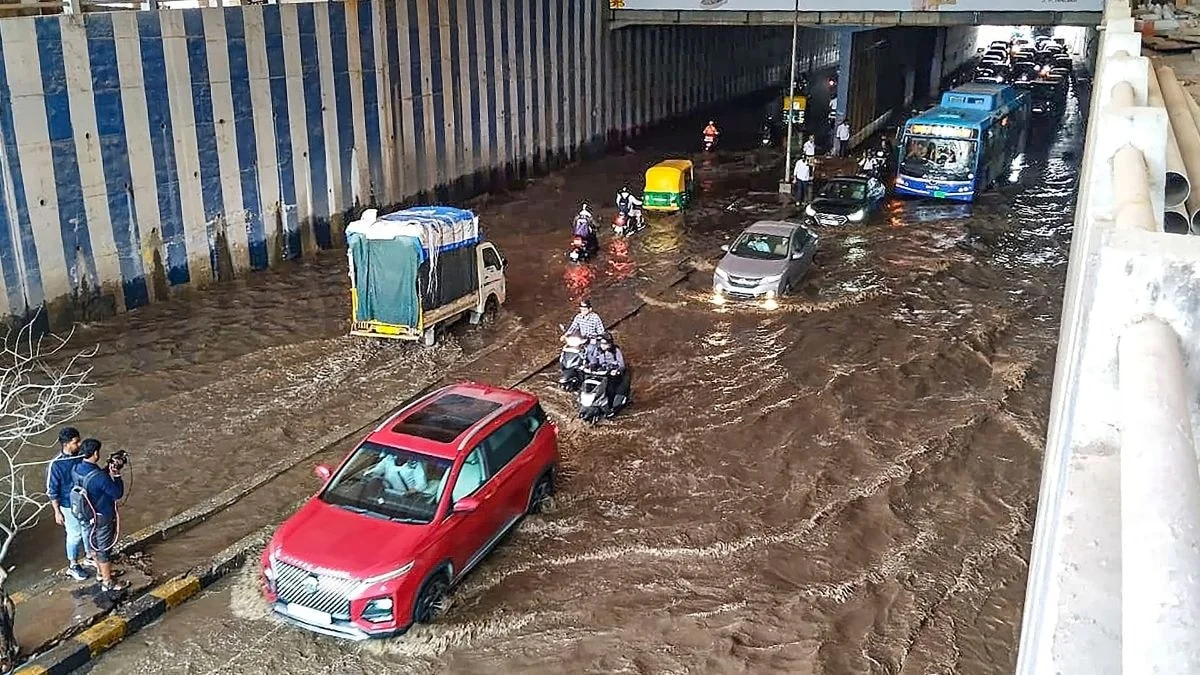
The Pune Bengaluru Highway, a vital artery connecting Maharashtra and Karnataka, is grappling with severe flooding issues due to blocked drains and culverts along its service roads.
The National Highways Authority of India (NHAI) has raised alarms over the situation, urging local authorities to take immediate corrective measures. In areas like Wakad, Tathawade, and Punawale, blocked culverts—many obstructed by adjacent high-rise developments—have led to knee-deep water accumulation during recent heavy rains. This has resulted in significant traffic congestion, with jams extending up to 4–5 km, and submerged underpasses, severely affecting daily commuters.
A joint survey conducted by NHAI and the Pimpri Chinchwad Municipal Corporation (PCMC) identified at least 10 closed culverts, most of which remain blocked. Residents have expressed frustration over repeated waterlogging and traffic delays. NHAI has ordered pothole repair work, while PCMC is addressing the drainage issues and plans to widen the service road from 12 to 24 meters, incorporating new stormwater and utility infrastructure for long-term relief. The current temporary measures, including newly-laid pipelines, have proven insufficient during heavy rains, and illegal wastewater discharge by businesses worsens the problem. NHAI emphasizes that the limited capacity of existing stormwater systems is unable to manage runoff from surrounding developments, necessitating urgent corrective action.
The situation underscores the need for comprehensive urban planning that integrates infrastructure development with environmental considerations. Sustainable drainage systems, proper waste management, and coordinated efforts between national and local authorities are essential to mitigate such issues in the future. In conclusion, the ongoing flooding on the Pune Bengaluru Highway highlights critical infrastructure shortcomings that require immediate attention. Addressing these issues is not only vital for ensuring road safety but also for promoting sustainable urban development that aligns with the broader goals of environmental conservation and public well-being.
Also Read: Maharashtra introduces parking space requirement for new cars
