


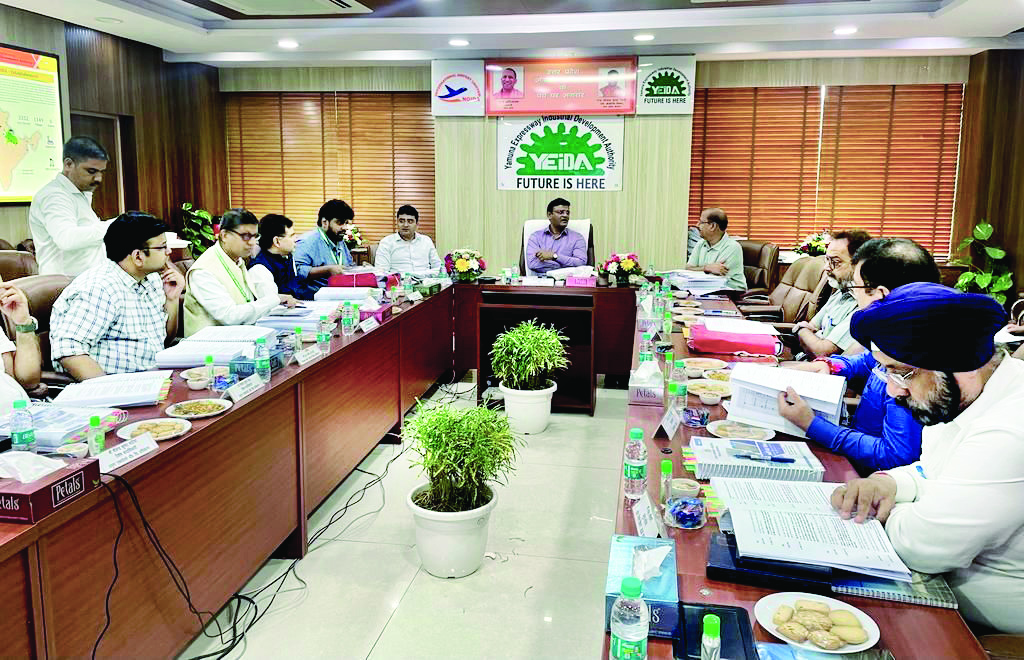
Yamuna Expressway Industrial Development Authority (Yeida) has refused approval for the proposed layout of the much-anticipated Film City project in Sector 21, Greater Noida, citing a series of planning violations and missing safety certifications.
The ₹10,000 crore mega project, helmed by a consortium led by filmmaker Boney Kapoor in partnership with a private developer, has now been directed to submit a revised and compliant plan before any further consideration.Officials at Yeida raised significant red flags over the current design, pointing out that the proposed layout disregards land use regulations by fragmenting green zones and introducing unauthorised commercial infrastructure on areas demarcated for industrial or ecological use. As per regulatory norms, 15% of the total land parcel — approximately 34.5 acres of the 230-acre site — must be reserved as uninterrupted green cover. However, the submitted plan slices through these spaces, violating the master plan’s ecological safeguarding provisions.
Further aggravating concerns, the developer failed to furnish essential clearances, including a fire no-objection certificate and a structural safety certificate — both critical for any high-density construction involving public facilities and accommodations. Yeida officials reiterated that such oversights compromise both regulatory transparency and public safety, particularly in a region poised for large-scale footfall and media-related traffic.The authority’s evaluation also revealed that the consortium had included multiple hotels, warehouses, and residential units intended for film crews and staff within the industrial zone — a clear breach of zoning laws. The approved land use designates 155 acres for industrial purposes, including 21 acres for a film institute and 134 acres for production facilities. An additional 75 acres are reserved for commercial development, but Yeida stated that the current layout attempts to introduce commercial activity prematurely and in the wrong zones.
The authority clarified that it will only approve Phase I of the project, which involves setting up core film infrastructure such as studios and training institutions. Approval for commercial establishments like shopping malls, resorts, and hospitality centres will be considered only after at least 15% of the primary film infrastructure is visibly completed and compliant with existing urban development norms.With the developer projecting an eight-year timeline for project completion, Yeida has now mandated a phase-wise development proposal. Officials have warned that if the revised layout fails to address the stated violations, the project risks long-term delays or possible cancellation.
At stake is not just a commercial venture, but the opportunity to create a sustainable and inclusive creative hub that aligns with urban development principles. Green buffers, public safety, and planned land use are integral to ensuring that Film City can become a model project that benefits the local economy without compromising on environmental integrity or regulatory adherence.While the Film City project has the potential to transform Greater Noida into a media and entertainment powerhouse, experts insist that such transformation must not come at the cost of sustainable planning. As cities across India grapple with climate stress, land pressures, and urban sprawl, projects of this magnitude must embody principles of equity, ecological preservation, and structural safety.
In this instance, Yeida’s decision underscores a larger shift towards holding developers accountable to the very standards that ensure cities remain liveable, safe, and environmentally resilient — especially as India seeks to expand its cultural economy without losing sight of its green and inclusive urban vision.
Also Read : Gujarat Bullet Train Works Speed Ahead With New Tech
